OpenAI Legal Threat Rocks Apple Stock: What AI Content Creators Need to Know
Apple Inc. (AAPL) stock fell 1.2% on May 15, 2026, following reports that OpenAI is considering legal action over the ChatGPT-Siri integration deal, which allegedly failed to meet revenue expectations (Source: Blockonomi). This development signals a critical inflection point for AI content creators, exposing the volatile business realities behind the AI tools we rely on and underscoring the importance of platform diversification and content sovereignty.
The Breakdown: A Deal Gone Sour Between Tech Titans

The core of the dispute lies in the landmark partnership announced in June 2024, where Apple agreed to integrate OpenAI’s ChatGPT technology into its Siri voice assistant and across its operating systems. The deal, celebrated as a “new era for AI,” was projected to generate billions in new revenue through premium subscriptions and usage fees shared between the companies.
According to sources close to the matter, the integration’s performance fell drastically short of forecasts. User adoption of the paid “ChatGPT+ via Siri” tier was reportedly 70% below projections in the first year. Analysts point to several factors:
- Apple’s Cautious Rollout: Apple limited ChatGPT’s deep integration to specific, premium iPhone models and required explicit user opt-ins, creating friction.
- Market Saturation: By 2025, users already had established workflows with standalone ChatGPT, Claude, and Gemini apps, reducing the need for a Siri-based version.
- Revenue Model Conflict: OpenAI’s model relied on high-volume usage and subscriptions, while Apple’s ecosystem historically favors one-time purchases and cuts from App Store transactions, creating a fundamental mismatch.
The potential legal action centers on contractual obligations and “good faith” performance clauses. OpenAI alleges Apple did not sufficiently market or promote the integrated features, while Apple counters that OpenAI’s models were not optimized for the real-time, on-device processing Siri requires.
Why This Legal Drama Matters for AI Content Creators

For professionals using AI to generate blog posts, marketing copy, and social media content, this isn’t just tech industry gossip. It’s a stark reminder that the tools underpinning our workflows are built on unstable, corporate partnerships. The fallout impacts creators in three key areas:
1. Tool Stability and Access Risk: Major integrations can be rolled back or degraded overnight due to business disputes. If OpenAI’s access to Apple’s billions of users is compromised, its revenue and, by extension, its ability to offer affordable, powerful models to the public could be threatened. Creators who have built entire processes around a specific model’s API or interface could face sudden disruption.
2. The Illusion of “Free” AI: The ChatGPT-Siri deal was partly predicated on converting free users to paid subscribers. Its failure indicates that the mass market may be resistant to paying for AI assistance directly. For creators, this reinforces that the current “freemium” model for powerful AI is unsustainable long-term. The pressure to monetize will lead to more paywalls, stricter usage limits, or a push towards enterprise-tier pricing, squeezing individual creators and small agencies.
3. The Centralization of AI Power: This dispute highlights the dangerous concentration of AI development and distribution among a few mega-corporations (OpenAI, Apple, Google, Microsoft). When deals between them sour, innovation stalls and users become collateral damage. For content creators, this means fewer choices, less competitive pricing, and the risk of having your preferred tool’s development roadmap altered by a boardroom decision you have no say in.
Practical Strategies for AI Content Creators Post-Apple-OpenAI Fallout

To future-proof your content creation business against such ecosystem shocks, adopt these actionable strategies immediately:
1. Diversify Your AI Tool Stack: Do not rely on a single AI provider. Build workflows that can pivot. For example:
- Use ChatGPT-4 for brainstorming and creative tasks.
- Use Claude 3 for long-form content and analysis.
- Use Gemini Advanced for research and data synthesis.
- Employ specialized tools like Jasper for marketing copy or Midjourney for images.
Platforms like EasyAuthor.ai are essential here, as they allow you to manage prompts and workflows across multiple AI models from a single dashboard, reducing vendor lock-in.
2. Own Your Content Distribution: Your website and email list are your most valuable assets. While AI can help create content, you must control the platform where it lives. Double down on SEO for your WordPress site, build your subscriber base, and reduce dependency on social media algorithms or third-party publishing platforms that could change their rules or shut down AI-assisted content.
3. Audit for API Dependency: If you use automation tools (Zapier, Make.com) that connect ChatGPT’s API to your CMS or social schedulers, identify single points of failure. Create backup workflows. For instance, if your “AI-generated tweet -> Twitter” zap breaks, have a manual process ready. Consider using more stable, platform-agnostic automation services.
4. Invest in Prompt Engineering & Fine-Tuning: The more efficient and precise your prompts, the less reliant you are on the raw power of the latest, most expensive model. Learning to fine-tune open-source models (like Llama 3 or Mistral) on your own data is a powerful hedge. While computationally intensive, services are emerging that make fine-tuning for specific content niches (e.g., legal blogging, tech reviews) more accessible.
5. Monitor AI Business News Religiously: Set up Google Alerts for “OpenAI partnership,” “AI licensing,” and “ChatGPT API.” Follow key analysts on LinkedIn or X. The financial health and legal entanglements of your AI providers are now a direct business continuity concern. A stock dip like Apple’s 1.2% drop is often a leading indicator of deeper product or partnership issues.
The Future: A More Fragmented and Sovereign AI Landscape
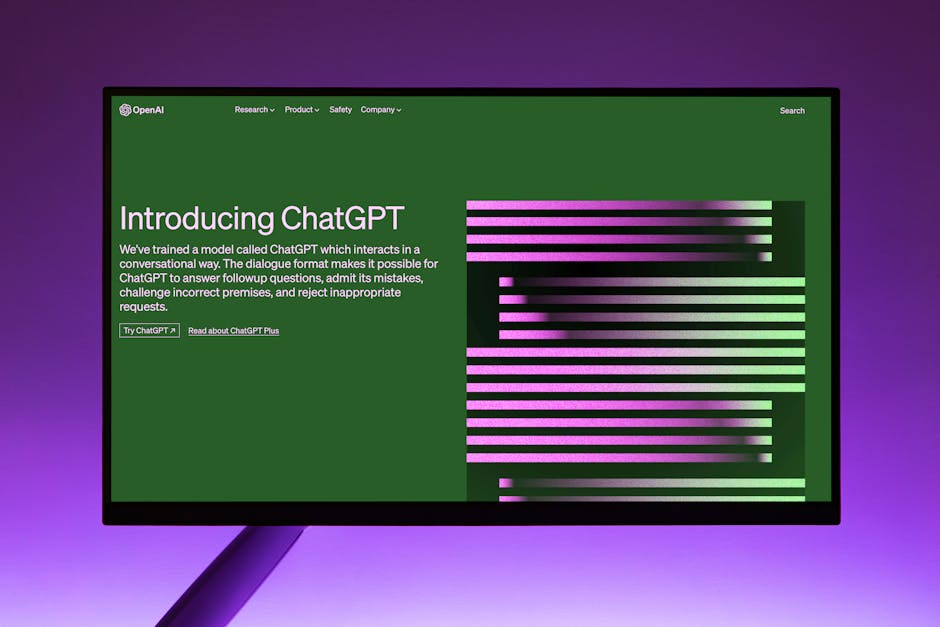
The Apple-OpenAI dispute is a catalyst. It will accelerate two trends critical for content creators: the rise of open-source, locally-run AI models and the demand for AI-agnostic content platforms. Smart creators will begin treating AI as a volatile commodity, not a stable utility. The winning strategy is to build content systems where the AI model is a replaceable component, not the foundation.
Your content’s value lies in your unique perspective, audience trust, and strategic distribution—not which LLM you used to draft it. Use this news as a wake-up call to audit your dependencies, diversify your tools, and solidify your own digital real estate. The era of assuming your favorite AI tool will always be there, cheap and powerful, is over.