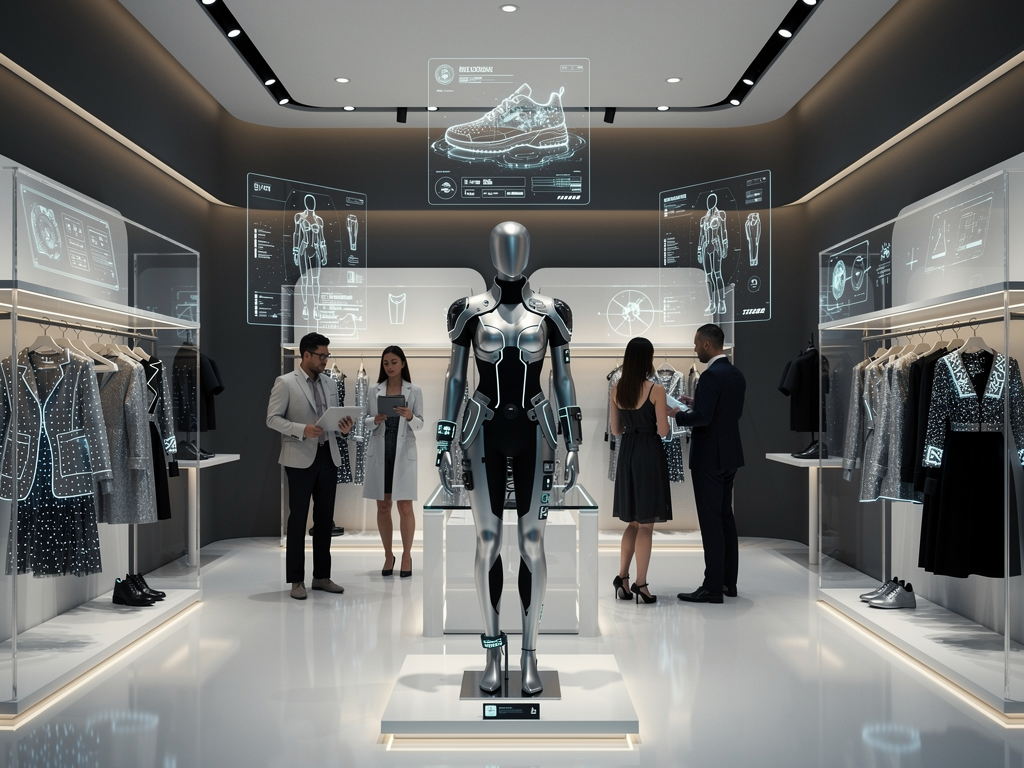
The Future of Retail: Tech and Innovation in Apparel and Fashion
The apparel and fashion industries, long driven by trends, creativity, and consumer desire, are undergoing a profound transformation. The future of retail is no longer just about what’s in vogue; it’s increasingly defined by the seamless integration of technology and innovative practices. From the design studio to the consumer’s closet, digital advancements are reshaping every facet of the fashion world, creating unprecedented opportunities for brands and consumers alike. This evolution is marked by a shift towards more personalized, sustainable, and immersive shopping experiences, driven by innovations like artificial intelligence, virtual reality, and advanced data analytics. Understanding these shifts is crucial for anyone involved in the apparel and fashion sectors, as adapting to these changes will determine success in the coming years.
The traditional retail model, characterized by brick-and-mortar stores and seasonal collections, is being challenged by agile, data-driven approaches. Consumers today expect more than just products; they seek engagement, convenience, and a connection with brands that align with their values. Technology is the key enabler of this new paradigm, offering tools that enhance efficiency, foster creativity, and deepen customer relationships. For instance, AI algorithms can now predict trends with remarkable accuracy, optimize inventory management, and personalize marketing campaigns, leading to a more responsive and profitable business. As we delve deeper, we’ll explore the specific technologies and innovations that are paving the way for this exciting new era in fashion retail.
Key Takeaways
- Technology is fundamentally altering the apparel and fashion retail landscape, moving towards personalization and sustainability.
- AI and machine learning are crucial for trend forecasting, inventory management, and personalized customer experiences.
- Virtual and augmented reality (VR/AR) offer immersive shopping experiences, bridging the gap between online and physical retail.
- Sustainable practices, enabled by technology, are becoming a major consumer demand and a competitive differentiator.
- Data analytics provides deep insights into consumer behavior, enabling brands to make informed decisions and optimize operations.
- The future of fashion retail involves a blend of online and offline channels, creating a unified omnichannel experience.
AI-Powered Personalization and Trend Forecasting
Artificial intelligence (AI) is arguably the most transformative technology impacting the future of retail in the fashion sector. AI algorithms can process vast amounts of data, from social media trends and runway shows to sales figures and customer browsing history, to predict upcoming fashion trends with remarkable accuracy. This capability allows brands to be more proactive in their design and production cycles, reducing the risk of overstocking unpopular items and capitalizing on emerging styles. For example, platforms like Stitch Fix use AI to curate personalized clothing recommendations for their subscribers, demonstrating the power of data-driven styling. This level of personalization extends beyond recommendations; AI can also tailor marketing messages, product placements, and even website layouts to individual user preferences, creating a highly engaging and relevant shopping journey.
Furthermore, AI is revolutionizing inventory management and supply chain optimization. By analyzing sales data in real-time, AI can predict demand for specific items in different locations, allowing retailers to manage stock levels more effectively. This minimizes waste, reduces carrying costs, and ensures that popular products are available when and where customers want them. For instance, Zara, a pioneer in fast fashion, leverages sophisticated data analysis to quickly identify popular styles and replenish stock, demonstrating the competitive advantage gained through AI-driven operations. The ability to make these data-backed decisions quickly is essential in the fast-paced fashion world, where trends can emerge and fade within weeks.
Beyond forecasting and inventory, AI is also enhancing customer service through chatbots and virtual assistants. These AI-powered tools can handle a large volume of customer inquiries 24/7, providing instant answers to common questions about sizing, shipping, and returns. This frees up human customer service agents to handle more complex issues, improving overall efficiency and customer satisfaction. Moreover, AI can analyze customer feedback and sentiment from reviews and social media, providing valuable insights that brands can use to improve their products and services. This continuous feedback loop, powered by AI, is crucial for staying competitive and meeting evolving consumer expectations.
Virtual and Augmented Reality: Immersive Shopping Experiences
Virtual Reality (VR) and Augmented Reality (AR) are ushering in a new era of immersive shopping experiences, blurring the lines between the digital and physical worlds. AR technology allows consumers to visualize products in their own environment before making a purchase. For apparel, this means customers can use their smartphones to virtually “try on” clothing, seeing how different items look on their own bodies without ever stepping into a fitting room. Brands like Gucci and Dior have already implemented AR features in their apps, allowing users to virtually try on sneakers or sunglasses. This not only enhances the online shopping experience by providing a more tangible sense of the product but also helps reduce return rates, as customers have a clearer idea of fit and appearance.
VR, on the other hand, offers even more profound immersive possibilities. Retailers can create virtual storefronts or showrooms where customers can browse collections, interact with products in 3D, and even attend virtual fashion shows. Imagine walking through a beautifully rendered virtual boutique, examining garments from every angle, and feeling a sense of presence that traditional e-commerce lacks. While widespread adoption of VR for shopping is still developing, its potential to create engaging and memorable brand experiences is immense. Companies are exploring VR for everything from virtual fitting rooms that simulate different body types to interactive brand storytelling that transports customers into the world of the designer. The potential for VR in retail lies in its ability to offer experiences that are both convenient and captivating.
The integration of VR and AR also extends to the design and manufacturing process. Designers can use VR to create and visualize prototypes in a 3D space, iterating on designs much faster and more cost-effectively than with traditional methods. This accelerates the product development cycle and allows for greater creativity. Furthermore, AR can be used on the factory floor for training and quality control, overlaying instructions or highlighting potential defects. As these technologies become more accessible and sophisticated, their role in shaping both the consumer-facing and operational aspects of the fashion industry will only grow.
Sustainable and Ethical Fashion: Technology as an Enabler
Sustainability and ethical production are no longer niche concerns but central demands from modern consumers, and technology is playing a pivotal role in enabling these shifts. The fashion industry has long faced criticism for its environmental impact, from water consumption and chemical pollution to textile waste. Innovations in materials science, supply chain transparency, and manufacturing processes are helping brands address these challenges. For instance, blockchain technology can provide an immutable record of a garment’s journey, from the origin of its raw materials to its final sale, offering consumers verifiable proof of ethical sourcing and production. This transparency builds trust and allows consumers to make informed purchasing decisions based on their values.
Furthermore, technology is driving the development and adoption of sustainable materials. Innovations range from lab-grown leather and recycled ocean plastics to biodegradable fabrics derived from agricultural waste. Companies are investing heavily in research and development to create materials that have a lower environmental footprint without compromising on quality or aesthetics. For example, the use of AI in material science can accelerate the discovery of new sustainable alternatives by simulating molecular interactions and predicting material properties. The rise of circular economy models, where products are designed for longevity, repair, and recycling, is also being facilitated by technology, enabling better tracking and management of resources throughout their lifecycle.
“Consumers are increasingly demanding transparency and accountability from brands regarding their environmental and social impact. Technology provides the tools to meet these demands and build a more sustainable future for fashion.”
The future of retail in fashion hinges on embracing these sustainable practices. Brands that prioritize ethical sourcing, reduce their environmental footprint, and communicate their efforts transparently will gain a significant competitive advantage. Technology offers the means to achieve these goals, from optimizing energy usage in manufacturing plants with IoT sensors to using 3D printing to reduce waste in prototyping and small-batch production. As consumers become more conscious of the impact of their purchases, the integration of technology for sustainability will become a non-negotiable aspect of brand identity and market success.
The Rise of Omnichannel Retail and Experiential Shopping
The future of retail is undeniably omnichannel, meaning a seamless integration of online and offline shopping experiences. Consumers no longer want to be confined to a single channel; they expect to interact with a brand consistently across websites, mobile apps, social media, and physical stores. This requires a unified approach to inventory management, customer data, and brand messaging. For example, a customer might browse items online, add them to a wishlist, check in-store availability via an app, try them on at a physical location, and then complete the purchase online for home delivery. Each touchpoint should feel connected and provide a consistent brand experience.
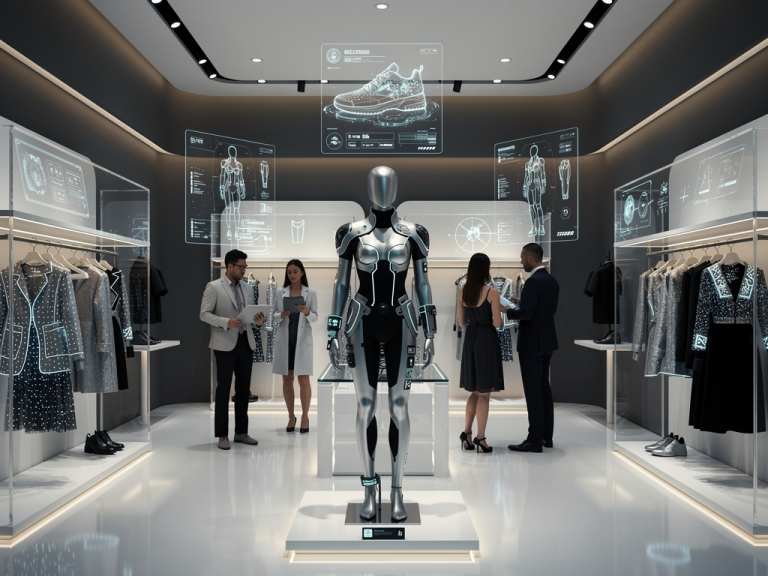
Technology is the backbone of this omnichannel strategy. Advanced Customer Relationship Management (CRM) systems, powered by data analytics, allow retailers to track customer interactions across all channels, building a comprehensive profile of preferences and behaviors. This enables highly personalized marketing and service, regardless of how the customer chooses to engage. Furthermore, innovations like buy-online-pickup-in-store (BOPIS), curbside pickup, and smart fitting rooms equipped with interactive mirrors are enhancing the convenience and engagement of physical retail spaces. These technologies bridge the gap between the digital convenience and the tangible experience of shopping in person.
Experiential shopping is also becoming a key differentiator. Physical stores are evolving from mere points of transaction to destinations that offer unique experiences. This can include in-store workshops, personalized styling sessions, exclusive events, or cafes integrated within the retail space. Technology enhances these experiences by providing interactive displays, personalized recommendations through apps, or even augmented reality features that bring products to life. For instance, a flagship store might use technology to allow customers to customize sneakers on the spot or connect with brand ambassadors via a digital platform. The goal is to create memorable interactions that foster brand loyalty and encourage repeat visits, transforming shopping from a necessity into a leisure activity.
Data Analytics and Predictive Modeling in Fashion
In the competitive landscape of the fashion industry, data analytics and predictive modeling are becoming indispensable tools for understanding and anticipating consumer behavior. By collecting and analyzing data from various sources—including sales transactions, website traffic, social media engagement, and customer feedback—retailers can gain profound insights into what customers want, when they want it, and why. This data-driven approach allows for more informed decision-making across all aspects of the business, from product development and marketing to inventory management and store layout.
Predictive modeling takes this a step further by using historical data and statistical algorithms to forecast future outcomes. In fashion retail, this can involve predicting which styles will be popular next season, estimating demand for specific products, or identifying customers most likely to churn. For example, a retailer might use predictive analytics to determine the optimal pricing for a new collection or to identify high-value customers who would respond best to a targeted loyalty program. Companies like ASOS extensively use data analytics to personalize product recommendations and optimize their website experience, contributing to their massive online presence. This proactive approach helps mitigate risks and maximize opportunities in a notoriously volatile market.
The insights derived from data analytics also fuel personalization efforts. By understanding individual customer preferences, purchase history, and browsing behavior, brands can deliver tailored product recommendations, personalized marketing communications, and customized offers. This level of personalization not only enhances the customer experience but also significantly boosts conversion rates and customer loyalty. As the volume and complexity of available data continue to grow, the sophistication of analytics tools and techniques will also advance, making data-driven decision-making an even more critical component of success in the future of retail for apparel and fashion.
The Role of 3D Printing and On-Demand Manufacturing
3D printing, also known as additive manufacturing, and on-demand production models are poised to revolutionize how apparel and fashion items are designed, produced, and sold. Traditionally, fashion relies on mass production, often leading to significant waste from unsold inventory and the need for large upfront investments in manufacturing runs. On-demand manufacturing, enabled by technologies like 3D printing and advanced digital knitting, allows garments to be produced only after a customer places an order, or in very small, customized batches.
This shift towards on-demand production offers numerous benefits. Firstly, it drastically reduces waste by eliminating the need for speculative production and minimizing overstock. Secondly, it enables unprecedented levels of customization and personalization. Customers could potentially design their own garments or choose specific modifications, which are then produced precisely to their specifications. Imagine ordering a bespoke dress or a pair of perfectly fitting shoes, created just for you using advanced manufacturing techniques. Companies are already exploring this, with some high-end brands experimenting with 3D-printed accessories and even footwear components.
Furthermore, 3D printing and on-demand manufacturing can shorten lead times significantly. Instead of months, complex designs or customized items could potentially be produced in days or even hours. This agility is crucial in the fast-fashion world and also supports the growing demand for unique, personalized pieces. It also has the potential to bring manufacturing closer to the consumer, reducing shipping distances and associated environmental impact. While challenges remain in scaling these technologies for mass apparel production, their disruptive potential for creating a more efficient, sustainable, and personalized fashion industry is undeniable.
Conclusion
The future of retail in the apparel and fashion industries is inextricably linked to technological innovation and a deep understanding of evolving consumer expectations. We’ve explored how AI is driving personalization and efficiency, how VR/AR are creating immersive shopping experiences, and how technology underpins the crucial shift towards sustainability and ethical practices. The rise of omnichannel strategies and experiential retail further highlights the need for seamless integration of digital and physical touchpoints, all powered by robust data analytics. Furthermore, emerging technologies like 3D printing and on-demand manufacturing promise to reshape production processes, reducing waste and enabling mass customization.
Brands that embrace these technological advancements, prioritize data-driven insights, and commit to sustainable and ethical operations will be best positioned to thrive. The consumer journey is becoming more complex, demanding greater convenience, personalization, and a connection to brand values. By leveraging the power of innovation, the apparel and fashion sectors can not only meet these demands but also create entirely new possibilities for how we design, produce, and interact with clothing. The future of retail is here, and it’s being shaped by the intelligent and creative application of technology. How do you envision your next fashion purchase being influenced by these innovations?