Amazon Web Services (AWS) announced on August ln27, 2026, a massive expansion of its partnership with Nvidia, planning to acquire 2 million additional GPUs by 2028 to meet explosive demand for AI cloud computing. This move, reported by Blockonomi, signals a critical infrastructure surge that will directly impact the cost, availability, and power of AI tools used by content creators. AWS simultaneously continues developing its own custom AI chips, like the Trainium 3, creating a dual-track strategy for dominating the AI compute market.
The Scale of Amazon’s AI Compute Ambition
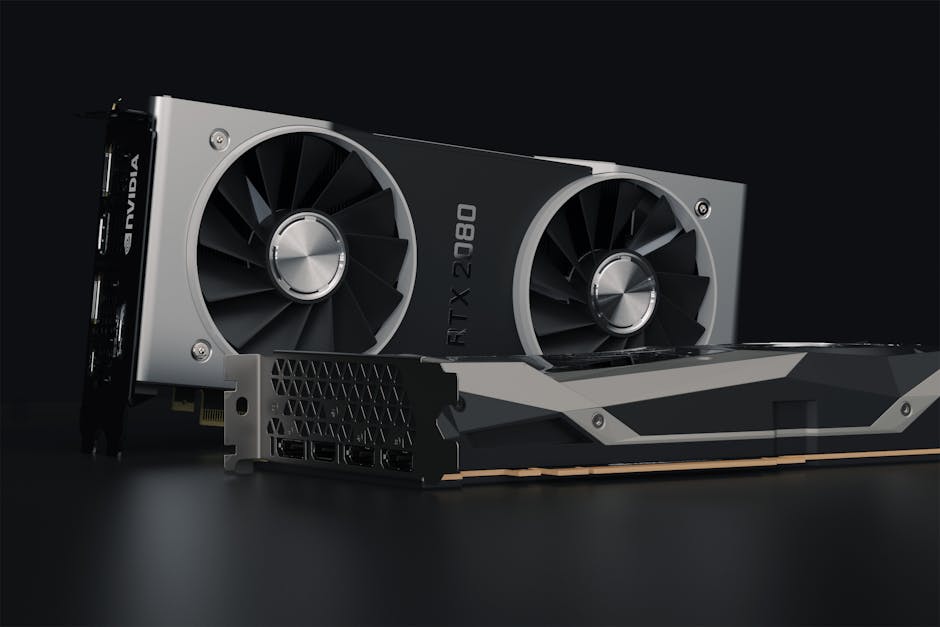
Amazon’s commitment to deploying 2 million Nvidia GPUs within two years represents the single largest public cloud investment in AI hardware to date. This isn’t a vague roadmap; it’s a concrete procurement plan that will reshape the competitive landscape. The GPUs will primarily be Nvidia’s latest Blackwell architecture chips, including the B200 Tensor Core GPUs and GB200 Grace Blackwell Superchips, which offer up to 30 times the performance for large language model inference compared to previous generations.
This expansion serves a clear purpose: to close the “GPU gap” with competitors like Microsoft Azure and Google Cloud. Industry analysts estimate AWS currently trails in raw GPU capacity dedicated to AI workloads. The 2-million-unit order, likely valued in the tens of billions of dollars, is a direct response to enterprise client demand that AWS has struggled to fully meet throughout 2025 and early 2026.
Parallel to this Nvidia deal, AWS is aggressively advancing its proprietary silicon. The second-generation Trainium 2 chip is already available, and development of Trainium 3 is underway. Amazon’s strategy is not one of total reliance. It’s a hedge: use Nvidia’s industry-standard hardware to capture immediate market demand while building cheaper, more efficient custom chips for long-term cost control and service differentiation. For AI content creators, this means more choice—premium Nvidia-powered instances for cutting-edge model training and more cost-optimized Trainium instances for scalable inference and fine-tuning.
Immediate Impact on AI Content Creation Tools and Costs

The flood of new GPU capacity into AWS will have a tangible, downward effect on the cost of AI inference and training over the next 6-24 months. Cloud providers operate on economies of scale. As AWS’s total available compute skyrockets, the cost per token for running models like GPT-4, Claude 3, or open-source Llama 3 variants will decrease. This is not speculation; it’s the fundamental economics of cloud infrastructure.
Content creators relying on API-based services (like OpenAI’s ChatGPT API or Anthropic’s Claude API) may not see direct price cuts immediately, as those companies use their own infrastructure mixes. However, creators and developers who run their own models on AWS, Google Cloud, or Azure will benefit from increased competition. To retain customers, all major cloud providers will be forced to offer more competitive pricing and new, lower-cost instance types. We expect to see the rise of “AI-optimized” EC2 instance families with per-second billing tailored for bursty content generation workloads.
More critically, availability will improve. The GPU shortage has caused waitlists and limited access to the most powerful instances (like AWS’s P5 instances with 8 H100 GPUs). By late 2027, spinning up a cluster with multiple state-of-the-art GPUs for fine-tuning a large model will become a routine operation, not a strategic challenge. This democratizes high-end AI content capabilities for mid-sized publishers and independent creators.
Strategic Actions for AI-Powered Blogs and Media Outlets
Forward-thinking content teams should adjust their AI tooling and infrastructure strategy now to leverage this coming wave of compute. Here are four concrete steps:
- Audit Your AI Stack for Cloud Lock-in: Map every AI tool you use. Identify which are SaaS applications (like Jasper AI, Copy.ai) and which are cloud-hosted models (like a fine-tuned Llama 3 running on AWS SageMaker). For the latter, begin planning a multi-cloud strategy. Design your model deployments to be portable between AWS, Google Cloud, and Azure using containerization (Docker) and orchestration (Kubernetes). This portability will give you negotiating power and resilience.
- Develop a Hybrid Inference Model: Not all content generation requires the latest, most expensive GPU. Implement a tiered system. Use high-cost, high-performance instances (e.g., AWS P5 with Nvidia H200) for generating long-form, flagship content where quality is paramount. Use lower-cost instances (e.g., AWS Trn1 with Trainium 2 chips) for bulk generation of social media posts, meta descriptions, or initial drafts. This cost-optimization can reduce your monthly AI compute bill by 40-60%.
- Plan for On-Demand Fine-Tuning: The barrier to fine-tuning your own specialized content model is about to collapse. Start curating your proprietary data now—your best-performing articles, your unique style guide, your audience engagement data. With readily available GPU clusters, you can economically fine-tune a base model (like Meta’s Llama 3.1 405B) to mimic your editorial voice, adhere to your SEO templates, and generate first drafts that require minimal editing. Budget for experimental fine-tuning projects in Q4 2026 and Q1 2027.
- Integrate Real-Time AI Content Services: The increased capacity will enable more robust real-time AI services. Explore integrating live AI features into your WordPress site using plugins like EasyAuthor.ai for automated content generation, or custom-built solutions using Vercel’s AI SDK or Steamship for agentic workflows. Think beyond static articles: real-time personalized content summaries, dynamic A/B testing of headlines via AI, and automated content refresh for evergreen posts.
The Future: AI Content Creation as a Utility
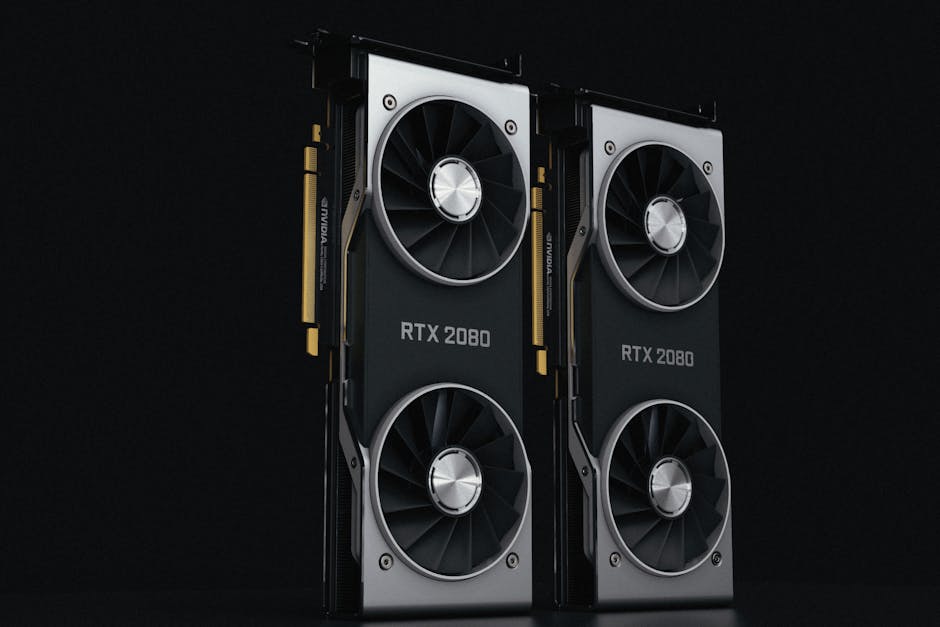
Amazon’s 2-million-GPU bet is a leading indicator that AI compute is transitioning from a scarce resource to a ubiquitous utility, akin to broadband internet or cloud storage. For content strategists, this shift means the competitive edge will no longer come from mere access to AI, but from how creatively and efficiently you wield it.
The winning blogs and media outlets of 2027-2028 will be those that built proprietary workflows around this abundant compute. They will use AI not just for drafting, but for holistic content operations: predictive analytics for topic selection, automated multimedia content generation (images, short videos), hyper-personalization at the reader level, and SEO optimization in real-time. The infrastructure battle between Amazon, Google, and Microsoft is about to put unprecedented power in the hands of creators. The question is no longer “Can we use AI?” but “What transformative content experiences can we build now that cost and capacity are vanishing constraints?”
Begin your infrastructure planning today. The GPU wave is coming.
