Vistra’s Earnings Miss: A Real-Time Test for AI Content Agility

Vistra Energy Corp. (NYSE: VST) experienced a sharp 12.6% stock decline on March 23, 2026, following a significant Q4 earnings miss. The company reported earnings per share (EPS) of $2.18, falling short of the $2.45 analyst consensus, while revenue of $4.58 billion badly missed the $5.75 billion estimate. This event, as reported by Blockonomi, serves as a powerful real-world case study for AI content creators and financial publishers. The rapid market reaction underscores the critical need for speed, accuracy, and strategic insight in content production—areas where AI-powered workflows can provide a decisive competitive edge.
For publishers covering financial markets, earnings season represents a high-stakes content sprint. The 13% single-day plunge in VST shares triggered immediate demand for analysis, explanations, and forward-looking commentary. Manual reporting processes struggle to keep pace with this velocity. AI content creation tools, however, can ingest SEC filings, analyst reports, and real-time market data to generate structured, fact-based articles within minutes of a news event. This agility transforms breaking financial news from a reactive scramble into a strategic, scalable content operation.
The AI Content Creator’s Advantage in Fast-Moving Markets
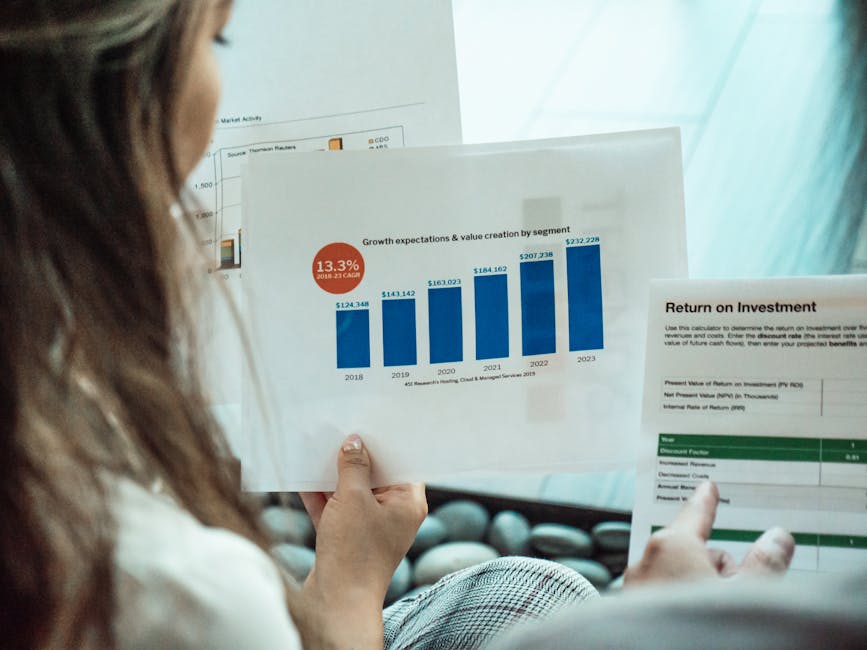
The Vistra earnings report highlights three specific challenges where AI content automation delivers superior results: data processing speed, contextual analysis, and multi-format scalability.
First, speed is non-negotiable. The time between an earnings release and the first wave of market analysis is often less than 30 minutes. AI tools like EasyAuthor.ai, Jasper, or Copy.ai configured for financial data can parse a 100-page 10-K filing, extract key metrics (EPS, revenue, guidance), and draft a coherent summary faster than any human team. This allows publishers to be first to market with accurate reporting, capturing peak search traffic and social media engagement.
Second, contextual depth separates basic reporting from valuable insight. An AI system can be prompted to compare Vistra’s $4.58B revenue against not only consensus estimates but also prior quarters (Q3 2025: $5.12B), year-over-year performance (Q4 2024: $4.89B), and sector benchmarks. It can flag that the $1.17B revenue miss represents a 20% shortfall—a critical detail for assessing severity. Furthermore, AI can integrate supplementary data, such as natural gas price fluctuations or regulatory changes impacting Texas’s power grid, to provide causal analysis beyond the raw numbers.
Third, scalability across content formats maximizes reach. From the core earnings article, an AI workflow can automatically generate a Twitter/X thread highlighting key takeaways, a LinkedIn post for professional investors, a bullet-point summary for a newsletter, and even script outlines for a YouTube or TikTok video explaining the stock drop. This multi-channel approach ensures a single data event feeds an entire content ecosystem, dramatically improving ROI on the initial reporting effort.
Practical AI Workflows for Financial News and Analysis

Implementing AI for financial content requires a structured, tool-augmented workflow. Here is a practical, step-by-step framework for covering events like the Vistra earnings miss.
- Data Ingestion & Triage: Use automation tools like Zapier or Make to monitor news wires (PR Newswire, Business Wire), SEC EDGAR for filings, and financial data APIs (Alpha Vantage, Polygon.io). Set triggers to notify your team and begin content drafting the moment a target company like Vistra releases earnings.
- Structured First Draft: Configure your AI writing tool (e.g., ChatGPT with Advanced Data Analysis, Claude, or a specialized platform like EasyAuthor.ai) with a financial earnings template. The prompt should instruct the AI to:
- Lead with the stock price movement and key missed metrics.
- Structure the body with sections: Earnings vs. Expectations, Revenue Analysis, Management Commentary, Market Reaction, and Analyst Outlook.
- Incorporate specific numbers: “$2.18 EPS vs. $2.45 expected,” “$4.58B revenue vs. $5.75B expected.”
- Add comparative context (previous quarter, year-ago quarter).
- Human-in-the-Loop Enhancement: The AI generates the first draft in under two minutes. The human editor’s role shifts from writer to strategist and verifier. They must:
- Verify all numbers against the primary source (the Vistra earnings release).
- Inject proprietary insight or expert commentary. For example, noting that Vistra’s miss may be linked to milder winter weather reducing electricity demand.
- Optimize for SEO by ensuring key phrases like “VST stock,” “Vistra earnings miss,” and “Vistra Q4 2025” are naturally included.
- Add a forward-looking perspective, perhaps prompting the AI to research and summarize Wall Street analyst rating changes following the report.
- Automated Publishing & Distribution: Use WordPress plugins or custom scripts to auto-publish the finalized article. Simultaneously, use social media automation tools (Buffer, Hootsuite) with AI-generated post variations to promote the content across platforms. Monitor real-time search trends for related queries (e.g., “is VST a buy now?”) to identify follow-up article opportunities.
This workflow compresses what was traditionally a 2-3 hour process into 20-30 minutes, with higher consistency and the ability to cover multiple earnings releases concurrently.
Strategic Takeaways: Building a Resilient AI-Powered News Desk

The Vistra case is not an anomaly; it’s the new normal for market-moving news. For content strategists and publishers, the imperative is clear: integrate AI not as a novelty, but as the core engine of your breaking news operation. The goal is to achieve “analyst-grade” speed with “journalist-grade” narrative.
Invest in training your AI models on your specific editorial voice and sector expertise. Fine-tune a model on your archive of financial analysis so its output mirrors your established style and depth. Develop a library of specialized prompts for different event types: earnings misses, M&A announcements, FDA approvals for biotech, or Fed rate decisions.
Furthermore, use AI for predictive content. Analyze patterns ahead of earnings season to create pre-earnings primers for companies like Vistra. After the event, use AI to quickly generate “what’s next” content, such as “3 Key Challenges for Vistra in Q1 2026” or “How Vistra’s Miss Impacts the Broader Utilities Sector (XLU).” This creates a content funnel that captures audience interest at every stage of the news cycle.
In conclusion, Vistra’s 13% stock plunge is more than a financial headline; it’s a benchmark for modern content velocity. AI content creation tools transform this velocity from a threat into an opportunity. By automating data processing and first-draft creation, they free human creators to focus on high-value analysis, strategy, and audience engagement. The publishers who master this hybrid model will own the breaking news cycle, turning real-time events into durable traffic, authority, and revenue.
