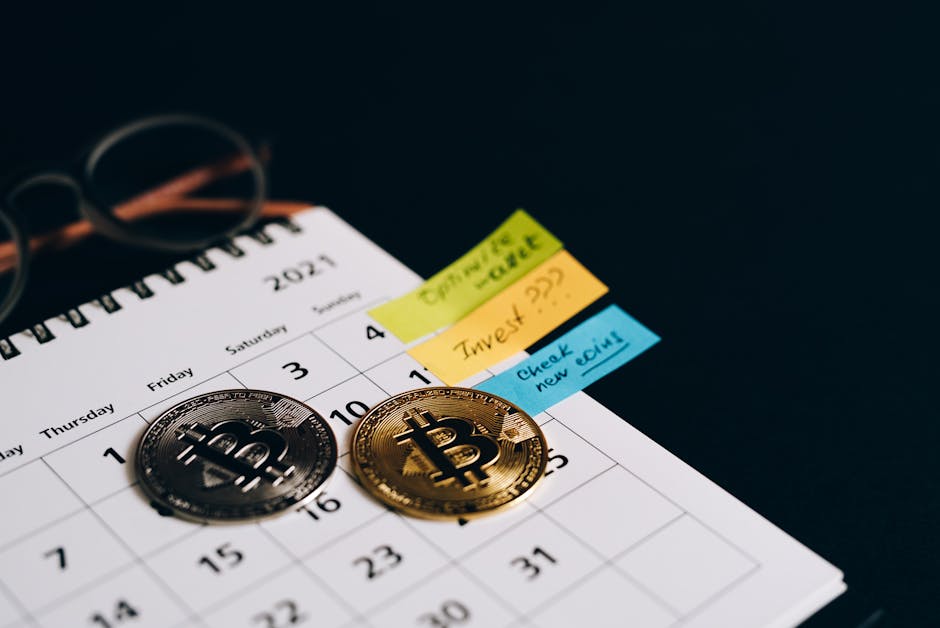
Bitcoin is the digital currency that launched a financial revolution, and if you’re like me a decade ago, you probably heard about it and thought it was just internet funny money for tech nerds. I remember scoffing at the idea, only to watch in awe as its value soared and it became a household name. So, what is this mysterious asset that has everyone from your barber to institutional investors talking? Simply put, Bitcoin is a decentralized digital currency, created and held electronically, that operates without a central bank or single administrator. It’s a peer-to-peer system where transactions happen directly between users, verified by network nodes through cryptography and recorded on a public ledger called a blockchain. This guide is my attempt to unpack it all for you, from the absolute basics to the complex implications, based on years of watching this space evolve from the fringe to the forefront.
What is Bitcoin, Really?
Let’s strip away the jargon. At its core, Bitcoin is digital cash. Imagine if you could email a $20 bill directly to a friend—no bank in the middle, no fees for the transfer, and it arrives instantly. That’s the foundational idea. It was invented in 2008 by an anonymous person or group using the name Satoshi Nakamoto, whose white paper proposed a system for “electronic cash” that didn’t rely on trust in a third party. The key innovation wasn’t just the currency (bitcoin, lowercase ‘b’) but the underlying technology, the Bitcoin network (uppercase ‘B’). This network is maintained by a decentralized community of users, not a company or government. Consequently, it’s resistant to censorship and control. Think of it as the internet of money: a global, open protocol for value exchange.
Furthermore, Bitcoin is often called “digital gold.” This isn’t just a catchy phrase. Like gold, its supply is limited—there will only ever be 21 million bitcoins created. This programmed scarcity is a fundamental part of its design and is why many see it as a hedge against inflation, unlike traditional fiat currencies that governments can print more of. The process of creating new bitcoins, called mining, involves powerful computers solving complex mathematical problems to secure the network. In return for this work, miners are rewarded with new bitcoins, but this reward halves approximately every four years in an event called the “halving,” which further enforces its scarcity. So, is it a currency, an asset, or a technology? The answer, frustratingly and fascinatingly, is all three.
How Does the Bitcoin Network Actually Work?
This is where it gets technical, but I promise to keep it as simple as my own understanding allows. The magic—and the security—of Bitcoin lies in its blockchain. Every transaction made is grouped into a “block.” Miners then compete to validate this block by solving a cryptographic puzzle, a process that requires immense computational power and electricity. The first miner to solve the puzzle gets to add the block to the chain and is rewarded with bitcoin. Once a block is added, the transactions inside are considered confirmed. This chain of blocks is the ledger, and it’s distributed across thousands of computers (nodes) worldwide.
Therefore, altering any past transaction would require an attacker to redo the proof-of-work for that block and all subsequent blocks, which is computationally practically impossible as long as the majority of the network is honest. This is what makes Bitcoin secure and tamper-proof. Your ownership of bitcoin is proven by cryptographic keys: a public key, which is like your bank account number (your Bitcoin address), and a private key, which is like your ultra-secret PIN. Lose your private key, and you lose your bitcoin forever—there’s no customer service hotline. This system of verification and consensus replaces the need for a trusted middleman like Visa or a central bank.
The Role of Wallets and Keys
To use Bitcoin, you need a wallet. This isn’t a physical leather billfold but a software program that stores your private and public keys and interacts with the blockchain. Wallets can be hosted online (hot wallets, convenient but less secure), on your desktop or phone, on a dedicated hardware device (cold wallets, very secure), or even on a piece of paper. Your public address is what you share to receive funds. Your private key is what you use to sign transactions and spend funds; it must never be shared. Think of it this way: the public address is your mailbox (anyone can drop a letter in), and the private key is the key to open it (only you should have it).
Why Did Bitcoin Become So Valuable?
Value is a tricky concept. Something is worth what people believe it’s worth. Bitcoin’s value stems from a combination of its unique properties. First, its decentralized nature appeals to those wary of government monetary policy or banking systems. Second, its fixed supply creates digital scarcity, a novel concept in a world of endless digital copying. As demand increases for a supply that is strictly limited, the price tends to rise. This was supercharged by a cultural phenomenon: the narrative of Bitcoin as a revolutionary store of value and a generational investment opportunity.
Moreover, major institutional adoption played a huge role. When companies like Tesla and MicroStrategy added bitcoin to their corporate treasuries, and when financial giants like Fidelity began offering crypto services, it signaled legitimacy to the traditional finance world. This created a powerful feedback loop of increasing demand and price discovery. Of course, this journey hasn’t been smooth. Bitcoin’s price is notoriously volatile, with breathtaking crashes following euphoric rallies. This volatility is a feature of its relatively young, speculative market, but it also presents both massive risk and potential reward for investors.
“Bitcoin represents a fundamental shift: it’s the first time we’ve had a digital asset that is both scarce and globally accessible without permission. That combination is historically unprecedented.” – Common sentiment among crypto analysts.
Buying, Selling, and Using Bitcoin Today
Getting bitcoin is easier than ever. You can buy it on centralized exchanges like Coinbase, Kraken, or Binance using your local currency. The process typically involves creating an account, verifying your identity (Know Your Customer laws apply), linking a bank account or debit card, and placing an order. You can buy fractions of a bitcoin—you don’t need to shell out for a whole coin. Once purchased, for security, it’s wise to transfer your bitcoin off the exchange into a personal wallet you control. This is the principle of “not your keys, not your coins.”
So, what can you actually do with it? While its use as everyday currency has grown slower than some hoped, you can:
- Hold it as a long-term investment (“HODL” in crypto slang).
- Use it to purchase goods from a growing number of online and physical retailers.
- Send money internationally with relatively low fees compared to traditional remittance services.
- Use it as collateral for decentralized finance (DeFi) loans.
Selling is just the reverse process on an exchange. However, be mindful of tax implications; in many countries, selling bitcoin for a profit is a taxable capital gains event.
The Major Risks and Criticisms You Can’t Ignore
Let’s not be naive. Bitcoin is not a risk-free paradise. The first and most obvious risk is extreme price volatility. You could see 20% of your investment vanish in a day. It’s not for the faint of heart or for money you can’t afford to lose. Second, while the network itself is secure, the ecosystem around it is prone to hacks, scams, and exchange failures. History is littered with stories of people losing their life savings to phishing attacks or collapsed platforms.
Third, there’s the significant environmental criticism due to the energy-intensive proof-of-work mining process. While estimates vary, Bitcoin mining does consume a substantial amount of electricity, often sourced from fossil fuels. The industry is rapidly moving towards renewable energy, but the concern remains valid. Finally, there’s regulatory risk. Governments are still figuring out how to classify and regulate Bitcoin. A harsh regulatory crackdown in a major economy could negatively impact its price and accessibility. Are you prepared to handle these potential storms?
Bitcoin’s Future: Where Do We Go From Here?
Predicting the future of Bitcoin is a fool’s errand, but we can look at the trends. Technologically, development continues on second-layer solutions like the Lightning Network, which aims to make transactions faster and cheaper for everyday use. Institutionally, adoption is likely to deepen, with more ETFs, retirement fund offerings, and integration into traditional finance. From a macro perspective, Bitcoin’s narrative as “digital gold” and an inflation hedge will be tested during periods of economic uncertainty.
Furthermore, its role in the broader “Web3” vision—a decentralized internet—cannot be understated. Bitcoin could serve as the foundational, secure base layer for a new economic system. However, it also faces competition from thousands of other cryptocurrencies (altcoins) that promise more features or faster speeds. Will Bitcoin remain the dominant leader, or will it be surpassed? My take, after years of observation, is that its first-mover advantage, unparalleled security, and robust network effect give it a staying power that is incredibly difficult to challenge. It has evolved from an experiment into an institution.
Conclusion
Bitcoin is a fascinating, complex, and transformative technology that has reshaped how we think about money, trust, and value. It’s a volatile and risky asset, a powerful technological innovation, and a cultural phenomenon all rolled into one. From its mysterious origins to its current status as a multi-trillion-dollar asset class, the journey of Bitcoin has been nothing short of remarkable. Understanding it requires looking past the price headlines and grasping the principles of decentralization, cryptographic security, and programmable scarcity.
Whether you see it as the future of finance or a speculative bubble, its impact is undeniable. It has sparked a global conversation about the nature of money and empowered individuals with financial sovereignty. As we move forward, Bitcoin will continue to evolve, face challenges, and provoke debate. The key is to educate yourself, understand the risks, and never invest more than you can afford to lose. So, are you ready to dive deeper into the world of Bitcoin and see where this digital revolution leads?