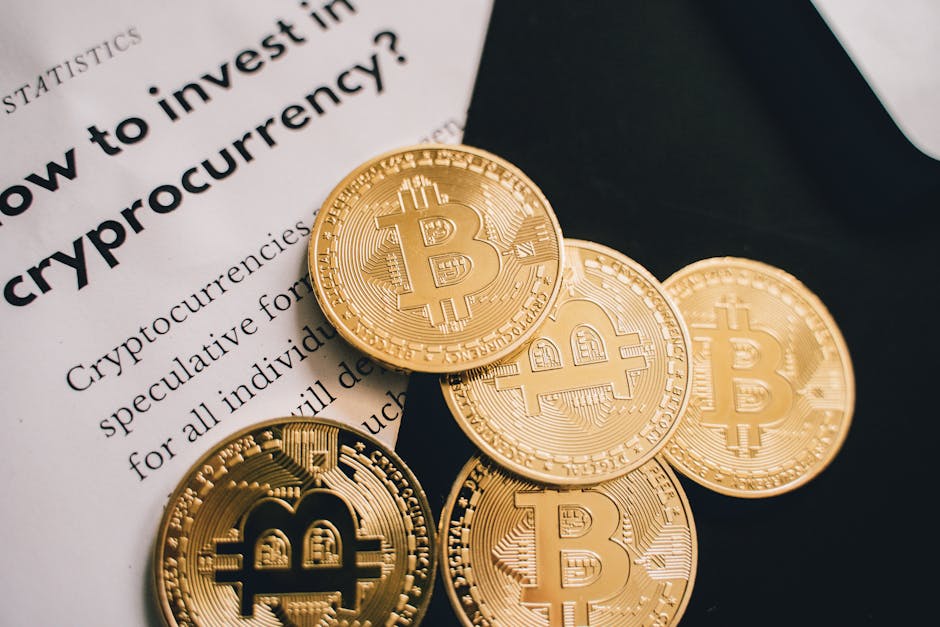
Let’s be real for a second. The first time I heard about Bitcoin, I thought it was either a scam or some weird internet money for tech nerds. I pictured a shady guy in a basement mining digital coins next to a pile of empty energy drink cans. Fast forward a few years, and here I am, not only using it but trying to explain it to my mom without her eyes glazing over. So, what is Bitcoin, really? At its core, Bitcoin is a decentralized digital currency, created in 2009 by an anonymous person (or group) using the name Satoshi Nakamoto. It operates without a central bank or single administrator, and transactions are verified by network nodes through cryptography and recorded on a public ledger called a blockchain. But that’s the textbook definition. The real story is way more interesting, full of wild price swings, philosophical debates about money, and a community that can feel like a combination of a revolutionary movement and a high-stakes casino. This guide is my attempt to cut through the noise and give you the straight talk on everything from the tech to the tactics.
What Is Bitcoin, Really? Breaking Down the Basics
Okay, let’s start with the absolute basics. Imagine you have a ten-dollar bill. You can hold it, you can give it to a friend, and that friend can give it to someone else. There’s no central record of every time that bill changes hands; the bill itself is the proof. Now, imagine that bill is purely digital. How do you prevent someone from just copying and pasting it a million times? This is the “double-spend” problem, and it’s the puzzle that plagued digital cash for decades. Satoshi Nakamoto’s 2008 whitepaper, “Bitcoin: A Peer-to-Peer Electronic Cash System,” proposed an elegant solution: a decentralized ledger maintained by a network of computers, not a trusted third party like a bank. This ledger is the blockchain. Every transaction is grouped into a “block,” cryptographically sealed, and added to a chain of previous blocks. Consequently, altering a past transaction would require redoing all the work that came after it, which is practically impossible for anyone without control of the majority of the network’s computing power.
The Blockchain: More Than Just a Buzzword
You’ll hear “blockchain” thrown around like confetti at a tech conference. But what does it actually do for Bitcoin? Think of it as a public, digital receipt book that everyone on the network has a copy of, but no single person owns. When you send Bitcoin to a friend, your transaction is broadcast to this network. Special computers called “miners” then compete to solve a complex mathematical puzzle to validate the transaction and add it to the next block. In return for this work, which secures the network, the winning miner is rewarded with newly created Bitcoin (the “block reward”) and transaction fees. This process is called proof-of-work. It’s intentionally energy-intensive to make it costly to attack the network. The result? A system where trust is established not by a central authority saying “this transaction is valid,” but by a transparent, mathematical consensus among thousands of independent participants.
Why Does Bitcoin Have Value? The Scarcity Argument
Here’s where people get really confused. If it’s just code, why is one Bitcoin worth tens of thousands of dollars? The short answer: because people believe it has value, much like gold or a famous painting. However, Bitcoin has some unique properties that fuel this belief. Firstly, and most importantly, it is programmatically scarce. The Bitcoin protocol dictates that only 21 million Bitcoins will ever be created. This hard cap is written into its code and is enforced by the network itself. As of now, over 19 million have already been mined. This scarcity is a direct contrast to government-issued currencies (fiat money), which central banks can print more of, potentially leading to inflation. Secondly, it’s durable, portable, divisible, and recognizable—all traits of a good form of money. You can send millions of dollars worth of Bitcoin across the globe in minutes for a relatively small fee, something that’s cumbersome and expensive with traditional banking systems. For instance, during political or economic instability in countries like Venezuela or Nigeria, Bitcoin has acted as a lifeline, allowing people to preserve wealth and make international payments when local currency fails.
Furthermore, Bitcoin’s value is also tied to its utility as a censorship-resistant network. No government or corporation can freeze a Bitcoin wallet or reverse a transaction once it’s confirmed. This property attracts users who prioritize financial sovereignty. Is it volatile? Absolutely. The price chart looks like a heart monitor for a caffeine-addicted squirrel. But its core attributes—scarcity, decentralization, and security—provide a foundation for its value proposition that continues to attract investors, technologists, and everyday users. For a deeper dive into the economic theories behind it, the Wikipedia page on Bitcoin offers a solid starting point.
How to Buy and Store Your First Bitcoin (Safely!)
Alright, you’re intrigued. You want to get some. How do you actually do it without getting ripped off? The process is surprisingly straightforward these days, but security is paramount. The golden rule is: Not your keys, not your coins. This means if you don’t control the private keys to your Bitcoin, you don’t truly own it—the exchange or service holding it does.
Step 1: Choosing an Exchange
You’ll typically start on a cryptocurrency exchange. Think of it like a stock brokerage for digital assets. Major, reputable platforms like Coinbase or Kraken are good for beginners. You’ll need to create an account, verify your identity (this is called Know Your Customer or KYC), and link a payment method like a bank account or debit card. Once your account is funded, you can place an order to buy Bitcoin at the current market price. Start small! Treat your first purchase as a learning experience, not a life-changing investment.
Step 2: Secure Storage: Wallets 101
Once you buy Bitcoin on an exchange, you should move it to a personal wallet for safekeeping. Leaving it on an exchange is like leaving cash in a mall—convenient but risky. Wallets come in two main flavors: hot and cold. A hot wallet is software connected to the internet, like the Exodus or Trust Wallet apps. They’re great for small amounts you plan to use or trade frequently. A cold wallet is a hardware device, like a Ledger or Trezor, that stores your private keys offline. This is the safest option for long-term storage of significant amounts. Setting one up involves writing down a 12 to 24-word recovery phrase (your “seed phrase”) on paper and storing it in a fireproof, waterproof, and secret location. Lose this phrase, and your Bitcoin is gone forever. No customer service can help you.
Bitcoin Mining: Is It Still Profitable in 2024?
Let’s talk about the engine room: mining. Remember those miners validating transactions? In the early days, you could mine Bitcoin on a decent laptop. Today, it’s a multi-billion dollar industrial operation. Individual miners now use specialized computers called ASICs (Application-Specific Integrated Circuits) that are incredibly powerful and energy-hungry. Profitability depends on a few key factors: the price of Bitcoin, the cost of your electricity (this is the biggest variable), the efficiency of your mining hardware, and the overall network difficulty (which adjusts automatically to ensure a new block is found roughly every 10 minutes). For most people in regions with high electricity costs, solo mining is almost certainly a money-losing endeavor.
So, how do people get involved? Many join mining pools, where groups of miners combine their computing power to have a more consistent chance of earning block rewards, which are then shared among participants based on contributed work. There’s also the option of cloud mining, where you rent mining power from a company, but this is fraught with scams and is generally not recommended. The environmental impact of Bitcoin’s energy use is a major point of criticism. However, it’s worth noting that a significant and growing portion of mining is powered by stranded or renewable energy, like excess hydroelectric power or flared natural gas, as miners seek the cheapest power sources globally. The conversation around crypto sustainability is evolving rapidly.
The Risks and Challenges You Need to Know
Bitcoin isn’t a risk-free magical internet money tree. Going in with your eyes wide open is crucial. First and foremost is price volatility. The value can swing 10% or more in a single day. You must be emotionally prepared to see your investment value cut in half, as it has multiple times throughout its history. Never invest money you can’t afford to lose. Secondly, while the Bitcoin network itself has never been hacked, the surrounding ecosystem is a target. Exchanges and online wallets have been breached, and phishing scams are rampant. This circles back to the importance of self-custody and security hygiene.
Regulatory uncertainty is another huge factor. Governments around the world are still figuring out how to classify and regulate cryptocurrencies. A major country banning Bitcoin or imposing harsh rules could negatively impact its price and usability. Furthermore, the user experience, while improving, is still not as seamless as tapping a credit card. You have to manage long cryptographic addresses, transaction fees (which can spike during network congestion), and the finality of payments—there are no chargebacks. For a balanced view on financial technology risks, resources from the U.S. Federal Reserve can provide context. Are you prepared to be your own bank? It comes with both freedom and responsibility.
Bitcoin vs. The Rest: How It Stacks Up to Altcoins
Bitcoin was the first, but it’s no longer the only game in town. Thousands of other cryptocurrencies, collectively called “altcoins” (alternative coins), have emerged. So, what makes Bitcoin different? Its primary focus is on being a secure, decentralized, and sound monetary asset. It’s often called “digital gold.” Other projects, like Ethereum, aim to be programmable platforms for decentralized applications (“world computers”). These altcoins often promise faster transactions or more features, but they usually make trade-offs in decentralization or security. For example, a network that promises ultra-fast, cheap transactions might achieve that by having far fewer, more centralized nodes validating the network.
Bitcoin’s development is intentionally conservative and slow. Changes to its core protocol are debated for years and require overwhelming consensus. This makes it robust and secure but less agile. Meanwhile, exploring the world of blockchain technology reveals a spectrum of approaches. When evaluating any cryptocurrency, ask yourself: Is it sufficiently decentralized? What is its security model? Does it have a clear, compelling use case that isn’t already served? Many altcoins come and go, but Bitcoin’s first-mover advantage, brand recognition, and massive network security give it a staying power that is hard to replicate.
Practical Uses: What Can You Actually Do With Bitcoin Today?
Beyond just buying and hoping the price goes up, how can you use it? The landscape is expanding. Firstly, it’s a powerful tool for cross-border remittances. Sending money home to family in another country can be faster and cheaper than traditional services like Western Union. Secondly, a growing number of merchants, both online and in physical stores, accept Bitcoin directly or through payment processors like BitPay. You can buy everything from a domain name to a luxury car with it. Thirdly, it’s becoming integrated into the traditional financial system. Major firms like Fidelity and BlackRock are offering Bitcoin investment products, and you can even find Bitcoin-linked credit cards that give you rewards in crypto.
Perhaps one of the most interesting developments is its use in decentralized finance (DeFi). While most DeFi activity happens on other blockchains, Bitcoin can be “wrapped” (represented as a token on another chain) to be used in lending, borrowing, and earning interest. Furthermore, for people living under authoritarian regimes or experiencing hyperinflation, Bitcoin provides a means to preserve capital and engage in commerce outside of state control. It’s not yet a universal daily spending currency for coffee, but its utility as a sovereign store of value and a borderless payment rail is very real and actively used by millions.
Conclusion
So, where does that leave us with Bitcoin? It’s a fascinating, complex, and often misunderstood innovation. It’s not a get-rich-quick scheme, but it is a profound experiment in creating a form of money that operates outside the traditional financial system. Its core innovations—decentralization, cryptographic security, and programmable scarcity—have sparked a global conversation about the future of finance. Whether you see it as digital gold, a revolutionary payment network, or a speculative asset, its impact is undeniable.
My advice? Start with curiosity, not greed. Learn the basics of how it works, understand the security practices, and only commit an amount of money that wouldn’t keep you up at night if it vanished. The world of Bitcoin and cryptocurrency is evolving at breakneck speed, and staying informed is your best defense and greatest opportunity. What will you use it for first—a long-term investment, an international payment, or simply as a way to learn about a new technological frontier? The choice, much like the network itself, is decentralized and yours to make.