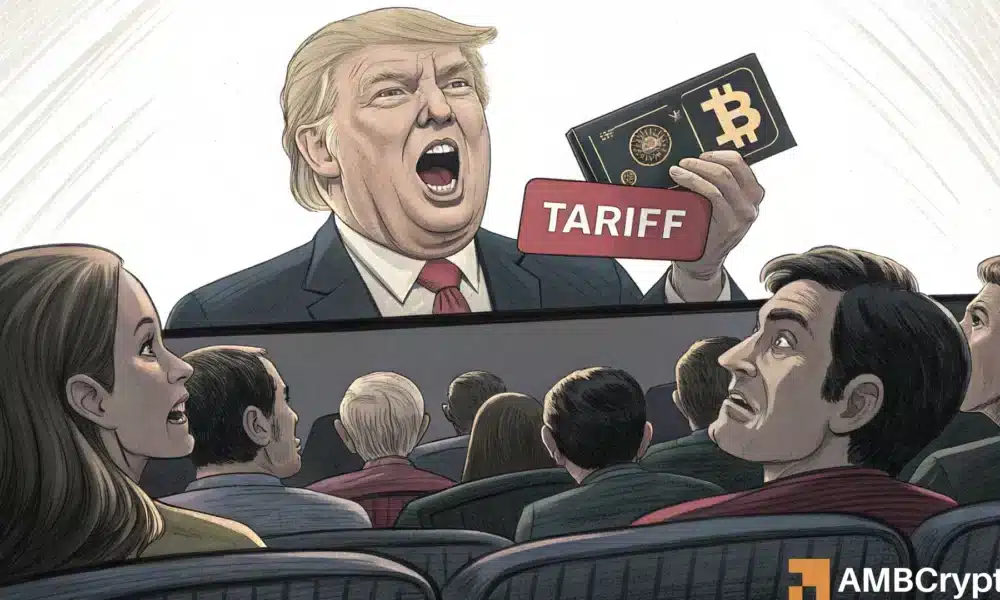
Understanding the Link Between Tariffs and Bitcoin
The cryptocurrency market has always been sensitive to macroeconomic shifts, and the latest 25% tariff announced by former President Donald Trump on nations trading with Iran is no exception. This move has sparked discussions about its impact on Bitcoin (BTC) and its broader market. While the digital currency continues to show resilience, deeper analysis reveals a complex narrative.
Bitcoin’s Market Behavior Amid Economic Fluctuations
Currently trading near $92,000 after a marginal 1.2% upward movement, Bitcoin shows signs of structural resilience despite fears of potential market distribution. Historically, Bitcoin has operated as a hedge in times of volatility, but factors such as long-term holder (LTH) behavior could signal hesitation in the market. According to Glassnode, the current LTH activity corresponds with higher levels of uncertainty, a trend commonly observed during the onset of bear markets.
On the other hand, the crypto Fear and Greed Index has rebounded significantly since November, reaching a neutral zone, indicating improving market sentiment. With January historically favoring Bitcoin, there’s cautious optimism that this could set the stage for a push toward $100,000. However, the ongoing tariff developments may shift this outlook.
Will U.S.-China Trade Tensions Resurface?
The strategic implications of Trump’s tariff announcement extend beyond the surface. China, being Iran’s largest trading partner, accounting for 30% of its foreign trade, may respond strongly, potentially exacerbating U.S.-China trade tensions. Historically, such escalations have led to market-wide FUD (Fear, Uncertainty, and Doubt), resulting in significant pullbacks in Bitcoin prices. For example, Bitcoin experienced a 30% drawdown following a 100% tariff levy in October, which also saw long-term holders realize profits exceeding $1.5 billion.
Potential Risks and Bitcoin’s Support Levels
As of now, Bitcoin’s critical near-term support level stands at $80,000—closely aligned with the average cost basis of many ETF holders. However, with increased uncertainty stemming from geopolitical developments, the downside risk remains a possibility. Investors should closely monitor on-chain signals and macroeconomic trends to make informed decisions.
How to Stay Prepared in an Uncertain Market
For those looking to diversify their portfolios or secure their investments in turbulent times, tools like Trezor’s Bitcoin Hardware Wallet (available here) provide enhanced security for cryptocurrency holdings. Securing your assets can be a crucial step in navigating unpredictable markets.
The cryptocurrency ecosystem remains dynamic, and Bitcoin’s ability to weather these challenges will depend heavily on both macroeconomic conditions and the continued confidence of its holders and institutional players. Stay informed and watch for updates as the situation evolves.