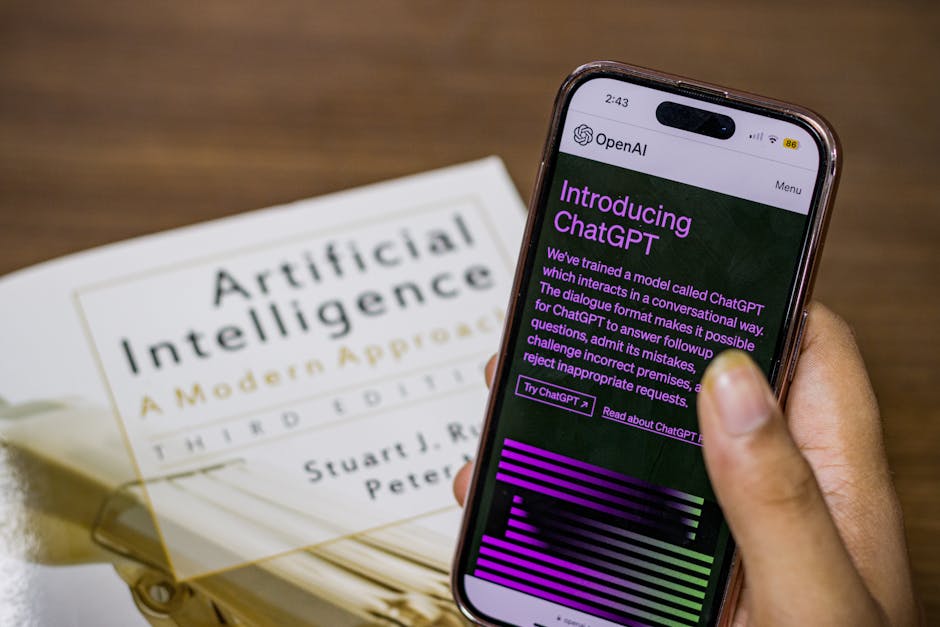
In 2025, AI technology took yet another leap forward, redefining efficiency, creativity, and specialized capabilities across industries. The focus shifted from finding a single ‘best’ model to assembling customized stacks of specialized models tailored to unique requirements. This article dives into the groundbreaking AI large language models (LLMs) that made headlines in 2025, analyzing their strengths and best-use cases.
The Rise of AI Stacks
Rather than pursuing one all-encompassing AI, users in 2025 embraced diverse AI stacks. Each model served a specific purpose, from coding and creative writing to workflow automation. This approach ensured optimized results based on task complexity and user priorities.
Best AI Models for Developers
Claude Opus 4.5
The go-to choice for professional developers, Claude Opus 4.5 excelled at solving complex coding challenges. Known for its exceptional reasoning capabilities, minimal hallucination rates, and solid reliability in production scenarios, this model earned an 80.9% SWE-bench Verified score. However, its premium pricing and high context usage made it better suited for serious professionals.
Best Value: DeepSeek V3.2
DeepSeek emerged as a budget-friendly alternative, costing just $0.28 per million input tokens while offering MIT-licensed weights. Users gained complete ownership and flexibility for modifications, making it a favorite among startups and small-scale developers.
Product Recommendation: Strengthen your development workflow by using Microsoft Azure’s AI capabilities, including tools for enhanced integration with popular models like GPT-based architectures. Discover more on Microsoft Azure.
Agentic AI: Transforming Workflows
Best in Category: GPT-5.2 ‘Thinking’ Model
OpenAI’s GPT-5.2 gained traction as the leading agentic AI with an impressive 80% SWE-bench Verified score. Equipped with dynamic reasoning capabilities, it intelligently balanced complex execution and quick responses. This model became a game-changer for businesses needing end-to-end solutions.
Best Value: MiniMax M2
MiniMax M2 proved invaluable for enterprises scaling AI-driven tasks. Its sparse MoE architecture provided low latency and cost-efficient processing. Perfect for automated support, R&D workflows, and knowledge management.
Versatile and Creative LLMs
GPT-5.2: The Leading All-Rounder
GPT-5.2 dominated the market with 60.5% market share and 800 million active users weekly. Its groundbreaking memory features allowed for meaningful interactions across sessions, boosting user relationships without repetitive context filling.
Best Value: Alibaba’s Qwen 2.5
Open-source and versatile, Qwen 2.5 became the backbone for fine-tuned models worldwide. Supporting multiple languages and offering an Apache 2.0 license, it offered flexibility and accessibility for businesses needing customizable AI solutions.
Creativity and Art: Pushing Boundaries
Best for Writers: GPT-5 Pro
OpenAI’s GPT-5 Pro scored the highest on writing benchmarks, excelling in storytelling and content creation. However, its $200/month price tag made it best suited for professional creators who required high-quality drafting tools.
Best Alternative: Sudowrite’s Muse
Tailored for creative writing, Muse offered unique narrative engineering pipelines for crafting structured stories. Exclusively available on the Sudowrite platform, it became a favorite for aspiring authors and screenwriters.
Product Recommendation: Writers can complement AI models like GPT-5 Pro with Grammarly Premium for polished, error-free content. Learn more at Grammarly.
Emerging Models and Trends
NVIDIA’s Nemotron 3 family and Alibaba’s Qwen3 showcased the potential for hybrid architecture and multilingual research models, respectively. These emerging players offered businesses new opportunities to scale, innovate, and customize operations in 2025 and beyond.
Conclusion
2025 marked a turning point for AI as LLMs matured into specialized tools that met diverse business and creative needs. From coding agents to creative writing models, this year’s innovations proved that the future of AI lies in versatility and task-specific excellence. Adopting the right mix of models can revolutionize workflows, reduce costs, and unlock new levels of productivity.
Ready to explore these game-changing AI tools? Visit platforms like OpenAI, Sudowrite, and DeepSeek to get started.