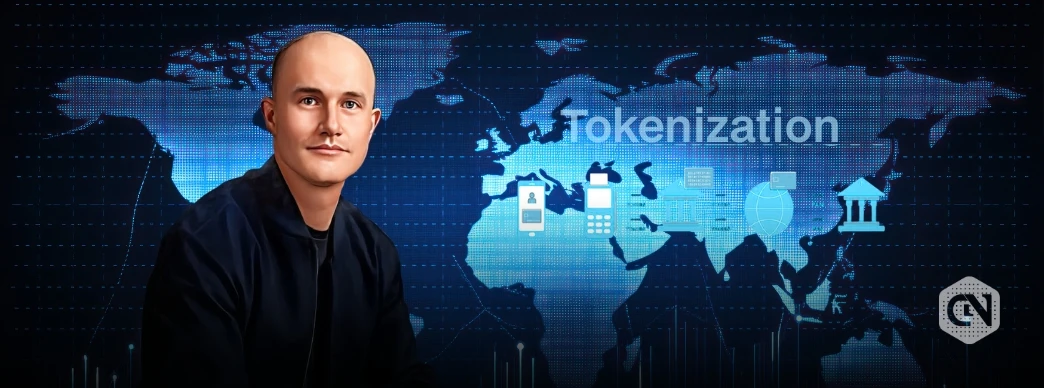
The global wealth gap has been a growing concern for years. As the rich get richer and the poor struggle to catch up, innovative solutions are needed to tackle this systemic issue. Recently, Brian Armstrong, CEO of Coinbase, shed light on how tokenization could potentially bridge the chasm of global wealth inequality. His thought-provoking insights have sparked a new discussion on leveraging blockchain technology to democratize wealth creation and distribution.
The Global Wealth Gap: A Critical Problem
According to the World Inequality Report 2026, the wealthiest 10% of the global population owns a staggering 75% of all personal wealth, leaving the bottom 50% with just 2%. This divide has been escalating over time. Alarmingly, the wealth share of the top 0.001% has increased from 4% in 1995 to over 6% today.
The disparity is further intensified by the imbalance between labor and capital income. Over the past four decades, capital income has skyrocketed by 136%, while labor income has grown only by 57%. This gap compounds over time, creating significant barriers for those unable to invest in wealth-generating assets. Armstrong observes that this inequality is perpetuated by traditional capital markets that favor the wealthy.
What Is Tokenization?
Tokenization is the process of converting ownership rights of physical or financial assets into digital tokens on a blockchain. This revolutionary technology offers an opportunity for people across the globe to invest in high-value assets, such as real estate or company shares, without requiring large amounts of initial capital. According to Armstrong, tokenization provides a more inclusive approach to building wealth, allowing individuals from different income brackets to own fractional shares of valuable assets.
For instance, BlackRock’s tokenized Treasury fund demonstrates the increasing institutional interest in this space. With over $2.5 billion in assets, it serves as a prime example of how tokenization can attract mainstream financial adoption.
The Rise of Tokenized Assets
The market for tokenized real-world assets (RWAs) is rapidly expanding. By mid-2025, tokenized U.S. Treasuries were valued at $7.4 billion, reflecting an 80% growth since the beginning of the year. Deutsche Bank Research reports that tokenized asset issuance has soared from $59.7 million in 2018 to approximately $300 billion by October 2025. As more institutions, such as custodians and asset managers, adopt tokenization, the concept is expected to revolutionize global financial markets.
A Path to Closing the Wealth Gap
By enabling fractional ownership, tokenization has the potential to empower individuals who have traditionally been excluded from lucrative investment opportunities. This shift could help address the systemic issues of wealth inequality. A report by Oxfam in 2025 revealed that billionaire fortunes grew by $2.5 trillion in a single year—an amount that could theoretically eradicate extreme poverty 26 times over. Clearly, new financial mechanisms like tokenization are necessary to change this narrative.
Final Thoughts and a Related Product
The ongoing boom in blockchain technology and tokenized assets could pave the way for a more inclusive global economy. Innovations like tokenization allow people from diverse financial backgrounds to invest in opportunities that were once reserved for the wealthy elite.
If you’re considering stepping into the world of tokenized assets, platforms like Coinbase make it easier to get started. With a user-friendly interface and a commitment to secure transactions, Coinbase is a reliable entry point for exploring tokenized investments.
As the digital landscape continues to evolve, tokenization could truly become the equalizer the world needs to address wealth inequalities.