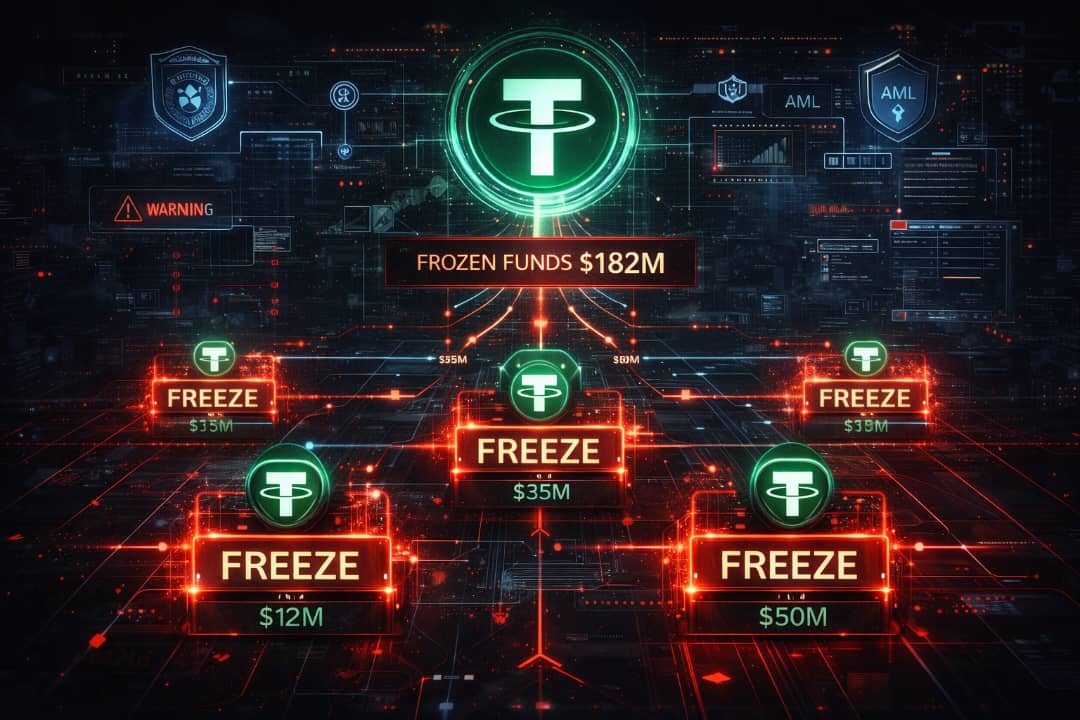
Tether, one of the most widely used stablecoins globally, has executed one of its largest wallet freezes to date, blocking access to over $182 million in USDt across five wallets on the Tron blockchain. This significant action, which took place on January 11, has reignited discussions around the role of centralized stablecoin issuers in law enforcement and the broader regulation of blockchain activity.
The Details Behind Tether’s $182M Freezes
According to onchain data flagged by Whale Alert—an independent blockchain monitoring service—five Tron wallets, each holding between $12 million and $50 million, were restricted by Tether on the same day. While Tether has not disclosed the wallet owners, the company confirmed that the freezes were carried out following a formal request from law enforcement authorities.
A Tether spokesperson stated, “Tether has frozen assets in connection with an ongoing investigation, following a formal request from law enforcement authorities. The relevant agency has been working on this case for several months.”
This indicates a high level of coordination between Tether and regulatory bodies, reflecting the company’s growing role in international compliance and blockchain monitoring. The timing and scale of this enforcement action highlight its significance in addressing potential misuse of stablecoins for illicit activities.
Regulation and Oversight in the Stablecoin Space
Since 2023, Tether has frozen approximately $3.3 billion in USDt and has blacklisted over 7,200 wallet addresses, according to data provided by AMLBot. These actions demonstrate the increasing regulatory scrutiny in the digital asset space. While decentralized cryptocurrencies like Bitcoin remain outside centralized control, stablecoins like USDt are designed with mechanisms that allow issuers to reverse or freeze transactions in collaboration with law enforcement.
The increasing number of wallet freezes reflects regulatory concerns about the misuse of stablecoins, particularly on networks like Tron. Known for their low transaction fees and high speed, these networks facilitate large-scale transactions, making them appealing for both legitimate businesses and illicit activities.
Tether’s Collaboration with Law Enforcement
To comply with global regulatory requirements, Tether updated its policies in late 2023 to include voluntary wallet freezes in response to requests from agencies such as the U.S. Treasury’s Office of Foreign Assets Control (OFAC). This policy enables asset freezes for wallets flagged on OFAC’s Specially Designated Nationals (SDN) list or any other trusted law enforcement watchlists. The recent freezes on January 11 appear to fall under this framework.
While these efforts enhance security and compliance, they also raise questions about centralization. Many blockchain enthusiasts value the decentralization of cryptocurrencies. However, stablecoins, by design, provide a centralized layer of control to meet legal requirements and prevent misuse.
The Impact on Cryptocurrency Markets
Although no major market disruptions have been observed so far, large-scale freezes like these could affect the liquidity of stablecoin markets. On networks like Tron, where significant USDt transactions take place daily, heightened regulatory oversight could introduce new compliance requirements for businesses and trading platforms.
For everyday users, Tether maintains that these actions predominantly target high-risk or illicit activities, ensuring the stability and integrity of the broader blockchain ecosystem.
Keeping Your Investments Safe
This latest enforcement action serves as a reminder to cryptocurrency users to exercise caution and comply with local regulations. For anyone concerned about transparency and safety, using tools like AMLBot can help monitor wallet activity and ensure compliance.
Additionally, keeping up with regulations and the latest trends in blockchain enforcement is key to protecting your investments. If you’re interested in cryptocurrency and blockchain technology news, consider subscribing to newsletters or following reliable sources such as NullTx.
Disclosure: This article is for informational purposes only and does not constitute legal, financial, or investment advice. Always conduct thorough research before engaging in cryptocurrency transactions.