What Happened with Starknet?
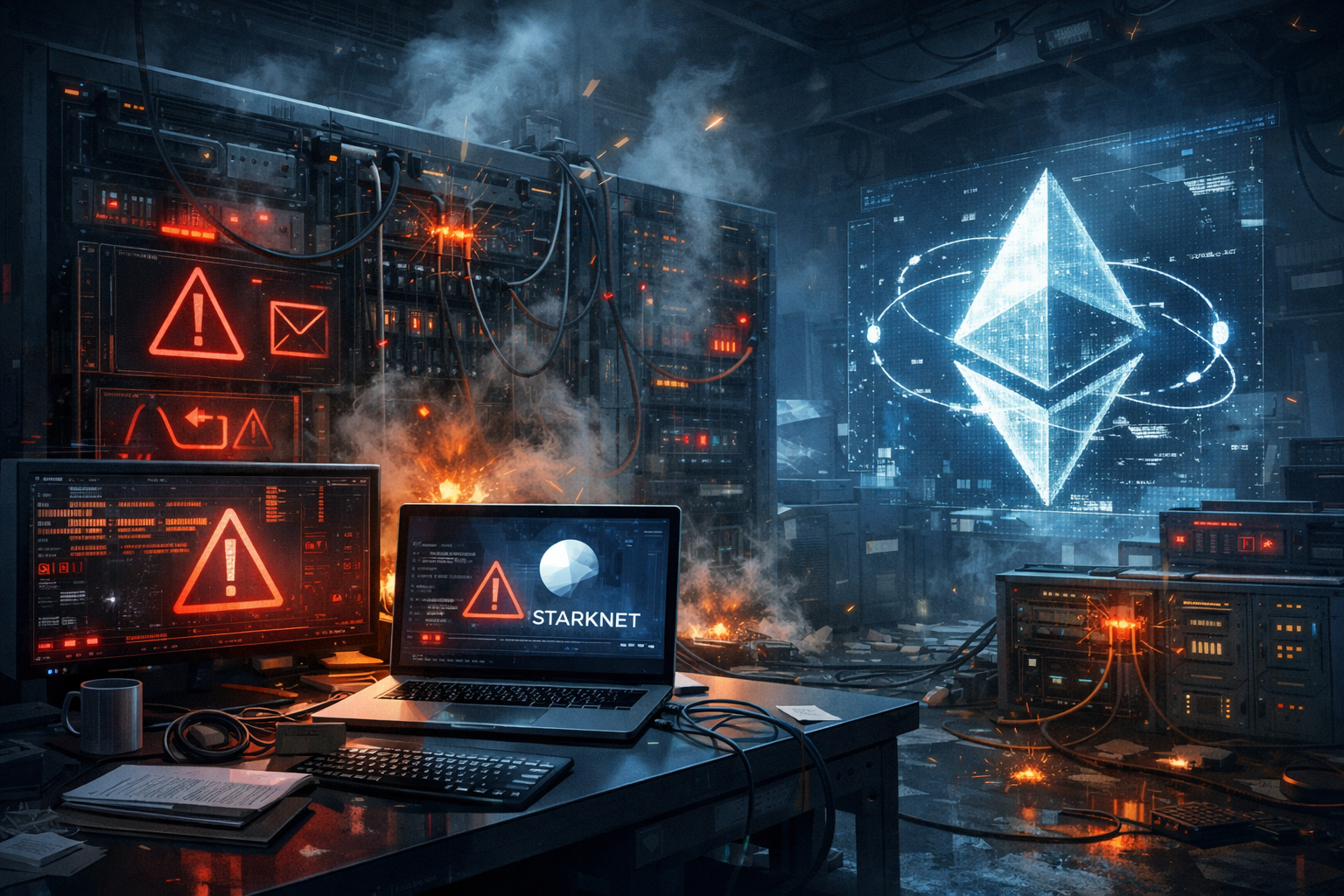
Starknet, a prominent Ethereum Layer 2 solution, experienced an unexpected mainnet disruption that caught the attention of the blockchain community. Known for using zero-knowledge rollups to batch transactions off-chain and settle them back on Ethereum, Starknet entered 2026 facing a temporary downtime that interrupted network activity.
At the time of the disruption, the downtime had lasted more than two hours, raising concerns about reliability amidst Ethereum’s growing need for scaling solutions. This latest incident underscores the importance of operational stability as developers and users increasingly depend on Layer 2 solutions for cost-efficient and fast transaction execution.
Understanding Zero-Knowledge Rollups and Starknet’s Role
Starknet operates by batching transactions off-chain and verifying them through cryptographic proofs before settling them on Ethereum. This infrastructure not only reduces transaction costs but also improves scalability, critical for decentralized applications (dApps) such as DeFi protocols, gaming platforms, and even Bitcoin-linked financial products through its BTCFi initiative.
While the recent disruption did not result in user asset losses, it led to stalled transaction sequencing and proof generation—core functionalities of the Starknet network. These events highlight the fragility of off-chain components and their impact on performance when interruptions occur, even temporarily.
How Starknet Plans to Evolve
Despite the temporary setback, Starknet remains a leader in Ethereum scaling technology. The network continues to expand its relevance by focusing on Bitcoin DeFi integration, positioning itself as a bridge between Bitcoin financial assets and Ethereum’s programmability. Known as BTCFi, this initiative reflects a broader ambition to connect cross-ecosystem functionalities and tap into blockchain interoperability.
For those looking to capitalize on Starknet’s growing ecosystem, investing in wallets or trading platforms that support STRK token transactions is key. One such option is eToro, a platform where users can trade crypto assets like Ethereum, Bitcoin, and STRK tokens. eToro allows secure investments while offering unique tools like social trading and portfolio tracking.
Why Operational Stability is Paramount
The disruption is a reminder that even leading blockchain networks are not immune to downtime. As Ethereum continues to depend on Layer 2 solutions for scalability, the ecosystem must optimize for stability and ensure that such systems are resilient to unforeseen faults. Starknet’s swift acknowledgment of the issue through their social media platforms reassured their community, though the lack of immediate technical details fueled speculation about the root cause.
For emerging developers, ensuring a robust network infrastructure is critical as dApps expand into complex use cases such as decentralized finance, gaming, and cross-chain integrations. Users, on the other hand, are encouraged to monitor updates closely and explore platforms that offer transparency and reliability in crypto management.
Conclusion
Starknet’s latest interruption has cast a spotlight on the operational resilience of Ethereum Layer 2 networks. While the STRK token price remained stable—trading at $0.08898 during the event—the incident reiterates the importance of maintaining uptime in a market where every moment can influence the trajectory of decentralized innovation.
Whether you’re a developer building the next revolutionary dApp or an investor navigating the crypto landscape, platforms like eToro provide resources to stay informed and connected to the broader blockchain ecosystem. As Starknet addresses this disruption, it’s clear that the quest for scalability and reliability in blockchain technology will be an evolving, collaborative effort.