The Growth of Stablecoins in the Financial Ecosystem
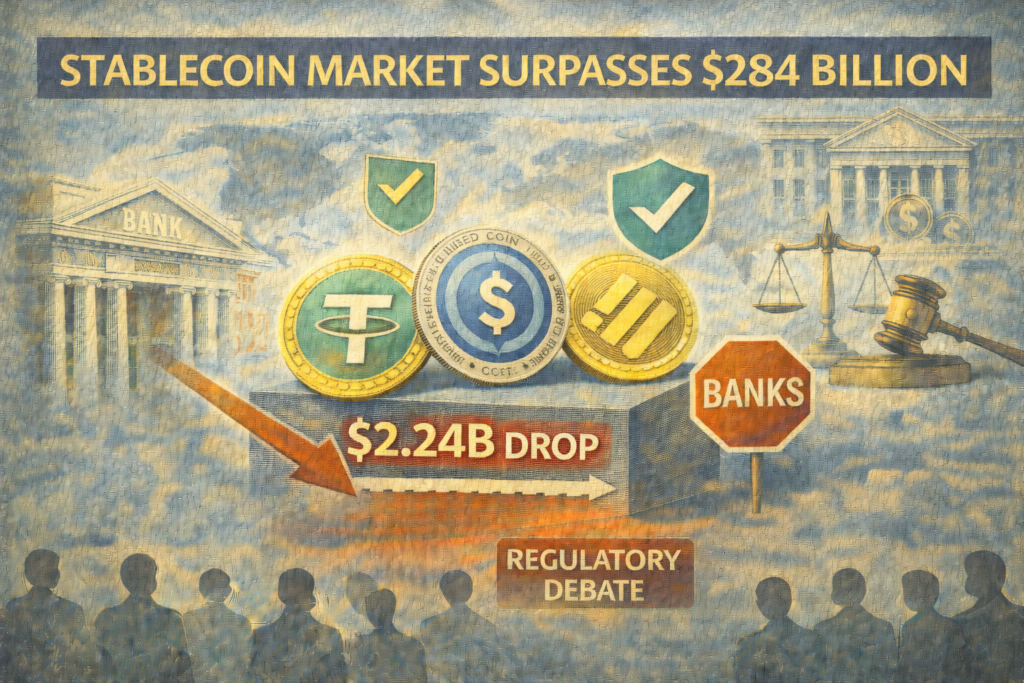
Stablecoins, fiat-backed digital tokens, have emerged as a key player in the financial industry. Over $284 billion in stablecoins are currently circulating, sparking a debate on whether their rapid growth threatens traditional banking or opens doors for innovative financial infrastructure.
The recent $2.24 billion dip in major stablecoins highlights shifting investor sentiment. However, financial experts argue that stablecoins are fundamentally transforming global payment systems without disrupting traditional banking’s stability.
What Sets Stablecoins Apart
Unlike speculative cryptocurrencies like Bitcoin, stablecoins are designed to maintain a stable value by pegging to fiat currencies. This stability allows them to operate as efficient payment instruments, rather than being speculative investments.
Industry experts, including historians like Niall Ferguson, highlight the difference between volatile digital assets and these fiat-backed tokens. With the implementation of the US GENIUS Act, the framework for stablecoin regulation ensures reserves are only held in cash, bank deposits, or US Treasury securities, guaranteeing their solidity.
Stablecoin Market Potential
Since the passage of the GENIUS Act, the stablecoin market has grown exponentially. Tether’s USDT and Circle’s USDC dominate, feeding into projections that demand for digital payments and cross-border transactions could reach $3 trillion by 2028. This positions stablecoins as a crucial asset in facilitating global financial transactions.
Circle, the issuer of USDC, underlines the importance of these tokens as modern-day banking alternatives. Jeremy Allaire, CEO of Circle, compared stablecoin rewards to loyalty programs, signifying additional value for users without eroding banking deposits.
Challenges from Traditional Banks
Not all view stablecoins as a positive innovation. Major banking institutions argue that widespread adoption could lead to reduced credit availability and heightened funding costs for banks. Critics, including JPMorgan executives, suggest that a “parallel banking system” created through stablecoins lacks regulatory safeguards, raising risks for consumers and the traditional financial landscape.
Nevertheless, historical data counters these concerns. Since 2018, stablecoin market capitalization grew by $280 billion, while U.S. bank deposits increased by $6 trillion. This concurrent growth suggests coexistence rather than competition.
Impact on the Crypto Ecosystem
Santiment analytics reported a $2.24 billion decrease in stablecoin market capitalization in just 10 days, emphasizing investor risk aversion. With capital moving toward safer assets like gold and silver, the crypto market faces temporary headwinds. Historically, crypto recoveries have aligned with rising stablecoin reserves, suggesting future potential for growth.
Explore Stablecoins with Coinbase
If you’re considering stablecoins as an investment or payment solution, platforms like Coinbase provide user-friendly access to USDT and USDC. Their secure ecosystem enables efficient crypto management while offering rewards for holding stablecoins.
As stablecoins continue to reshape financial systems, they represent a promising, versatile tool for both investors and everyday users. Whether you’re looking to simplify transactions, explore digital finance, or diversify your portfolio, stablecoins could provide the stability and innovation you need.