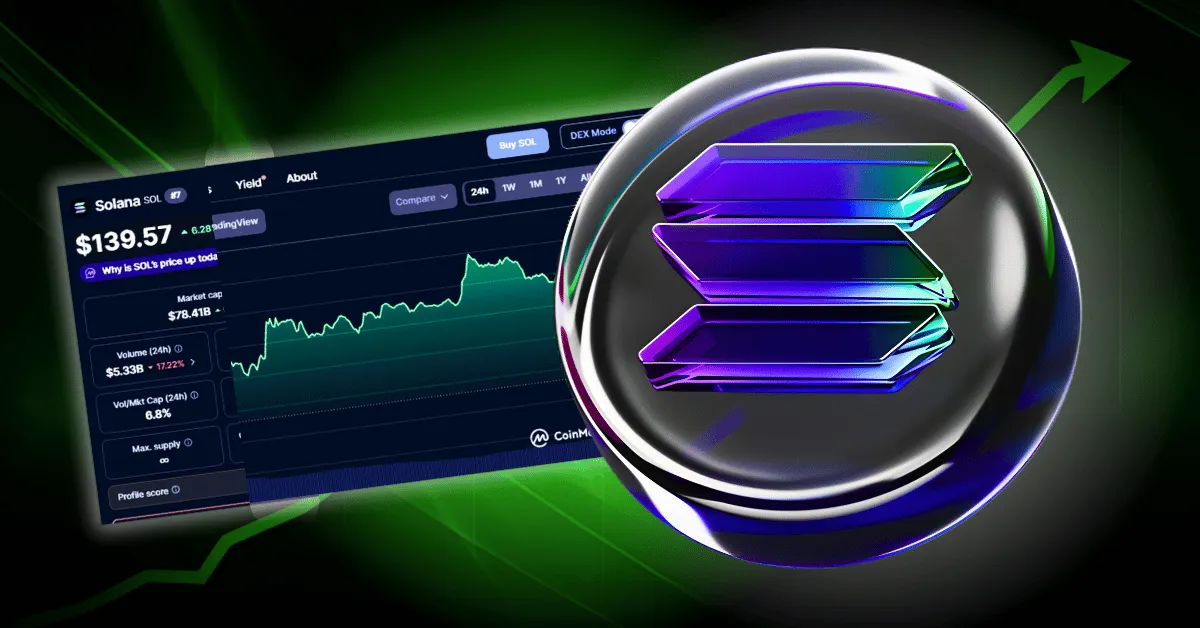
When it comes to navigating the ever-evolving world of cryptocurrency, staying updated on market trends and future forecasts is crucial. Among the notable blockchain networks, Solana (SOL) continues to capture attention due to its rapid growth and technological advancements. Here’s an in-depth look at the current state of Solana’s price, its long-term support zones, and the factors influencing its future potential.
Understanding Solana’s Current Market Performance
As of today, Solana’s price hovers around the $127 mark, closely aligned with its critical long-term support zone between $119 and $126. This range has been a key stabilizing factor for the SOL/USD pairing, providing significant resistance to deeper market downturns. Despite short-term volatility, Solana has maintained resilience above this base zone, suggesting that a deeper breakdown may not yet be on the horizon.
After a recent rejection from $134, the SOL price remains under pressure. However, if the current turbulence in global markets is managed without drastic consequences, Solana could stabilize, setting the stage for improved short-term conditions and a more bullish recovery outlook. Notably, historical data reflects that this long-term support has consistently aided Solana in maintaining structural integrity.
Macro Factors Influencing Solana’s Outlook
One pivotal macroeconomic event looming on the horizon is the Bank of Japan’s upcoming decision regarding interest rates, scheduled for December 19. Any changes in global liquidity—driven by potential rate hikes—could have rippling effects on the crypto market. Historically, similar decisions by the Bank of Japan in 2024 and 2025 led to significant drawdowns in major cryptocurrencies, including Bitcoin and Solana.
A rate hike could lead to a reduction in risk appetite across global financial markets, potentially exerting selling pressure on SOL. Conversely, a more dovish stance could provide the relief needed for cryptocurrencies like Solana to stabilize. Either way, macroeconomic conditions are increasingly shaping the outlook for digital assets, and traders should stay alert to such developments.
Solana’s Long-Term Fundamentals Remain Strong
Despite short-term uncertainties, Solana’s underlying fundamentals remain robust. The blockchain network showcases exceptional developer activity, growing adoption in decentralized applications (DApps), and a thriving ecosystem. When macroeconomic turbulence subsides, these strong fundamentals could serve as a solid foundation for Solana’s long-term growth.
Future Predictions: Regulatory Clarity and Market Opportunity
Looking ahead to 2026, regulatory developments are expected to play a decisive role in shaping the trajectory of crypto markets. For instance, the U.S. CLARITY Act could unlock the next phase of growth for blockchain assets. Solana, with its scalable infrastructure and focus on speed and affordability, is well-positioned to benefit from emerging trends like tokenization and stablecoin adoption.
In line with its surging ecosystem growth, Solana could become a key beneficiary as institutional interest increases. If broader regulatory clarity aligns with the ongoing development within the network, Solana’s potential to outperform becomes increasingly optimistic. As highlighted by a recent Bitwise report, capturing these trends early could be instrumental for forward-looking investors.
Recommended Resource: Ledger Nano X for Secure SOL Storage
For those looking to invest or already holding Solana, securing your assets is of utmost importance. The Ledger Nano X, a hardware wallet backed by industry-leading security measures, is an excellent choice for keeping your SOL safe while ensuring peace of mind. Visit Ledger’s official website for more details.
In conclusion, while challenges and uncertainties lie ahead for Solana and the broader crypto market, its strong fundamentals and potential for long-term growth make it a cryptocurrency that’s worth watching. As always, investors should perform their own research and stay informed about market trends and external factors that could influence future price movements.