Source: Reporting from Blockonomi indicates SK Hynix, the world’s second-largest memory chipmaker and a critical supplier to NVIDIA, is targeting an August 2026 debut on U.S. markets via a landmark $14 billion American Depositary Receipt (ADR) offering. The move, pending SEC approval expected around June 22, highlights the soaring financial and strategic value of the AI hardware that underpins global content creation. The company’s stock has surged 240% year-to-date, pushing its market capitalization toward $1 trillion, a direct reflection of the insatiable demand for High Bandwidth Memory (HBM) chips powering generative AI models.
The Strategic Core: How SK Hynix Powers the AI Content Revolution
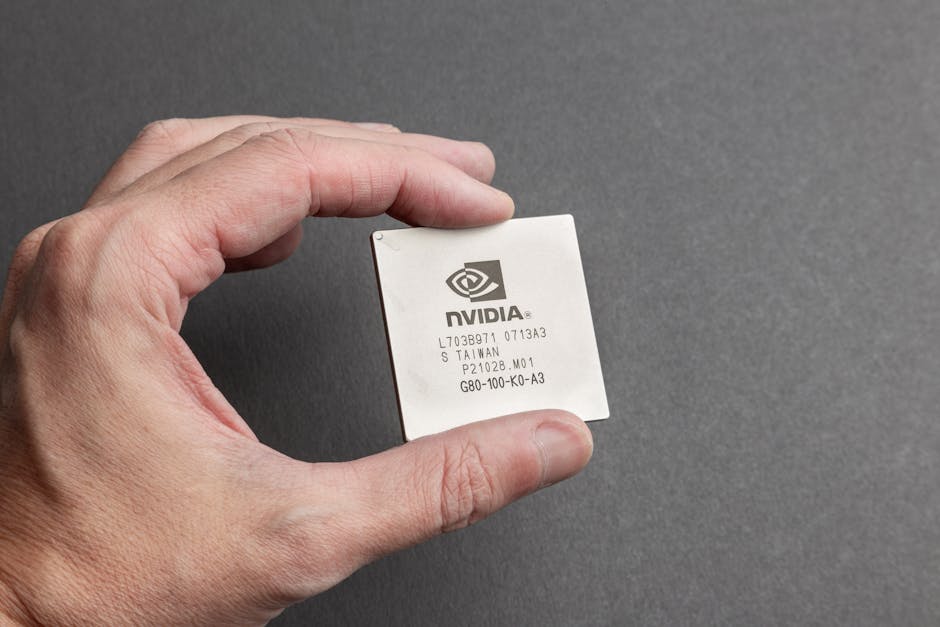
For AI content creators and automation professionals, SK Hynix isn’t just another chip stock; it’s the bedrock of the modern content pipeline. The company’s dominance in High Bandwidth Memory (HBM) is the unsung hero behind the rapid inference and training of the large language models (LLMs) and diffusion models that tools like ChatGPT, Midjourney, and Claude rely on. HBM’s unique stacked architecture provides the massive bandwidth necessary to feed data-hungry AI accelerators, making it a non-negotiable component in NVIDIA’s H100, H200, and Blackwell GPUs.
The $14 billion ADR offering is more than a fundraising exercise; it’s a strategic maneuver to secure capital for the “all-out war” in the AI chip memory arena. SK Hynix is reportedly allocating over 90% of its advanced HBM3E production capacity to NVIDIA, creating a near-symbiotic relationship. The capital raised will fuel massive expansion to meet demand that currently outstrips supply by a significant margin. For content teams, this translates to a direct link between SK Hynix’s manufacturing success and the future availability, cost, and performance of the AI tools they use daily. A bottleneck in HBM production doesn’t just affect chip prices; it can slow the entire ecosystem’s innovation cycle, impacting model training times and, ultimately, the capabilities of content generation platforms.
Impact for AI Content Creators: Stability, Costs, and Next-Gen Tools

This financial move has tangible, downstream implications for anyone using AI for content creation, SEO, and blogging automation.
1. Hardware Stability and Cloud Service Pricing: The success of this offering and SK Hynix’s subsequent expansion will directly influence the stability and pricing of cloud AI services. Platforms like OpenAI’s API, Google’s Vertex AI, and AWS Bedrock run on hardware powered by these memory chips. Increased, efficient HBM production can help mitigate the supply constraints that have led to sporadic API availability and high inference costs. A more robust supply chain means more reliable and potentially more affordable access to cutting-edge models for automated content workflows.
2. Fueling the Next Generation of On-Device AI: The capital isn’t just for data center chips. SK Hynix is also a leader in LPDDR5T and future LPDDR6 memory, which is crucial for on-device AI in laptops, smartphones, and dedicated AI hardware. This funding accelerates the development of memory that allows more powerful AI models to run locally. For creators, this means future versions of tools like Jasper, Copy.ai, or even advanced local models like Llama 3 could run faster and more efficiently on your own machine, reducing reliance on the cloud and enabling more complex, real-time content automation.
3. A Bellwether for AI Investment Trends: The sheer scale of this offering—$14 billion—signals Wall Street’s overwhelming confidence in the long-term AI infrastructure boom. For content strategists and business owners, this is a critical data point. It validates that investment in AI content tools is not a fleeting trend but is built on a multi-trillion-dollar hardware foundation. Allocating budget for AI content platforms, custom model training, or automated publishing systems is an investment aligned with the broader, capital-intensive direction of the entire technology sector.
Practical Tips: How to Align Your Content Strategy with the Hardware Wave

Understanding the hardware layer is no longer just for engineers; it’s a strategic advantage for content leaders. Here’s how to apply this insight:
1. Factor Hardware Roadmaps into Your Tool Evaluation: When assessing new AI writing assistants, image generators, or video synthesis tools, dig into their underlying infrastructure. Are they built on NVIDIA’s latest platform? Do they mention optimizations for HBM or next-gen memory? Tools leveraging the most efficient hardware will have a competitive edge in speed, output quality, and cost-effectiveness over the next 12-24 months. This is especially critical for high-volume, automated content workflows where latency and cost per token are key metrics.
2. Build Redundancy Around Core AI Services: The concentration of HBM supply—with SK Hynix and Samsung dominating—creates a potential single point of failure. While this ADR offering aims to alleviate that, prudent content operations should not rely on a single AI model or API provider. Design your automated workflows (using platforms like EasyAuthor.ai, Make, or Zapier) to be model-agnostic where possible. Have fallback options to switch between OpenAI, Anthropic, and open-source models if one service experiences downtime or pricing shifts driven by underlying hardware constraints.
3. Prioritize Efficiency in Your AI Content Briefs: As hardware defines the cost of AI inference, optimizing your prompts and content parameters becomes a direct cost-saving measure. Use tools that offer context window optimization, prompt caching, and structured output formats (like JSON) to reduce the computational load. For example, instead of generating a full 2000-word article in one call, break it into structured sections with clear, concise instructions. This reduces token usage and leverages hardware more efficiently, keeping your operational costs predictable as the hardware market evolves.
4. Monitor the SEC Filing and August Launch: The SEC’s decision (expected June 22, 2026) and the subsequent August launch will be followed by detailed financial disclosures. Content industry analysts should watch for SK Hynix’s capital expenditure (CapEx) forecasts and HBM capacity projections. A significant increase in CapEx guidance will signal even greater AI hardware investment ahead, confirming the longevity of the current growth cycle. This intelligence can inform longer-term budgeting for AI content initiatives.
Conclusion: The Invisible Foundation of AI Content Gets a $14B Spotlight

SK Hynix’s planned $14 billion U.S. market debut is a watershed moment that illuminates the profound connection between semiconductor finance and the future of AI-generated content. For content creators, strategists, and automation specialists, it underscores that the tools we use are inextricably linked to global supply chains, billion-dollar factory investments, and Wall Street confidence. The success of this offering will help determine the pace at which more powerful, efficient, and accessible AI models reach the market, directly shaping the competitive landscape for automated content.
The key takeaway is to elevate your perspective: see your AI content platform not just as software, but as a service running on a specific, rapidly evolving hardware stack. By understanding the forces at play in the memory chip sector—exemplified by this historic ADR move—you can make more informed decisions, build more resilient workflows, and ultimately harness the full potential of AI-driven content creation as the hardware foundation grows ever stronger.
