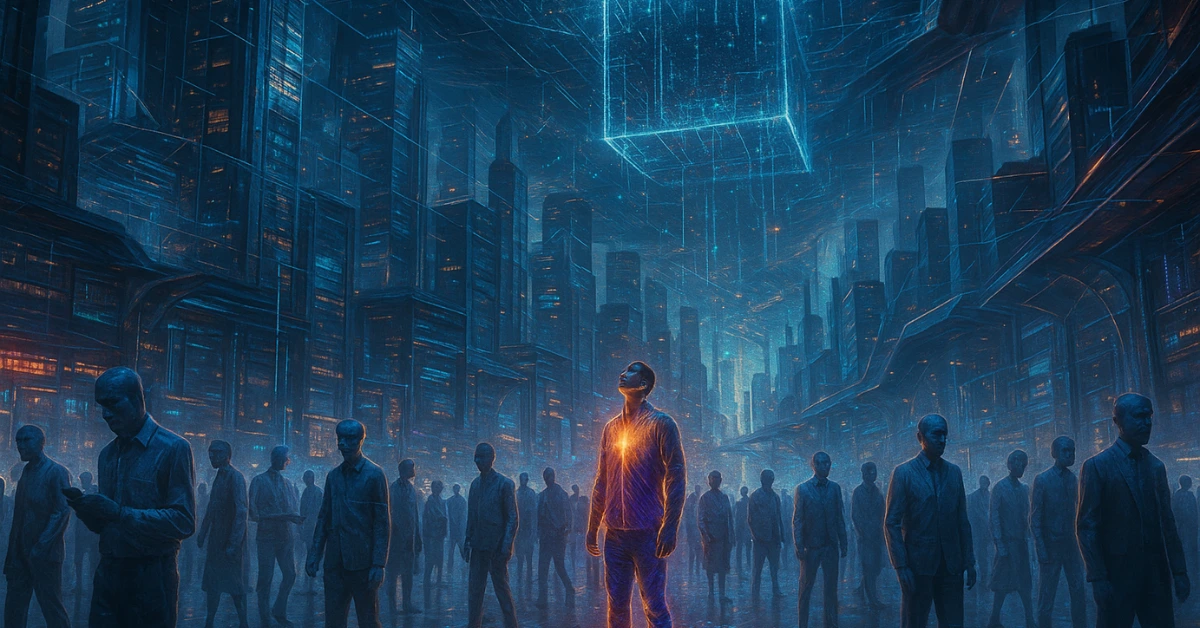
Are We Living in a Simulation? The Alluring Concept of Simulation Theory
Simulation theory—the belief that our reality might just be an advanced computer simulation—has transcended niche philosophical conversations to become a mainstream talking point. Prominent voices like Elon Musk and Neil deGrasse Tyson have lent credence to the idea, sparking widespread discussions across the internet and popular culture.
Understanding the Concept of NPCs
The term NPC (Non-Playable Character) originates from video games, where scripted, automated characters interact with players in predictable ways. In the context of simulation theory, NPCs are thought to be simulated individuals without independent thought, incorporated to maintain the appearance of a bustling reality.
For example, have you ever met someone who seems to operate on autopilot—a cashier repeating the same phrases or a colleague responding blankly to deep, thought-provoking questions? Some proponents argue that such encounters might indicate NPC-like behavior, making us question what’s real and who’s fully aware in this digital “simulation.”
Technology and the Evidence for Simulation Theory
Advancements in technology, especially in the realms of virtual reality, AI, and graphics, bolster the plausibility of simulation theory. With developers creating increasingly realistic digital environments, it doesn’t feel far-fetched to imagine an indistinguishable virtual reality—akin to the Holodeck from Star Trek—in the near future. Could we already be in such a world?
Critics often dismiss the theory due to a lack of observable evidence, but believers point out our inability to verify anything beyond what our senses perceive. For instance, countries or phenomena you’ve only read about might exist solely as programmed data in the simulation framework.
Why Simulations May Include NPCs
If reality is a computer simulation, including NPCs could be a matter of resource efficiency. Simulating billions of independent minds would demand enormous computing power, so NPCs might serve to populate and give depth to the world without overwhelming the system. This theory aligns with the principle of resource optimization in machine learning and computer systems.
The Rise of Awakening Movements
The “Awakened” are those who believe they are self-aware characters within the simulation. Seeing themselves as main characters in an overarching narrative, they challenge the simulation by spreading awareness and exploring ways to “break” the system.
One example is the No NPC Society, a movement built around raising awareness of simulation theory. Their Web3 initiative includes the dissemination of $NONPC cryptocurrency tokens, symbolizing a rejection of simulated existence. Supporters argue that as more people embrace this currency, the simulation might destabilize, potentially revealing its creators.
Historical Parallels
The societal resistance toward simulation theory echoes the 17th-century pushback against early astronomical discoveries, which revealed that Earth isn’t the center of the universe. Humanity has historically resisted new ideas that challenge entrenched beliefs, only to find, in hindsight, they were transformative. Perhaps simulation theory represents the next evolution in our understanding of existence.
Start Your Own Awakening Journey
Curious about joining those delving into the mysteries of simulation theory? Engaging with movements like the No NPC Society or exploring blockchain gaming projects that center on philosophical questions about reality could be a starting point to “awaken.” Additionally, you might also explore cutting-edge VR technologies like the Oculus Quest 3 for an immersive look into what simulated worlds feel like today.
While it might feel unsettling to consider the possibility that we live in a simulation, it also demonstrates our limitless curiosity about the universe and everything beyond it.