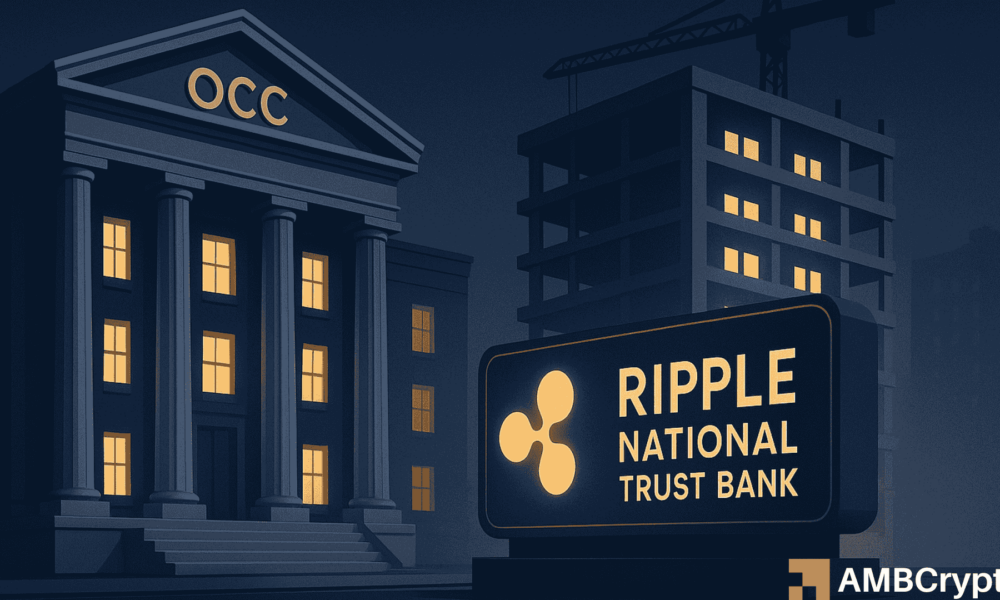
Ripple has achieved a groundbreaking milestone by receiving conditional approval from the Office of the Comptroller of the Currency (OCC) to form the Ripple National Trust Bank. This regulatory approval solidifies Ripple’s position as a key player within the U.S. financial ecosystem and paves the way for a significant transformation in the cryptocurrency and stablecoin arena.
Ripple’s Major Regulatory Breakthrough
On December 12, Ripple was announced as one of five digital-asset firms granted a national trust bank charter by the OCC, alongside BitGo, Fidelity Digital Assets, and Paxos. This move highlights the federal government’s evolving approach to integrating blockchain and cryptocurrency into traditional financial services. Speaking on the innovative venture, Comptroller of the Currency Jonathan Gould emphasized, “New entrants into the federal banking sector are good for consumers, the banking industry, and the economy.” This charter represents a vital step forward for Ripple in breaking down barriers to institutional partnerships and enhancing regulatory clarity.
RLUSD: A Staple in Stablecoins
Ripple’s stablecoin, RLUSD, emerges as the industry’s first tokenized dollar to acquire recognition under the dual oversight of federal and state regulators. This sets a new standard for stablecoins and positions Ripple to compete directly with market leaders like USDC and PYUSD. Backed by a circulating supply of 1.02 billion tokens, RLUSD maintains a near-perfect peg at $0.9999, showcasing robust stability even amidst market fluctuations.
For those looking to boost their ventures into stablecoins, Ripple’s innovative solutions provide institutional-grade offerings. You can explore Ripple technologies and their impact on blockchain solutions through trusted retailer links here.
Ripple Challenges the Traditional Banking Model
Reacting to the OCC’s landmark decision, Ripple CEO Brad Garlinghouse highlighted the growing tension between blockchain firms and traditional banking institutions. “You’ve complained that crypto isn’t playing by the same rules, but here’s the crypto industry — directly under the OCC’s supervision and standards,” Garlinghouse remarked. His statement underscores Ripple’s commitment to fostering regulatory parity and advancing financial innovation.
The Ripple Effect on U.S. Financial Systems
The Ripple National Trust Bank charter offers enhanced control over stablecoin issuance, greater transparency in reserves, and improved settlement guarantees. This development provides Ripple a direct path into U.S. financial services, setting a precedent for blockchain adoption within traditional banking. For the broader crypto industry, the approval signals an increasingly inclusive federal stance toward digital assets, cementing tokenized assets as an integral part of the economy.
What This Means for the Cryptocurrency Market
Ripple’s approval highlights federal regulators’ shift from isolating blockchain technology to incorporating it within the existing financial framework. By embracing stablecoin issuers and crypto custody platforms, the OCC recognizes the evolving nature of finance. This decision not only legitimizes Ripple’s efforts but also opens doors for other blockchain innovators seeking to modernize the market.
In the evolving world of cryptocurrency and blockchain, cutting-edge products like Ripple National Trust Bank are a cornerstone for establishing trust and cooperation between innovative firms and traditional enterprises. As this sector grows, staying informed of the latest developments, strategies, and solutions is vital for investors and businesses alike.