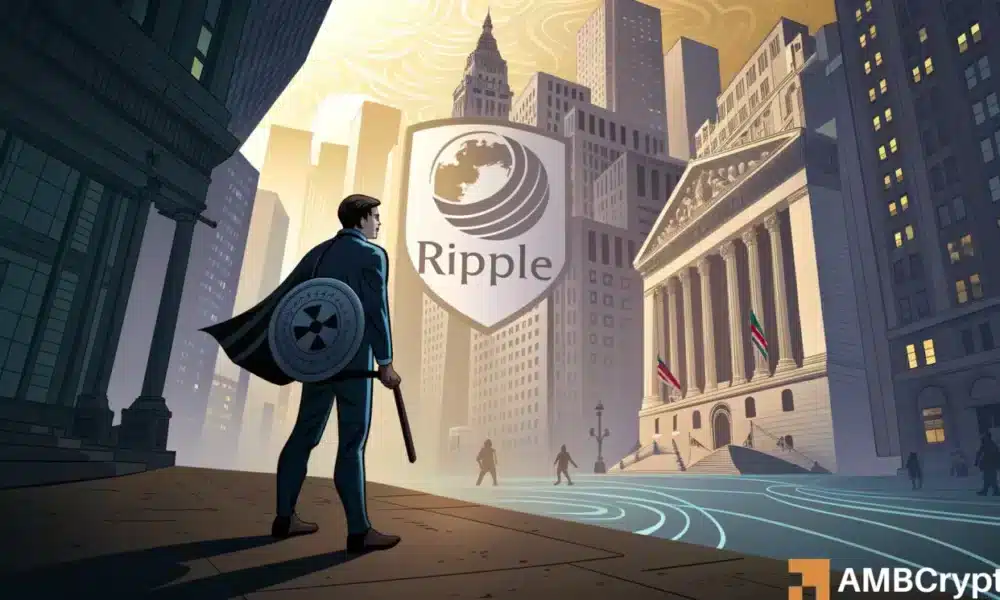
Ripple, a major player in the blockchain and digital payments industry, has unveiled its strategic plans for 2026 that notably exclude an IPO (Initial Public Offering). Despite industry expectations and market hype, Ripple’s leadership has decided to remain a private company. Here’s what this decision means and why it positions Ripple as a force to watch in the crypto space.
Why Ripple Is Choosing the Private Route
Ripple President Monica Long shed light on the company’s decision during an interview with Bloomberg. With a robust $40 billion valuation and top-tier investors such as Citadel Securities and Fortress, Ripple remains confident in its financial health. As Long stated, “We still plan to remain private.”
For many tech giants, going public is a natural milestone to acquire liquidity and expand investor reach. However, Ripple has opted to side-step this route, focusing instead on internal growth and strategic control. The company recently completed a $500 million share sale and executed several high-profile acquisitions, showcasing its financial independence.
Acquisitions and Innovation: Ripple’s Growth Formula
Ripple’s refusal to go public aligns with its focus on enhancing its infrastructure and global presence. With over $4 billion invested, Ripple’s recent acquisitions, such as Hidden Road (now Ripple Prime) for brokerage services and GTreasury for corporate finance solutions, aim to build a closed-loop ecosystem for digital assets.
Ripple’s innovative RLUSD stablecoin is another key highlight. Launched less than a year ago, the dollar-pegged stablecoin hit $1 billion in market capitalization within seven months. In addition, Ripple Payments processed a staggering $95 billion in total volume as of late 2025. These achievements underscore Ripple’s dominance in the digital payments industry, IPO or not.
Why Staying Private Works for Ripple
Staying private gives Ripple the freedom to operate without public market pressure while maintaining liquidity and credibility. Ripple has offered attractive incentives to private investors, including buyback guarantees and safeguards. These measures not only instill confidence but also allow Ripple to function with the perks of a public company without actually listing on the stock market.
With over 70 global licenses, including recent approvals from Singapore’s Monetary Authority (MAS), Ripple continues to provide enterprise clients with secure and legally compliant digital payment solutions worldwide.
The Crypto Industry’s Takeaway
Ripple’s decision to delay or potentially forgo an IPO doesn’t indicate a lack of growth opportunities. Instead, it’s a calculated move to focus on expanding its payment network, integrating acquisitions, and enhancing infrastructure. This solidifies its position as one of the leading blockchain companies globally.
If you’re looking to explore Ripple’s ecosystem or stay updated on crypto innovations, consider checking out products like the Ledger Nano X (here) to securely store your Ripple (XRP) and other cryptocurrencies.