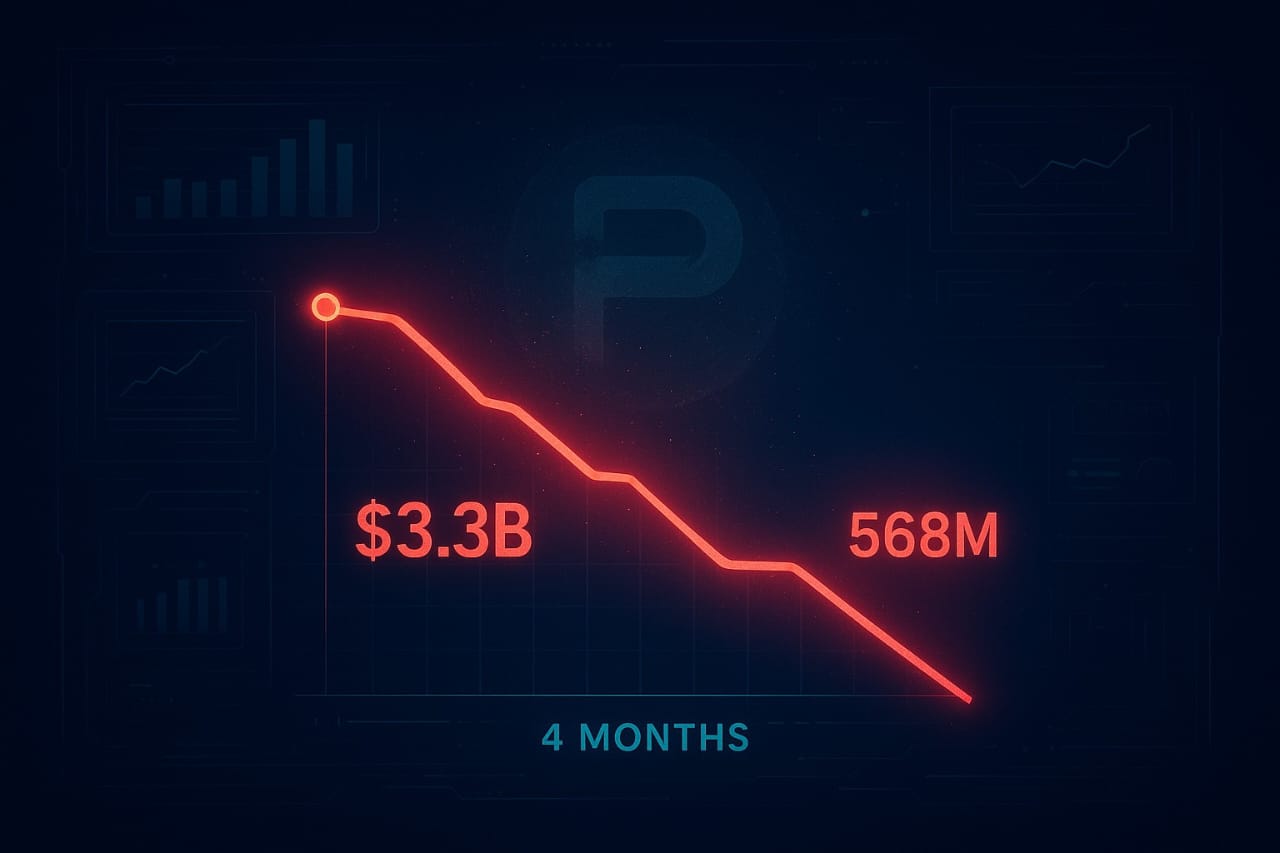
Pumpfun, the retail trading platform that skyrocketed to fame during the cryptocurrency boom of 2024 and early 2025, is experiencing a significant cooldown. After dominating the narrative for months, the platform is now facing its fourth consecutive month of declining trading volumes, with weekly activity dropping from its peak of $3.3 billion to a mere $568 million. What does this mean for the future of the platform and its token economy?
Understanding Pumpfun’s Decline
Known for its fast-paced launches of meme tokens and microcaps, Pumpfun leveraged speed and virality to capture retail traders’ attention. However, what once seemed unstoppable is now faltering. Trading volumes have seen an 82% drawdown from their peak, signaling a structural downturn rather than a temporary dip. The platform is shedding liquidity as retail traders migrate towards other opportunities in cryptocurrency markets.
The Factors Behind the Drop
Several key reasons have driven Pumpfun into this phase of decline:
- Attention Fatigue: The novelty of the platform’s ultra-high-risk tokens is wearing off, and traders are seeking fresh narratives.
- Declining New Launches: The conveyor belt of meme token launches has slowed significantly. Many tokens now fail to sustain momentum beyond their initial hours of listing.
- Liquidity Challenges: Buy walls that once supported tokens are evaporating, and sell pressure spikes earlier, creating a challenging environment for new tokens to thrive.
Market Migration
While Pumpfun struggles, traders are not leaving the crypto space entirely. Instead, they are shifting towards more transparent and structured trading environments, such as perpetual trading platforms and prediction markets. These alternatives offer better risk management, tighter trade execution, and incentives that attract both experienced and new participants.
A prime example is how prediction markets focused on political events and sports betting have gained popularity in recent years. This diversification reflects a maturing retail trading environment where traders seek sustainability over short-lived hype cycles.
Can Pumpfun Bounce Back?
Despite its current struggles, Pumpfun is not out of the game. The platform has implemented one of the cryptocurrency market’s most aggressive buyback programs, acquiring over 10% of its circulating token supply within just four months. This program, which results in an annualized buyback rate of 33%, aims to strengthen $PUMP’s tokenomics by creating structural support for its economy.
But the effectiveness of these efforts depends on the platform’s ability to maintain revenues amidst declining activity. Without a resurgence in trading volume, sustaining such a high buyback rate could become challenging.
The Future of Pumpfun
Pumpfun’s trajectory mirrors the typical lifecycle of retail-driven crypto platforms: rapid growth, peak mania, and eventual stabilization. While it is unlikely that the platform will return to the explosive growth of early 2024 without another speculative crypto boom, it has an opportunity to adapt. By focusing on strengthening its token economy and fostering a loyal, experienced user base, Pumpfun could carve out a steady role in the crypto ecosystem.
One promising strategy would be to introduce innovative tools or collaborations that attract traders back to the platform while addressing liquidity challenges. For example, they could partner with emerging DeFi projects or prediction market platforms to bring more diversity to their offerings.
Stay Ahead in Crypto Innovations
The shift in trading trends highlights the need for a more thoughtful approach to navigating the crypto markets. If you’re looking to optimize your cryptocurrency trading toolkit, consider products like Ledger Nano X, a premium hardware wallet designed to keep your digital assets secure. With crypto markets evolving rapidly, safeguarding your tokens with reliable storage solutions is a must.
Disclaimer: This article is for informational purposes only and does not constitute trading or investment advice. Always conduct your own research before making financial decisions.