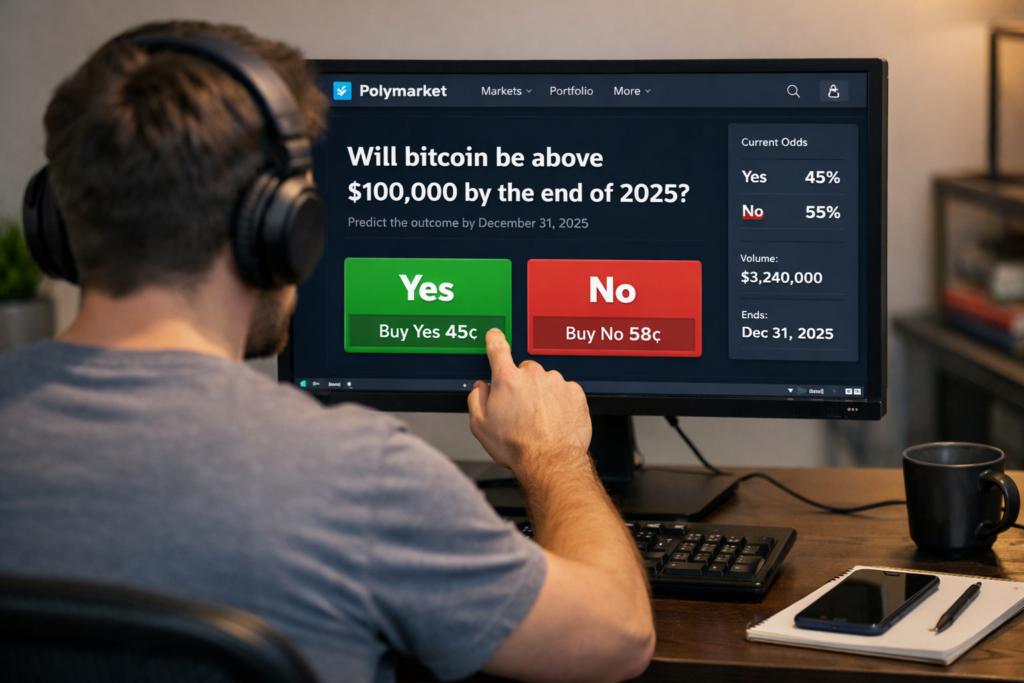
Prediction markets have quietly emerged as one of the most revolutionary innovations in finance, captivating the attention of investors, institutions, and everyday users alike. With platforms like Polymarket and Kalshi leading the charge, billions of dollars are now being traded weekly, signaling a transformative shift in how we view risk, belief, and real-time data.
What Are Prediction Markets?
In essence, prediction markets are platforms where users can speculate on real-world outcomes. These outcomes range from political election results and economic data to entertainment decisions or major sporting events. By trading simple “yes” or “no” contracts, participants engage in a dynamic system that rewards accuracy and penalizes incorrect predictions, offering insights into public sentiment and probability trends.
Unlike gambling, these platforms do not set odds. Instead, they function as neutral exchanges where participants trade directly with one another. This creates a crowd-driven pricing mechanism, updating in real time based on constantly evolving user sentiment.
A Historical Perspective
The origin of prediction markets dates back to the 1500s, but it wasn’t until recent decades that they began gaining traction. In particular, the 2024 U.S. election cycle marked a turning point. Platforms like Polymarket outperformed traditional pollsters, consistently predicting Donald Trump’s victory over Kamala Harris with higher confidence. This accuracy boosted public trust in these platforms and set the stage for their rapid growth.
The Regulatory Breakthrough
For years, prediction markets wrestled with regulatory challenges, prompting many platforms to operate in a legal gray area. However, a landmark victory came in 2024 when Kalshi won its lawsuit against the Commodity Futures Trading Commission (CFTC), establishing election contracts as legitimate financial derivatives. This opened the doors for widespread adoption, with Kalshi launching regulated election contracts across all 50 states.
The Business Opportunity
Prediction markets offer immense value for financial firms, fintech platforms, and even traditional exchanges. Here’s why:
- Massive Trading Volumes: Event contracts generate consistent trading activity, with low transaction fees accumulating into significant revenue streams.
- Access to Real-Time Sentiment Data: Platforms collect real-time probability signals that can be monetized and offered as subscription-based data services to hedge funds, insurance companies, and enterprises.
- User Engagement: Prediction markets create gamified experiences, drawing users in with their intuitive interface and low barrier to entry. Participants stay engaged, often checking platforms multiple times a day to track market fluctuations.
Why Prediction Markets Stand Out
Unlike traditional trading formats, prediction markets thrive on organic virality. Each event contract ties directly into the latest news cycle, making them inherently scalable and self-promoting. As users engage with topics that matter to them—be it politics, tech disruptions, or entertainment—they create a feedback loop of social sharing and app retention. The result: unprecedented reach and user engagement at minimal marketing cost.
The Future of Prediction Markets
Prediction markets mark a paradigm shift, changing the way individuals and institutions navigate uncertainty. By pricing human beliefs rather than tangible assets, they open a completely new class of tradable information. These markets are not just financial mechanisms but philosophical tools, turning conviction into measurable and actionable data.
For anyone looking to stay ahead, platforms like Polymarket and Kalshi are worth exploring. Whether you’re an investor, analyst, or simply curious, prediction markets represent the cutting-edge intersection of finance, technology, and human intuition. The question isn’t whether they’ll grow—it’s how fast they’ll redefine the future of forecasting.