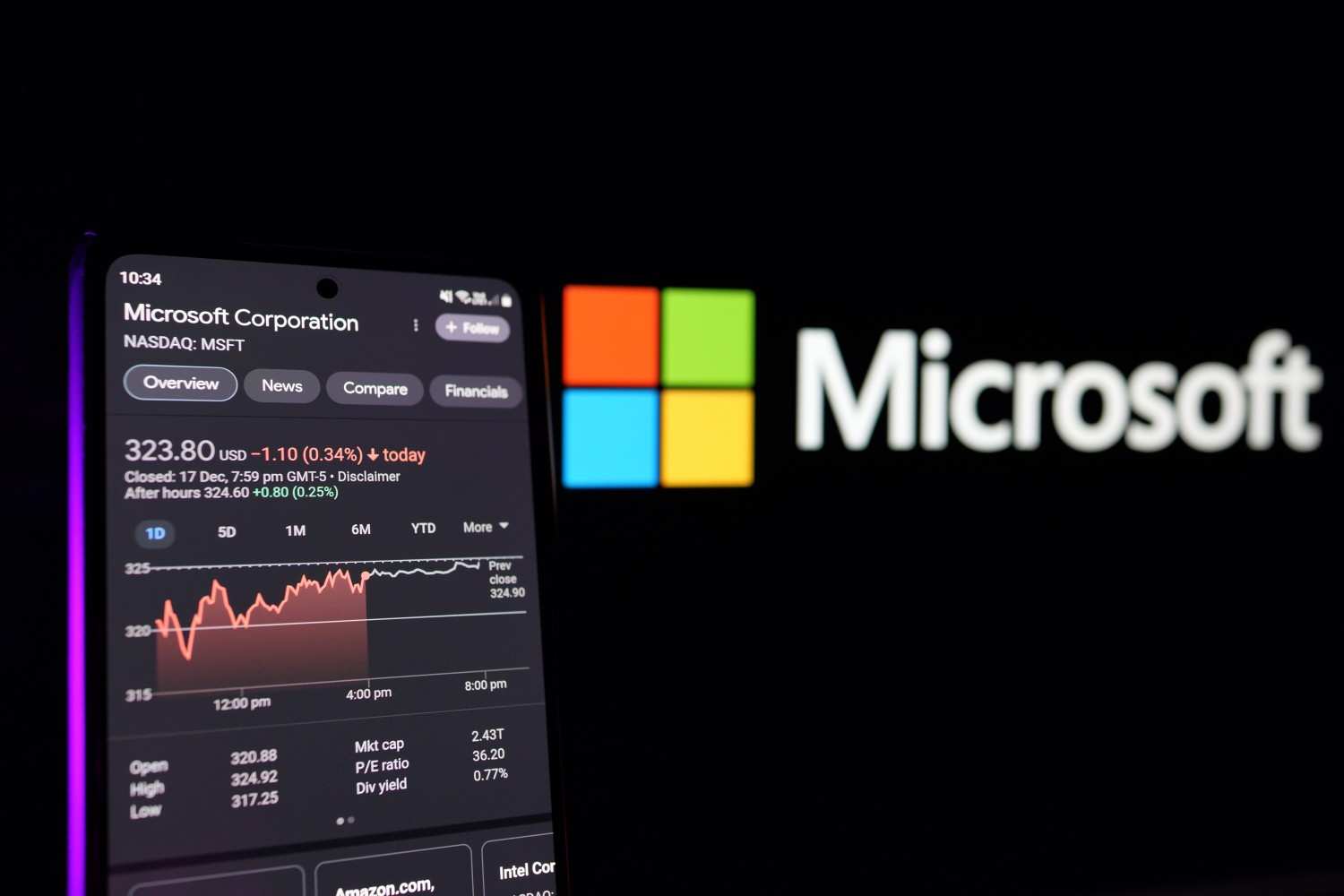
Microsoft’s Unexpected Stock Plunge: The Details
The global tech leader, Microsoft (NASDAQ: MSFT), recently experienced one of the largest stock crashes in recent years. On January 30, 2026, the company’s stock fell by nearly 10% within 24 hours, wiping out a staggering $360 billion from its market capitalization. This market value decline brought the company’s valuation from $3.58 trillion to approximately $3.22 trillion.
Despite its strong performance earlier in the year, with shares rising from $444 on January 21 to $482 by January 28, the sudden drop startled investors. Microsoft’s stock closed at $435.55, marking a significant turning point for the tech giant.
Why Did Microsoft Stock Crash?
Although Microsoft had just released a robust Q2 earnings report, exceeding expectations with $4.14 adjusted earnings per share (EPS) versus the $3.97 forecasted, not all metrics were reassuring. For instance, the company’s fiscal third-quarter operating margin came in at 45.1%, slightly below the projected 45.5%. Additionally, the gross margin fell to a three-year low of 68%, raising concerns among stakeholders.
Another red flag was the 9.5% dip in gaming revenue, which, while modest, compounded concerns about Microsoft’s dependency on partnerships. Most notably, the company revealed that 45% of its backlog is linked to OpenAI, an AI innovator that has sparked debates about sustainability and profitability. OpenAI’s high burn rate and existential dependency on investor funds added to market apprehension.
OpenAI Partnership and AI Market Risks
Microsoft’s substantial investment in OpenAI in recent years has tied the company’s future to the success of artificial intelligence (AI). However, this venture comes with risks. For example, statements by OpenAI’s CEO, Sam Altman, regarding the potential need for government intervention if the firm encounters financial troubles, have made investors wary.
The rapid rollout of Microsoft’s AI-driven tools, such as Copilot, has drawn mixed reactions from users. While adoption figures are high, the integration is viewed skeptically, often labeled ‘forced’ due to the difficulty of opting out of AI-specific features in software like Windows 11. Popular skepticism is evident on digital platforms, where critics have nicknamed the company ‘Microslop.’
What This Means for Investors
The Microsoft crash serves as a reminder of how market sentiment can shift dramatically, even for a tech giant. While the company’s core products, like Azure Cloud services, continue to perform well with 39% growth, significant market risks tied to AI and other emerging technologies remain.
If you’re an investor, it’s crucial to diversify your portfolio. Consider products like eToro’s ETF offerings for a balanced, low-risk investment approach. ETFs can help offset potential losses from high-volatility stocks in the tech sector.
Looking Ahead
Microsoft’s role as a market leader remains strong, but this incident underscores the importance of analyzing risks in even the most successful companies. With the growing influence of AI, both investors and analysts will be closely watching Microsoft’s future strategies and its partnership with OpenAI.