Source: Blockonomi – Microchip Technology (MCHP) Stock: Falls as Company Announces Hailo Edge AI Acquisition by Yasmin Werner, published July 24, 2026.
Microchip Technology’s acquisition of edge AI chipmaker Hailo for an undisclosed sum, announced July 24, 2026, signals a major strategic pivot for the semiconductor giant into high-performance, low-power AI processing. While the market initially reacted with a stock dip—a common response to large, transformative acquisitions—the long-term implications are profound for the AI content creation ecosystem. This move accelerates the hardware trend of bringing powerful AI inference directly to devices (the “edge”), a shift that will fundamentally change how AI tools are built, deployed, and used by creators and bloggers.
The Hailo Acquisition: A Deep Dive into the Edge AI Hardware Shift
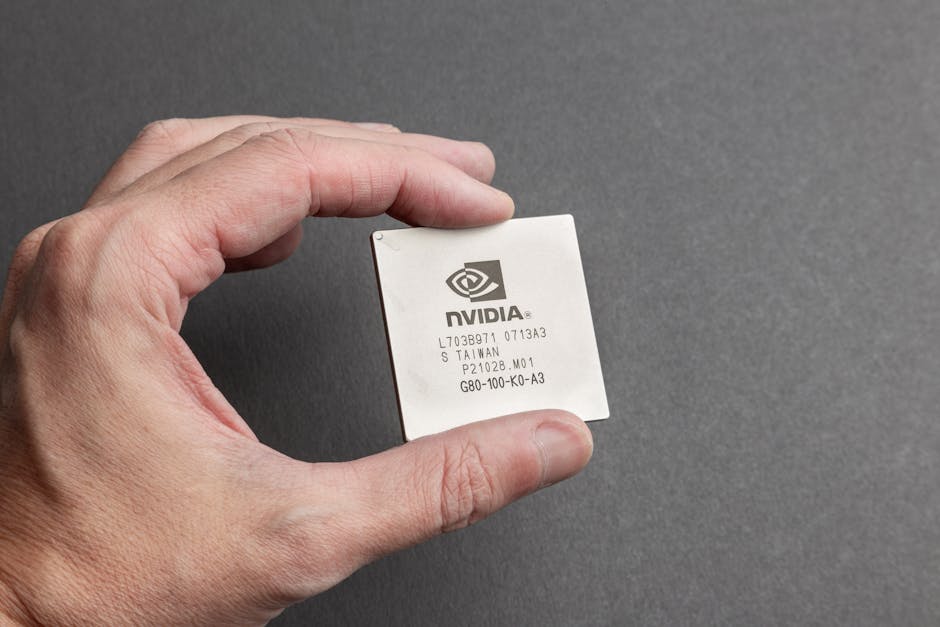
Microchip Technology (NASDAQ: MCHP), a leading provider of microcontroller and analog semiconductors, is not traditionally known for cutting-edge AI processors. Its acquisition of Hailo, an Israeli startup renowned for its high-efficiency AI accelerators, is a deliberate and aggressive play to dominate the burgeoning edge AI hardware market.
Hailo’s technology specializes in delivering data center-level AI performance in a power envelope suitable for embedded systems, smart cameras, automotive applications, and industrial PCs. Their Hailo-8 and Hailo-15 processors are designed to run complex neural networks—like those powering image recognition, natural language processing, and generative AI models—locally on a device without needing a constant cloud connection. For instance, the Hailo-8 can deliver up to 26 tera-operations per second (TOPS) while consuming mere watts of power, a critical metric for battery-operated or thermally constrained devices.
By integrating Hailo’s AI processors, vision system-on-chips (SoCs), and software stack into its portfolio, Microchip gains immediate access to a complete, high-performance edge AI solution. This allows them to offer customers a one-stop shop: Microchip’s traditional microcontrollers for control, combined with Hailo’s accelerators for intelligent perception and generation. The financial markets often punish short-term uncertainty, hence the stock drop. However, the strategic rationale is clear: own the silicon that will power the next generation of intelligent devices, from AI-powered security cameras that analyze footage locally to next-gen laptops that run AI writing assistants offline.
This acquisition is part of a larger industry consolidation. In 2025, AMD acquired Nod.ai to bolster its AI software stack, and Qualcomm has been aggressively integrating AI engines into its Snapdragon platforms for years. Microchip’s move validates that specialized, efficient AI silicon is now a mandatory component for any broad-line semiconductor company aiming to stay relevant.
Why This Edge AI Hardware War Matters for AI Content Creators
For content strategists, bloggers, and digital marketers using AI tools, this shift from cloud-centric to edge-capable AI is not an abstract hardware story—it’s the foundation of the next evolution in content creation workflows. The implications are direct and practical.
First, privacy and data sovereignty will become a major differentiator. Currently, most advanced AI content tools (like GPT-4, Claude 3, or Midjourney) require sending your prompts, drafts, and sometimes sensitive data to a remote cloud server. With powerful edge AI chips like Hailo’s becoming mainstream in consumer devices, the next generation of AI writing assistants, image generators, and SEO analyzers could run entirely on your laptop or tablet. This means your proprietary content ideas, client briefs, and unpublished drafts never leave your machine. For creators handling confidential client projects or operating in regulated industries, this is a game-changer.
Second, latency and reliability will see dramatic improvements. Imagine prompting your AI blog outline generator and getting a complex, detailed result instantly, without the half-second to two-second delay typical of cloud API calls. Or using a real-time AI grammar and style checker that works seamlessly even when your internet connection is spotty—on a plane, in a cafe with poor Wi-Fi, or during a commute. Edge AI makes this possible by eliminating the round-trip to a data center.
Third, cost structures for AI tool providers will change, potentially lowering subscription fees. Running AI models in the cloud incurs significant compute costs for SaaS companies, which are passed on to users. If a tool can offload a substantial portion of its inference workload to the user’s local hardware, its operational expenses drop. This could lead to more affordable “pro” tiers or even one-time purchase software licenses for powerful AI content creation suites, moving away from the universal subscription model.
Finally, this enables new, hybrid AI workflows. A creator could use a lightweight, always-available edge model for brainstorming, initial drafting, and basic optimization, then selectively call upon a massive cloud model (via a plugin or integrated tool) for highly complex tasks like competitive analysis across thousands of web pages. The tool ecosystem will become more layered and intelligent about where to process each task.
Practical Tips: Preparing Your Content Workflow for the Edge AI Future

The transition to edge-empowered AI won’t happen overnight, but forward-thinking content creators can start positioning their strategies and toolkits today. Here’s how to adapt and prepare.
1. Evaluate AI Tools on Their Architecture & Roadmap: When choosing new AI writing, SEO, or multimedia tools, look beyond feature lists. Investigate the company’s stance on edge computing. Do they offer any offline capabilities? Do they discuss on-device processing in their product roadmap or technical blog? Companies like Jasper, Copy.ai, or Frase that are investing in smaller, more efficient models (like fine-tuned versions of Llama 3.1 or Mistral models) are likely preparing for this shift. Prioritize tools that are transparent about their infrastructure and have a clear path to offering local, private options.
2. Start Experimenting with Local AI Models Now: Familiarize yourself with running open-source AI models on your own hardware. Tools like Ollama, LM Studio, or GPT4All allow you to download and run models like Llama 3, Mistral, or Gemma directly on your Mac or PC. While these may not yet match the quality of cloud-based giants for all tasks, they excel at specific jobs like text summarization, basic ideation, or following strict formatting instructions. This hands-on experience will make you an early adopter and help you understand the trade-offs between speed, quality, and privacy.
3. Future-Proof Your Hardware Purchases: Your next laptop or desktop upgrade should factor in AI acceleration capabilities. Look for systems with dedicated Neural Processing Units (NPUs) or powerful integrated GPUs. Apple’s M-series chips have industry-leading NPUs. For Windows, look for laptops with Intel Core Ultra (“Meteor Lake” and beyond) or AMD Ryzen 7040/8040 series and newer chips with dedicated AI engines. These will be the platforms that run next-gen edge AI content tools flawlessly. Investing in this hardware now ensures you won’t be left behind when software catches up.
4. Design Content Automation with Hybrid Workflows in Mind: If you use automation platforms like Zapier, Make, or EasyAuthor.ai to connect your content tools, start thinking about conditional logic. Design workflows where sensitive or time-critical tasks are routed to local AI resources if available, and less sensitive, bulk analysis tasks are sent to the cloud. For example, a workflow could: 1) Use a local model to generate a first draft from a private client brief, 2) Send that draft to a cloud-based SEO keyword optimizer for SERP analysis, 3) Use a local model again for final grammar and style checks before publishing. This hybrid approach maximizes both privacy and power.
The Bottom Line: AI Content Creation is Moving to Your Desktop

Microchip’s acquisition of Hailo is a bellwether event. It confirms that the major forces in technology—from chipmakers to software developers—are all converging on a future where AI is not a distant cloud service, but an integrated, local capability. For content professionals, this means more control, faster iteration, and greater creative freedom. The era of being tethered to an internet connection and a monthly API bill for core creative functions is ending.
The savvy creator’s response is not to wait, but to proactively explore, experiment, and build workflows that leverage both the immense power of the cloud and the emerging promise of the edge. By understanding the hardware shift exemplified by deals like Microchip-Hailo, you can make smarter tool choices, invest in the right technology, and build a content engine that is not only more efficient but also more secure and resilient. The future of AI content creation is distributed, and it’s coming directly to the device on your desk.
