The Rise of Euro-Backed Stablecoins: A New Era Begins
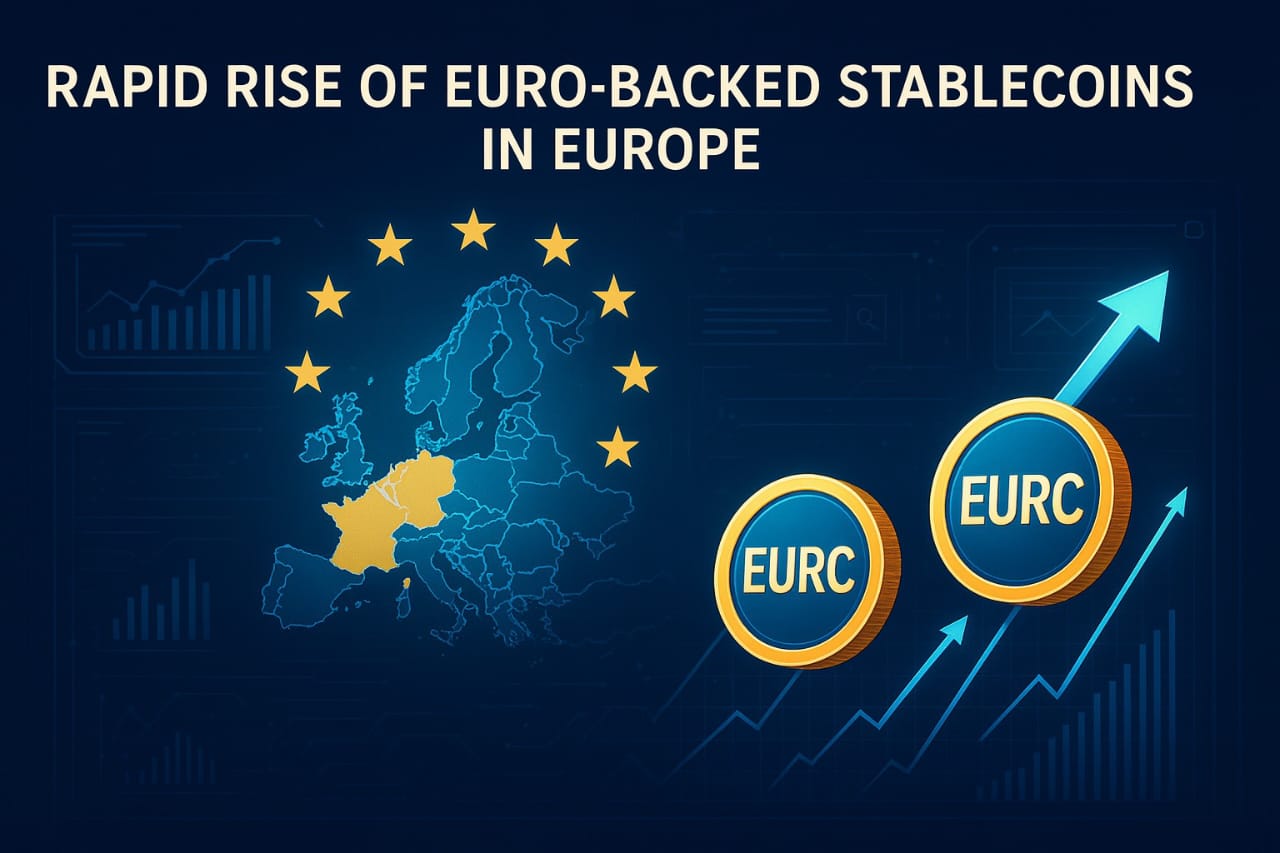
Since the landmark introduction of the EU’s MiCA (Markets in Crypto-Assets) regulations in June 2024, Europe’s stablecoin market has experienced unprecedented growth. Euro-backed stablecoins are showing their strongest development phase yet, with market capitalization doubling and trading volumes reaching new heights. This momentum is reshaping what was once a market dominated by U.S. dollar stablecoins.
According to recent data from CoinGecko, euro-denominated stablecoins now hold a market cap of approximately $683 million, up from half that amount just a year ago.
MiCA’s Impact on the Stablecoin Landscape
The implementation of MiCA has introduced a structured regulatory framework that eliminates the barriers once limiting euro-backed stablecoins. Historically hindered by fragmented regulations and a lack of clear compliance, euro stablecoins are now benefitting from:
- Transparent Reserve Requirements: Issuers must maintain verifiable reserves, increasing trust among users.
- EU Passporting: A license in one member state offers access to all 27 EU countries, reducing complexity for issuers.
- Standardized Rules: Non-EU issuers face stricter compliance or restricted access, leveling the playing field for EU projects.
- Bank Issuance of Tokenized Money: This has allowed institutional assets such as EURCV, issued by Société Générale, to scale rapidly.
These regulatory advancements are giving institutional players and fintech startups the confidence to embrace euro stablecoins as legitimate financial tools.
The Leaders Driving the Market: EURS, EURC, and EURCV
Much of the growth in the euro-backed stablecoin sector is attributed to three key assets:
- EURS: Known for its dependable compliance, EURS has seen a steady 6.44% growth in market cap since MiCA’s launch.
- EURC: Issued by Circle, this stablecoin benefits from the company’s global reach and robust compliance network.
- EURCV: Backed by Société Générale, EURCV represents an institutional-grade asset that aligns closely with MiCA’s goals.
These assets, collectively, have driven euro-stable market trading volumes to approximately $3.83 billion per month, signaling increasing liquidity and investor interest. Products like Circle’s EURC are readily available to support businesses and individuals seeking euro-denominated options in a dollar-centric market.
Growing Awareness Among Retail and Institutional Investors
A surprising side effect of MiCA’s implementation is the spike in public interest. Search queries for euro stablecoins have increased exponentially across EU nations. This indicates growing retail curiosity alongside institutional adoption, as many users explore alternatives to traditional U.S. dollar stablecoins.
The regulatory clarity provided by MiCA has also attracted conservative investors who value transparency and compliance over high-yield opportunities.
Challenges and Future Prospects
Despite the impressive growth, Europe’s stablecoin market still trails far behind the $300 billion ecosystem of dollar stablecoins. MiCA offers the framework, but further time and innovation are needed to fully close the gap. Nevertheless, the doubling of the euro stablecoin sector in just one year signifies a promising turning point.
Projects like Société Générale’s EURCV and Circle’s EURC continue to highlight the potential of euro-backed assets. These tokens are not just playing catch-up; they are redefining Europe’s role in the global digital currency landscape.
The Bottom Line
MiCA’s regulatory framework is proving to be more than just a policy milestone—it’s a catalyst fueling the growth of Europe’s stablecoin market. With market caps surging, trading volumes hitting record levels, and user interest reaching new pinnacles, euro stablecoins like EURS, EURC, and EURCV are at the forefront of this transformation.
Whether this early momentum turns into sustained long-term growth remains to be seen. However, one thing is clear: Europe’s stablecoin ecosystem is no longer just an alternative—it’s a rising force in the global financial landscape.