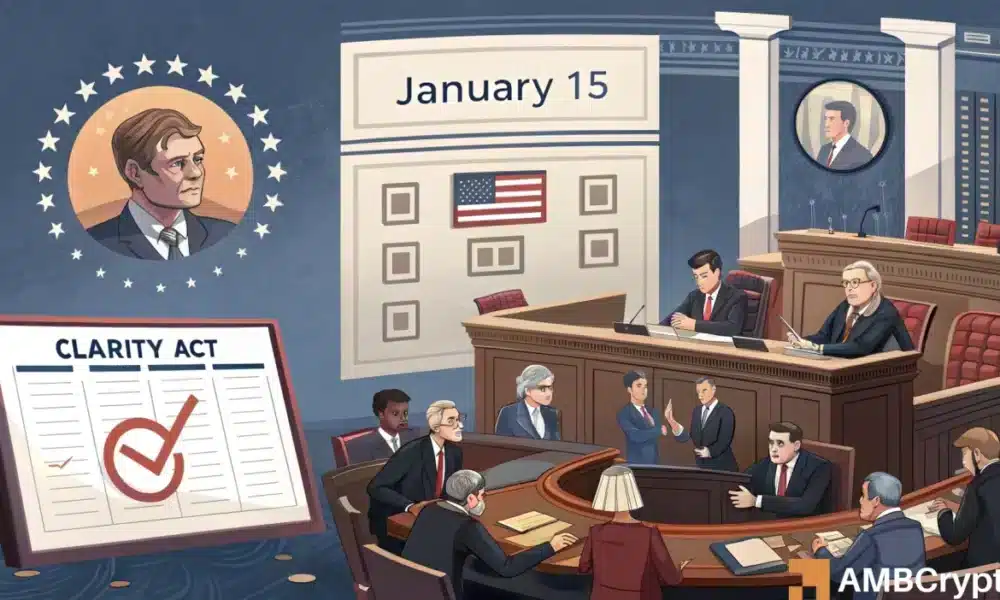
The U.S. cryptocurrency industry could be on the verge of a transformative moment. After years of operating in a regulatory ‘gray zone,’ the Digital Asset Market Clarity Act (CLARITY Act) might finally provide a clear legal framework. On January 15, the Senate Banking Committee is scheduled for a high-stakes markup session that could resolve the decade-long battle of jurisdiction between the SEC and CFTC.
Why the CLARITY Act Matters
For months, industry insiders have been eagerly awaiting progress on the CLARITY Act, which has already passed the House of Representatives with bipartisan support. With strong backing from Senate Banking Committee Chairmen Tim Scott and John Boozman, this legislation aims to bring transparency and rules that the crypto world desperately needs. If successfully passed, it will regulate digital assets comprehensively, signaling a pivotal shift in the U.S. crypto industry.
Main Challenges for the Legislation
Despite bipartisan efforts, three critical points of contention remain:
- How to regulate decentralized finance (DeFi) without discouraging developer innovation.
- Determining which tokens fall under the SEC versus CFTC’s jurisdiction.
- Stablecoin regulation, particularly whether issuers should offer rewards, a matter strictly opposed by Committee Democrats.
While Republicans could technically push the bill through the Banking Committee, insiders caution that a party-line vote would likely doom its chances on the Senate floor. Securing at least 60 votes for cloture makes bipartisan support non-negotiable.
Market Confidence on the Rise
Optimism about the bill’s passage is growing. Data from prediction platform Kalshi indicates a 69% probability that the CLARITY Act will become law before May 2026, with 42% of traders anticipating its approval as early as April. Another platform, Polymarket, saw its odds jump from 15% to 35% for the Act’s approval following the latest round of legislative negotiations.
This progress reflects a stark shift from the skepticism that dominated the market late last year, suggesting that the legislative freeze surrounding digital assets might finally be thawing.
The Clock is Ticking
Still, time is running out. With the midterm elections approaching in 2026, the opportunity for bipartisan cooperation may shrink, and delays could push the legislation to 2027. A failure to resolve these issues would force the crypto sector to operate in uncertainty for yet another year, potentially slowing innovation and investments.
The Bottom Line
All eyes are now on the Senate Banking Committee as it works through the CLARITY Act’s final challenges. Should it succeed, this legislation could provide crypto investors and businesses with the long-awaited clarity they need to thrive.
Are you looking to stay updated on cryptocurrency and blockchain technology? Discover the Ledger Nano X Wallet—a trusted product for securely managing your digital assets. With enhanced security and ease of use, this is a great option for those who want to ensure their crypto holdings remain safe in an uncertain regulatory landscape.