Source: Blockonomi reports that Intel (INTC) stock declined by over 4% in early trading on June 2, 2026, following major announcements at Computex 2026. Despite unveiling its Xeon 6+ processors and new AI rackscale infrastructure systems, the market reaction was negative, signaling investor skepticism about Intel’s ability to compete in the AI hardware race against rivals like NVIDIA and AMD. This event provides a critical case study for AI content creators on the volatile relationship between technological announcements, market expectations, and real-world infrastructure that powers our tools.
The Computex 2026 Announcements: More Power, Less Impact
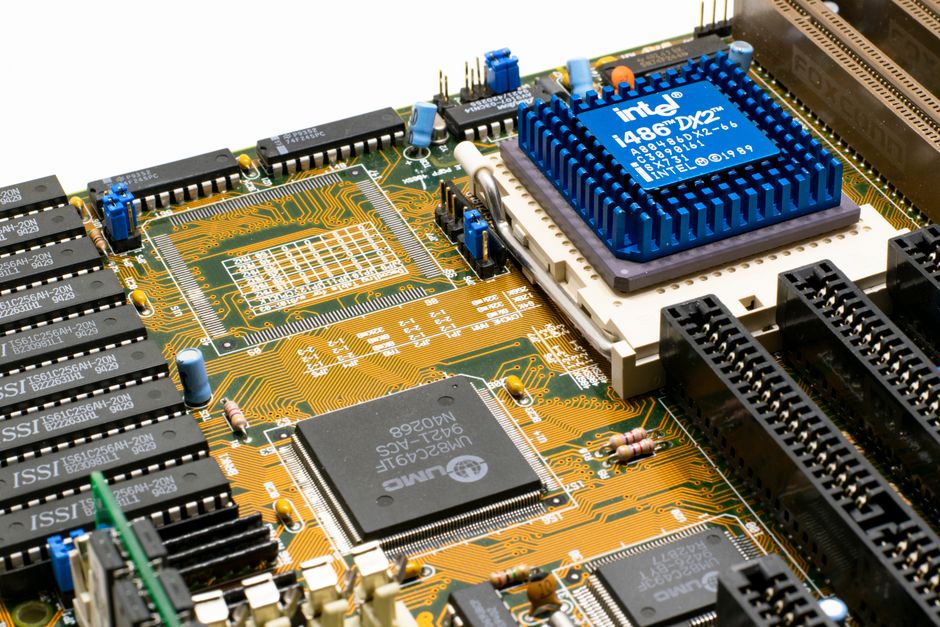
Intel’s Computex 2026 presentation focused heavily on enterprise AI infrastructure, positioning itself as a full-stack solutions provider rather than just a chipmaker. The company revealed its Xeon 6+ processors with enhanced AI acceleration capabilities through new matrix engines, promising up to 2.5x performance gains in AI inference workloads compared to previous generations. More significantly, Intel launched its “AI Rackscale Systems” – pre-configured, modular data center solutions designed specifically for deploying and scaling large language models and generative AI applications.
These rackscale systems include integrated cooling, power management, and software orchestration layers, representing Intel’s attempt to capture more value in the AI infrastructure stack. The company also announced expanded partnerships with major cloud providers including Google Cloud, Microsoft Azure, and several Asian hyperscalers to deploy these systems. However, analysts noted that many of these partnerships appeared to be non-exclusive and incremental rather than transformative.
Financial details revealed during the presentation showed Intel’s Data Center and AI Group revenue growing at 12% year-over-year, significantly slower than NVIDIA’s 34% growth in the same period. This performance gap, combined with the lack of specific wins against NVIDIA’s dominant H100 and Blackwell architectures, likely contributed to the stock’s decline. The market appears to be judging Intel not against its past performance but against the explosive growth of its competitors in the AI gold rush.
Why This Matters for AI Content Creators and Infrastructure
For AI content professionals, hardware announcements like Intel’s Computex reveals have direct implications on the tools and platforms we depend on daily. The performance, availability, and cost of AI inference hardware directly affects:
1. Cloud AI Service Pricing: When major hardware providers like Intel achieve efficiency gains, these typically trickle down to reduced costs for cloud-based AI services from providers like AWS SageMaker, Google AI Platform, and Azure Machine Learning. More efficient chips mean lower operational costs for cloud providers, which often translates to more competitive pricing for API calls and hosted model inference.
2. Local AI Development: Intel’s focus on AI acceleration in consumer processors (though not highlighted at this enterprise-focused event) eventually influences what’s possible on local machines. Content creators running tools like Stable Diffusion, Llama.cpp, or local LLM instances benefit from hardware improvements that make larger models accessible without expensive GPU investments.
3. Content Generation Speed and Scale: The throughput and latency improvements promised by new AI chips directly impact how quickly platforms can generate content at scale. For agencies and enterprises running automated content pipelines, even marginal improvements in inference speed can significantly reduce operational costs when multiplied across millions of content generation requests.
4. Specialized AI Workloads: Intel’s announcements included specific optimizations for retrieval-augmented generation (RAG) pipelines and multi-modal models. These hardware-level optimizations could make certain advanced content generation techniques more economically viable for mainstream use.
Practical Implications for AI Content Strategy and Operations
The market’s negative reaction to Intel’s announcements provides several actionable insights for content teams and technology strategists:
1. Infrastructure Diversification Strategy: Don’t lock your content generation pipelines into single-vendor AI hardware ecosystems. The competitive dynamics between NVIDIA, AMD, Intel, and cloud-specific chips (like Google’s TPUs and AWS Trainium) mean pricing and performance will continue to fluctuate. Design your AI content workflows to be portable across different inference backends.
2. Monitor Hardware Roadmaps for Budget Planning: Major hardware announcements typically precede price adjustments in cloud AI services by 6-12 months. By tracking these developments, content operations managers can anticipate when to renegotiate cloud contracts or shift workloads to take advantage of new efficiency gains. Set calendar reminders to review AI infrastructure costs following major industry events like Computex, GTC, and AWS re:Invent.
3. Evaluate On-Premises Options for Sensitive Workloads: Intel’s rackscale systems represent a growing trend toward enterprise-grade, on-premises AI infrastructure. For content teams working with proprietary data, sensitive information, or requiring guaranteed uptime, these pre-configured solutions may offer advantages over pure cloud approaches despite higher upfront costs.
4. Performance Testing Protocols: Establish regular benchmarking of your AI content generation tools against new hardware announcements. Create a simple test suite that measures tokens-per-second, image generation time, and cost-per-article across different providers. This data-driven approach will help you identify when to migrate workloads based on actual performance improvements rather than marketing claims.
5. Contract Negotiation Leverage: Use knowledge of competitive hardware developments to negotiate better terms with AI service providers. When new chips enter the market, existing providers often become more flexible on pricing to retain customers. Time your contract renewals to coincide with these market shifts.
The Future of AI Content Infrastructure: Beyond the Chip Wars
Looking beyond the immediate market reaction, Intel’s Computex 2026 announcements point toward several longer-term trends that will shape AI content creation:
Specialized Hardware for Content Moderation: As regulatory pressure increases on AI-generated content, expect to see hardware-level features for content provenance, watermarking, and compliance checking. Intel mentioned “AI safety accelerators” in development – these could become essential for enterprises needing to demonstrate responsible AI use.
Edge AI for Real-Time Content: The efficiency gains in AI chips will eventually make sophisticated content generation possible on edge devices. Imagine journalists generating draft articles on laptops without internet connectivity, or social media managers creating localized content on mobile devices during events.
Democratization Through Efficiency: Every improvement in AI hardware efficiency lowers the barrier to entry for high-quality content generation. What requires a $10,000 GPU today might run on a $500 consumer device within two years, dramatically expanding who can leverage advanced AI content tools.
Infrastructure-as-Code for Content Pipelines: Intel’s focus on pre-configured, software-managed rackscale systems reflects a broader trend toward treating AI infrastructure as programmable resources. Content teams will increasingly manage their generation capacity through code, scaling up and down based on content calendars and campaign schedules.
The disconnect between Intel’s technological showcase and market reaction underscores a fundamental truth for AI content professionals: infrastructure matters, but execution matters more. The most advanced chips mean little without efficient workflows, thoughtful prompting, and strategic content distribution. As the hardware landscape continues to evolve at a breakneck pace, successful content creators will be those who maintain flexibility in their technical stack while doubling down on what truly differentiates content – originality, relevance, and human insight. The tools may become exponentially more powerful, but the craft of connecting with audiences remains profoundly human.