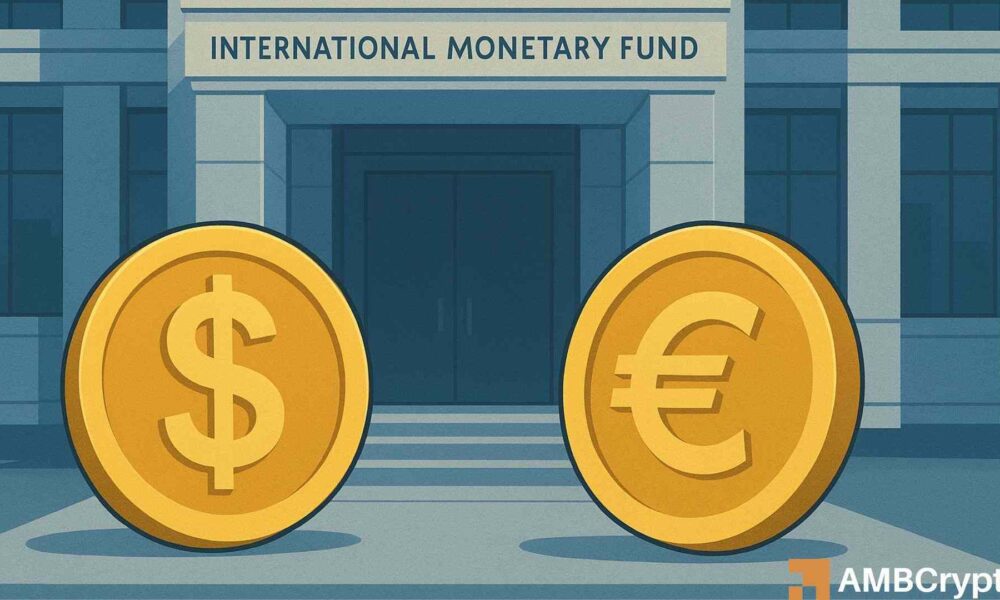
Understanding the IMF’s Concerns About Stablecoins
The International Monetary Fund (IMF) recently issued a warning regarding stablecoins, suggesting they could undermine the goal of democratizing finance—a value proposition that cryptocurrencies are built on. According to Professor Eswar Prasad, stablecoins may promote decentralized finance (DeFi) but paradoxically rely on centralized institutions for trust, counteracting the core principles of decentralization within cryptocurrency.
The Dominance of U.S. Dollar-Backed Stablecoins
Currently, stablecoins like Tether (USDT) and Circle’s USD Coin (USDC) account for over $303 billion in market supply, representing a staggering 99.7% dominance of U.S. dollar-backed stablecoins. These digital assets are increasingly used for cross-border payments, offering faster and more reliable solutions compared to traditional systems. However, this dominance may weaken other major currencies like the Euro and the Yen, as pointed out by the IMF’s analysis.
This dominance has spurred countries like China and the Eurozone to develop their own central bank digital currencies (CBDCs), protecting their economies from an overwhelming influence of U.S. dollar-pegged stablecoins.
Economic Challenges for Developing Nations
The IMF report highlights potential negative consequences for developing countries with unstable or inflationary currencies. Citizens in these nations may shift their capital into stablecoins as a safer alternative, potentially draining local economies. Standard Chartered estimates such outflows could reach $1 trillion from emerging markets in the near future, further intensifying financial instability in vulnerable regions.
Counterpoints: Not All Agree
Noritaka Okabe, CEO of JPYC Co., Japan’s first regulated yen-based stablecoin, offers a differing perspective. He argues that by leveraging self-custodial wallets, users can maintain financial autonomy without relying on intermediaries. This perspective stands in contrast to the IMF’s claim that stablecoin issuance remains centralized and issuer-controlled.
Regulatory Clarity Driving Stablecoin Growth
Stablecoins continue to gain momentum due to clearer regulatory frameworks. For example, the U.S. government passed the GENIUS Act in July, which established transparent guidelines for stablecoin adoption and use. As a result, the market saw a remarkable increase in monthly inflows, ranging between $10 billion and $18 billion during the following months. Despite occasional declines, optimism remains high in the sector.
Solutions for a Stablecoin-Focused Future
Emerging concerns underscore the importance of establishing robust regulations and fostering innovation across the globe. In countries where financial stability is at risk, introducing localized stablecoin solutions may help mitigate adverse effects. For instance, products like the Circle USDC stablecoin have already demonstrated their utility in fast, decentralized payment systems, offering broader financial inclusion when carefully managed.
Ultimately, stablecoins represent a transformative shift in the financial industry, but their long-term success lies in balancing innovation with equitable, decentralized, and regulation-backed solutions.