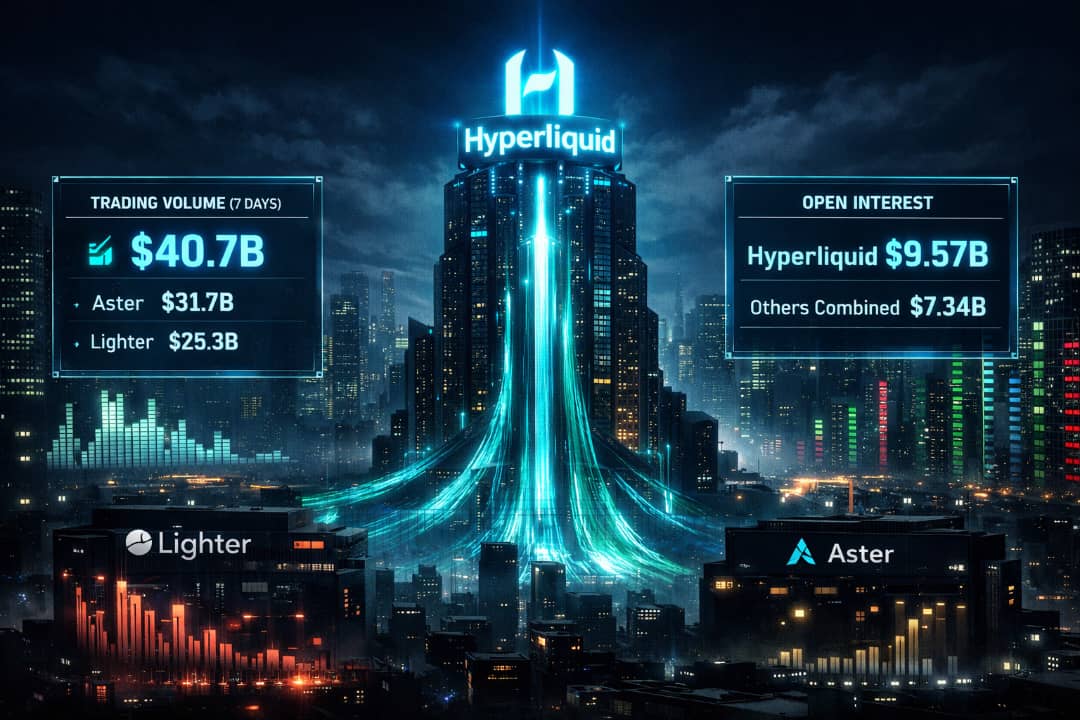
Hyperliquid Reclaims Its Crown in the Decentralized Exchange Market
Hyperliquid has surged back to the forefront of the decentralized exchange (DEX) market for perpetual trading, reclaiming the top spot by both trading volume and open interest. This marks a pivotal moment as liquidity and trader activity consolidate around platforms with more robust infrastructure and stable participation. Fresh data from CryptoRank reveals a striking shift in trader behavior following the cooldown of airdrop-driven trading on competitor platforms.
The Fade of Airdrop-Driven Platforms
Airdrops have long been a favorite tactic among new platforms to attract traders. One such platform, Lighter, saw trading volume spike during its airdrop phase, but as the incentives waned, weekly trading volume dropped nearly threefold from its peak. This decline highlights an important trend: platforms that rely heavily on short-term incentive campaigns struggle to maintain sustained liquidity and activity.
While the airdrop generated initial excitement, the lack of enduring structural advantages caused traders to migrate back to platforms offering deeper liquidity and tighter spreads. This is where Hyperliquid shines, standing out as a reliable venue for serious traders who prioritize execution quality over temporary rewards.
Why Traders Are Choosing Hyperliquid
Hyperliquid’s leadership in the decentralized exchange market is underscored by its robust stats. Over the past seven days, its trading volume reached approximately $40.7 billion, significantly outpacing competing platforms like Aster and Lighter. Recent data even suggests this number could be closer to $46 billion, affirming its dominance in the market.
Moreover, Hyperliquid leads in open interest—a critical metric that measures active positions held by traders. With $9.57 billion in open interest reported in the past 24 hours alone, Hyperliquid dwarfs competitors like Lighter, Aster, and Variational combined. This steady influx of trades and capital demonstrates the platform’s focus on long-term reliability and consistent liquidity.
For those looking to trade with confidence and precision, having a strong, dependable exchange is paramount. This trust is why traders increasingly gravitate toward Hyperliquid despite competitors’ attempts to lure them with limited-time incentives.
The Competitive Landscape
While Hyperliquid has solidified its place at the top, competition remains fierce. Platforms like Aster and Variational have carved out noteworthy positions, with Aster reporting $31.7 billion in weekly trading volume. Though Lighter experienced a decline post-airdrop, its $25.3 billion volume shows it still commands attention in the market.
Interestingly, newer platforms like Variational, which posted $1 billion in daily trading volume, highlight the growing diversification within the DEX ecosystem. These platforms are pushing innovation, forcing incumbents to enhance their infrastructure to stay competitive.
The Takeaway: Fundamentals Over Short-Term Incentives
Hyperliquid’s resurgence is a testament to one enduring truth in cryptocurrency markets: durable platforms with deep liquidity and consistent performance outshine those focused on fleeting incentives. Traders are showing a preference for exchanges that offer stability, low slippage, and a dependable user experience.
One example of a product aligning with this trend in financial technology is Ledger’s Nano X hardware wallet for secure cryptocurrency storage. Used by both novice and professional traders, the Nano X provides unmatched security for your digital assets. Check out the Nano X on Ledger’s official website.
As the decentralized exchange market continues to evolve, innovation and competition will reshape the landscape. However, Hyperliquid’s combination of liquidity, depth, and a loyal trading base has set a high standard. For traders, the focus is clear: pick platforms that offer more than just short-term rewards—they’re choosing infrastructure that lasts.