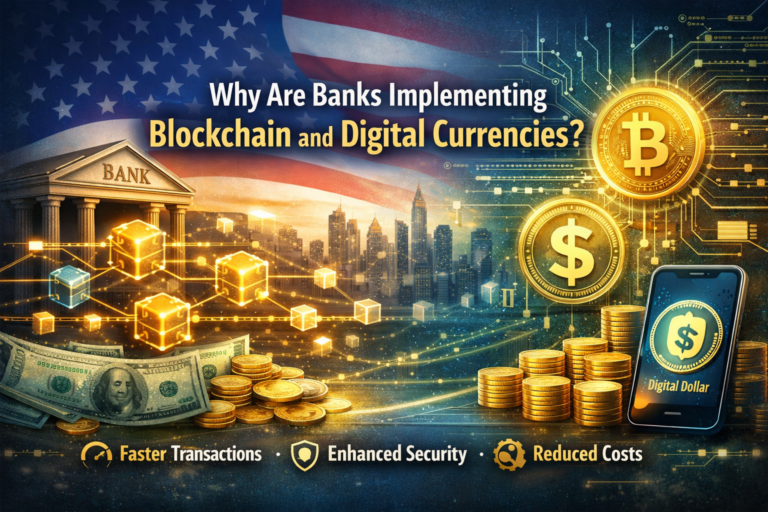
How Blockchain and Digital Currencies are Revolutionizing US Banking
The financial sector is rapidly evolving, and the US banking system is at the forefront of integrating cutting-edge technologies like blockchain and digital currencies. This transformation is driven by a need to optimize operations, improve security, and attract younger, tech-savvy customers. Here is how blockchain and digital currencies are shaping the future of banking.
Reducing Operational Costs and Increasing Efficiency
A major advantage of blockchain technology is its ability to streamline banking processes. Traditional operations in banks often demand significant time, human resources, and a robust IT infrastructure. Blockchain leverages distributed ledger technology to automate and simplify processes, reducing operational costs while boosting profitability.
For instance, transaction processing that once required massive personnel and infrastructure now benefits from blockchain’s efficiency. This digital backbone can support lower IT expenses, ultimately leading banks toward better margins.
Enhancing Security and Transparency
Security has always been a top priority in financial services. Blockchain’s principles of decentralization, cryptography, and immutability provide a resilient defense mechanism against hacking and fraud. Transactions are cryptographically secured, creating a transparent and verifiable chain of data.
This transparency is crucial, especially in sectors like international payments and trade finance, where trust among participants is essential. By implementing blockchain, US banks can make auditing processes simpler and maintain a higher level of transparency, enabling stronger measures against corruption and economic fraud.
The Role of Digital Currencies in Banking Evolution
Alongside blockchain, digital currencies are emerging as significant tools in modern finance. Many US banks are experimenting with government-issued digital currencies like a potential digital dollar, along with stablecoins offered by private entities.
For example, pilot projects focusing on the creation of a digital dollar aim to refine payment systems and introduce innovative business models centered around digital assets. This evolution positions banks to cater to younger generations who demand faster and more versatile solutions for their financial needs.
Opportunities and Risks Ahead
The adoption of blockchain and digital currencies is not without challenges. Regulatory concerns, technological risks, and market fluctuations demand careful navigation. Banks must collaborate closely with fintech companies and regulatory bodies to implement these advancements seamlessly. However, those that succeed in adopting blockchain and digital currencies today are likely to emerge as tomorrow’s market leaders.
Interested in how blockchain can boost your financial knowledge? Consider investing in learning resources like the Complete Guide to Blockchain in Banking.
The Bottom Line
Blockchain and digital currencies are becoming essential tools for navigating an increasingly digital world. These advancements aren’t meant to replace traditional banks but to enhance their operational speed, efficiency, and security. By embracing this technology, the US banking sector is stepping into a future where innovation meets reliability.