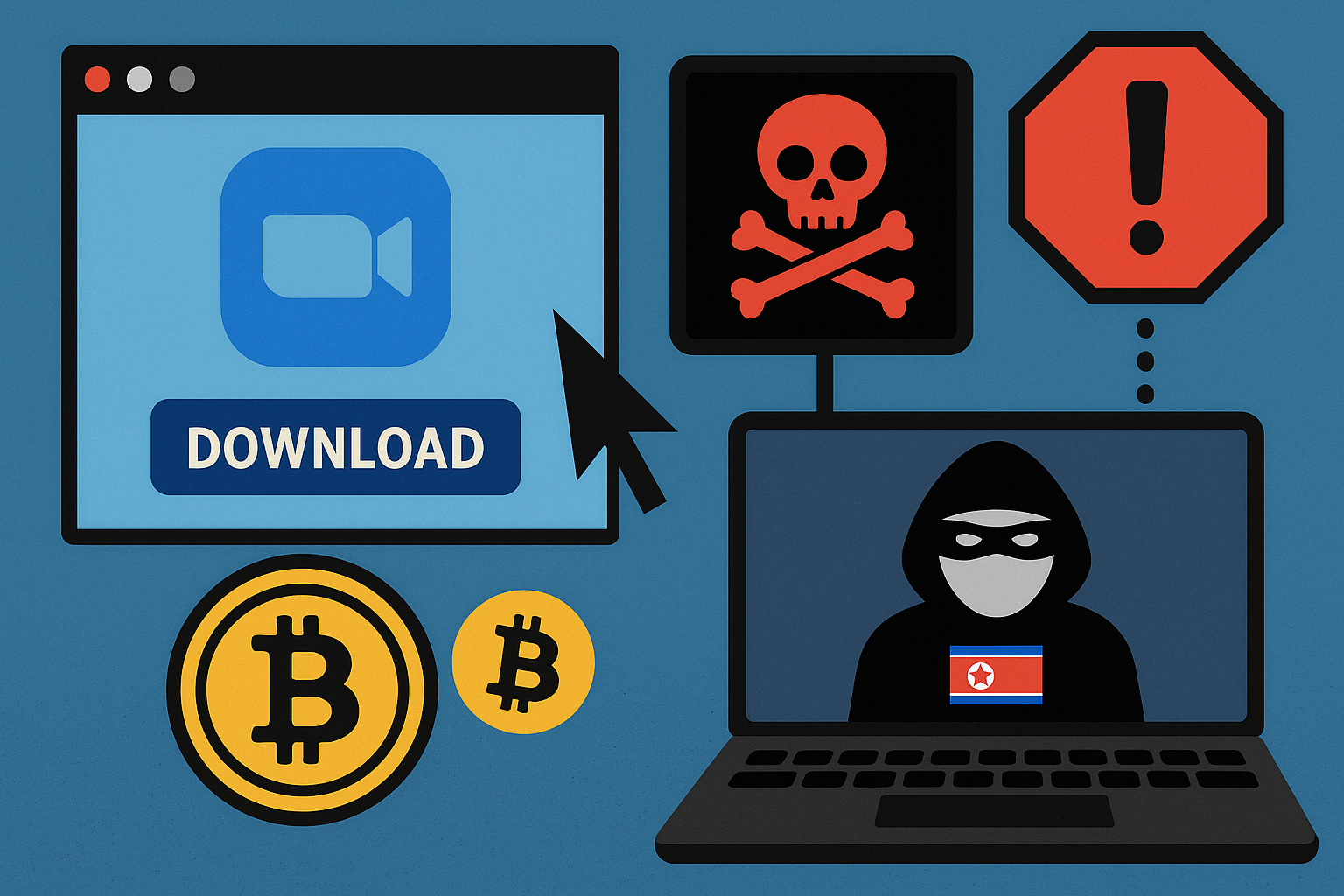
The digital world is facing a new breed of cyberattacks as North Korean hackers increasingly target cryptocurrency users through fake Zoom meetings. Leveraging social engineering tactics, these hackers deceive unsuspecting individuals into downloading malware disguised as audio patches, leading to substantial financial losses. This growing threat has raised alarms across the tech and crypto industries.
How the Scam Works
According to Security Alliance (SEAL), a renowned cybersecurity firm, the scheme begins on Telegram, where hackers impersonate known contacts of their victims. By targeting individuals with existing chat histories, the criminals increase their credibility, making their requests appear legitimate.
Once contact is established, the attackers set up a fake meeting link, often using apps like Calendly to appear professional. The meeting itself takes place in what victims believe is a genuine Zoom call. During the video session, attackers use pre-recorded footage of trusted individuals to lull victims into a false sense of security. When audio issues arise, the perpetrators prompt the victims to install what they claim is a patch or software update. This file, however, contains malicious software such as a Remote Access Trojan (RAT), granting hackers access to the victim’s device.
The Consequences: Data and Cryptocurrency Theft
Once the malware is executed, it silently extracts sensitive information, including passwords, internal documents, and private cryptocurrency wallet keys. Blockchain and crypto-focused organizations are particularly vulnerable, with hackers draining entire wallets in minutes without detection.
Cybersecurity expert Taylor Monahan has estimated that this method has already led to losses exceeding $300 million. The rapid deployment of malware in these scenarios highlights how crucial it is for users to act instantly if they suspect an infection during a meeting.
Tips to Protect Yourself
To combat these sophisticated scams, experts recommend several protective measures:
- Be cautious with meeting links and unexpected communication—even from known contacts. Verify details through alternative channels before proceeding.
- Use trusted antivirus software to detect and block malicious payloads.
- Avoid downloading files or updates shared during a call, particularly if the request seems urgent.
- If compromised, immediately disconnect from the internet and shut down your device to halt data transfer.
Related Product: Norton Crypto Security
For cryptocurrency users seeking robust protection, consider investing in Norton Crypto Security. This advanced security suite offers real-time threat detection tailored for digital wallets and blockchain transactions. With encrypted vaults and proactive malware scanning, it’s a must-have for anyone navigating the crypto space.
The Broader Implication
North Korean hacking groups such as Lazarus have long been linked to financially motivated cybercrime, using proceeds to fund state activities. These social engineering methods mark a shift from traditional hacking to human-centric manipulation, targeting trust and familiarity. As these threats escalate, cybersecurity awareness is more vital than ever.
Remember, even in familiar digital spaces, vigilance is your best defense.