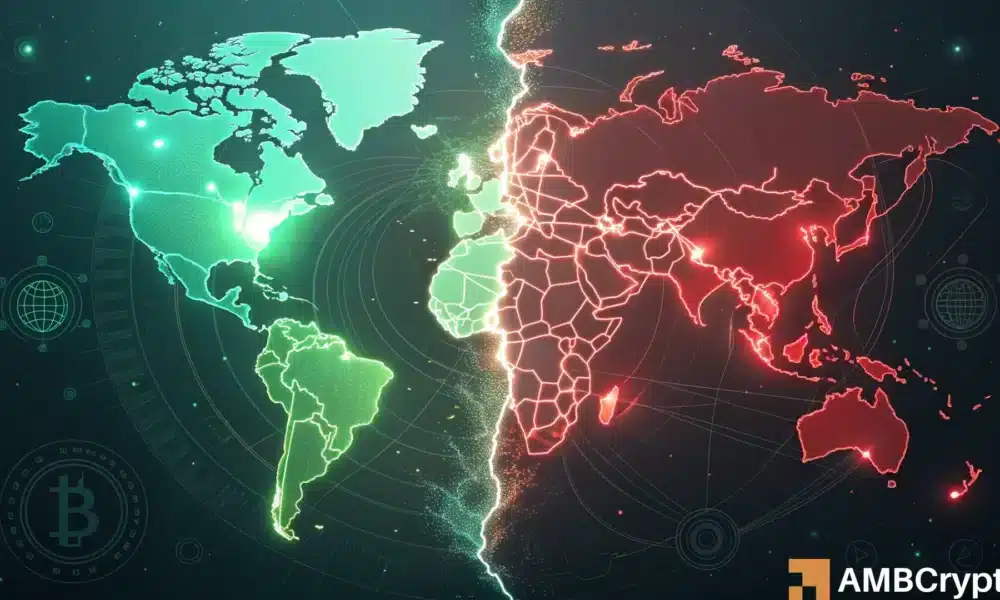
Understanding the Global Crypto Divide: Europe vs. Asia
The global cryptocurrency market is witnessing a dramatic divergence in regulatory approaches. While Europe embraces innovation and opens its financial systems to digital assets, Asia is tightening its oversight, aiming to mitigate risks. This duality in crypto regulations is shaping the future of the industry and impacting investors worldwide.
Asia’s Crackdown on Crypto Markets
In South Korea, stringent measures are being implemented following high-profile security breaches, such as the recent Upbit hack, where over 104 billion Solana-based tokens were stolen in mere minutes. South Korean regulators have responded by proposing “bank-level” liability rules. These rules will hold exchanges accountable for customer losses, even in instances where the exchange is not directly at fault.
Although welcomed by investors seeking better security measures, this move highlights a cautious approach towards digital assets. The Financial Supervisory Service (FSS) Governor Lee Chan-jin stated, “The hacking is not something we can overlook. However, regulatory oversight clearly has limits in imposing penalties.” Coupled with increased scrutiny on stablecoin projects, South Korea is setting a precedent for other Asian nations considering tighter control over the crypto realm.
Europe’s Progressive Stance on Crypto
On the other hand, Europe is innovating rapidly. Major financial players, such as BPCE, Spain’s BBVA, and Santander, are integrating cryptocurrency solutions directly into their customer-facing platforms. These moves give millions of customers seamless access to trade and store popular cryptocurrencies like Bitcoin (BTC), Ethereum (ETH), Solana (SOL), and USD Coin (USDC).
BPCE, for instance, has partnered with custody solution provider Hexarq to ensure secure user accounts with transparent fees. Spain leads the way among European nations, emphasizing the use of licensed fintech ecosystems to cater to younger, tech-savvy investors. Such integration reflects a larger trend of traditional financial institutions adapting to retain customers and compete with emerging platforms.
Regional Challenges
Despite the enthusiasm, not all EU members are moving at the same pace. Poland, for instance, has stalled its progress on complying with MiCA regulations, causing it to lag behind Italy and other European nations introducing advanced investor safeguards. This regulatory inconsistency may ultimately create hurdles for smooth crypto adoption across Europe.
What Does This Mean for the Future?
The contrasting approaches of Europe and Asia could have significant implications for global crypto investors. European markets may emerge as a hub for crypto innovation and mainstream adoption, while Asia’s regulations focus more on mitigating risk and ensuring consumer protection.
For investors navigating the crypto landscape, choosing platforms aligned with regulatory best practices will become increasingly vital. For example, hardware wallets like the Ledger Nano X provide secure offline storage of assets, offering peace of mind regardless of regional regulation. As markets evolve, staying informed and proactive remains key to successful crypto investing.
Final Thoughts
As Europe opens its gates to cryptocurrencies and Asia builds walls around them, the global crypto industry continues to adapt and grow. Keeping an eye on these regional shifts will be critical for both businesses and everyday investors looking to make strategic moves in this dynamic space.