Ethereum Price Falls Below $3,000: What’s Happening?
The cryptocurrency market is experiencing significant turbulence, with Ethereum ($ETH), the second-largest digital asset by market cap, plunging below the critical $3,000 support level on January 20, 2026. This comes after weeks of sideways trading and unsuccessful attempts to surpass the $3,400 resistance zone. Let’s dive into what caused this price crash and what could come next for Ethereum.
Key Drivers Behind the Ethereum Price Crash
The broader crypto market is currently in a risk-off environment, driven by macroeconomic concerns such as geopolitical tensions and shifting global trade policies. Investors are increasingly moving away from high-risk assets like Ethereum and Bitcoin, preferring safer havens like gold. Furthermore, the drop was exacerbated by liquidations of leveraged long positions as stop-loss levels were triggered.
Technical Analysis: $3,200 Breaks Down
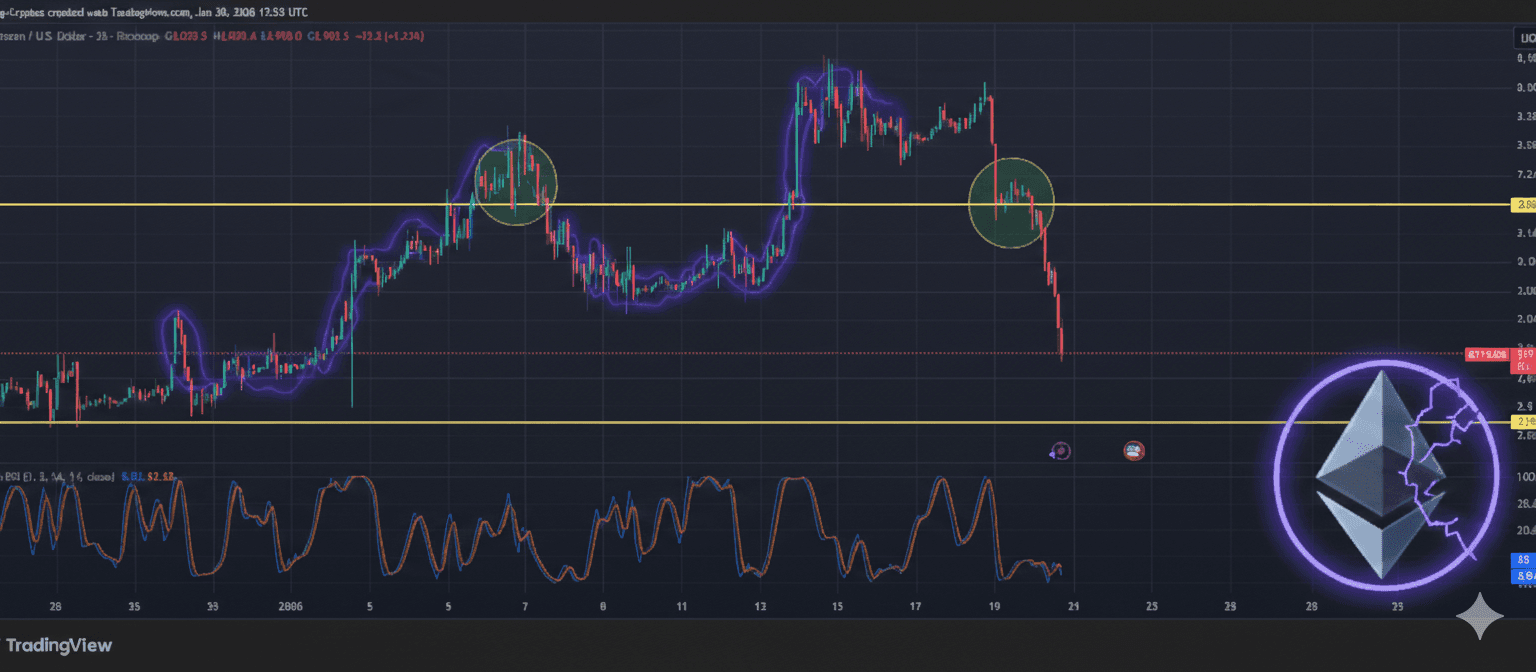
A technical breakdown has played a critical role in Ethereum’s decline. The 2-hour ETH-USD chart highlighted the bearish momentum when Ethereum was unable to sustain the $3,200 support level. Once this key level turned into resistance, a high-volume red candle pushed Ethereum’s price toward $2,992, with an immediate target support near $2,900.
Key technical highlights:
- Resistance turned support: The $3,200 level is now a formidable resistance zone.
- Immediate support: The next horizontal support is at $2,900. A break below this level could signal a move toward $2,700.
- Oversold conditions: Indicators such as the Stochastic RSI suggest Ethereum is heavily oversold, which often signals a short-term relief rally or “dead cat bounce.”
How to Navigate Ethereum’s Volatility
For traders and investors, the current situation presents both challenges and opportunities. Here’s what to consider:
Short-Term Trading Strategies
Monitor Ethereum’s daily close. If prices fail to reclaim the crucial $3,000 level, it could confirm a medium-term bearish trend. For active traders, ensuring low transaction costs and high liquidity during volatile periods is essential. Platforms like Coinbase and Binance remain top picks for trading Ethereum due to their competitive fee structures.
Long-Term Storage and Investments
For long-term holders, keeping assets secure is vital. Using a hardware wallet like the Ledger Nano X ensures maximum protection against hacks and exchange risks. With its easy interface and cutting-edge encryption, it’s a great investment for safeguarding your crypto assets.
What Lies Ahead for Ethereum?
All eyes are on the $2,900 support level. A failure to hold here could lead to deeper corrections toward the $2,700 zone, possibly revisiting lows seen in 2025. However, oversold indicators suggest a short-term bounce might occur, providing day traders and investors with opportunities to reassess their positions.
In conclusion, Ethereum’s price movements reflect broader market conditions and sentiment shifts. By understanding key support and resistance zones, traders can better navigate this period of uncertainty. For those looking to trade or invest, consider utilizing secure tools and platforms to maximize your efficiency and safety in the crypto market.