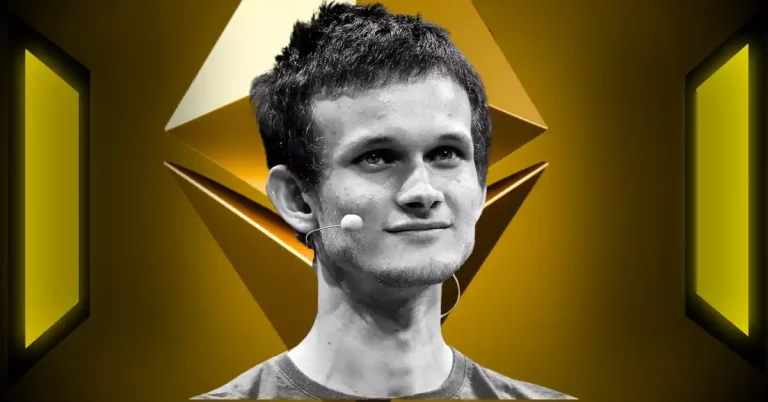
Understanding Ethereum’s Blockchain Trilemma
Blockchain technology has long faced a critical challenge often referred to as the ‘Blockchain Trilemma’—the difficult balance of achieving decentralization, security, and scalability simultaneously. For years, developers had to prioritize only two of these properties, leaving the third compromised. However, Ethereum co-founder Vitalik Buterin recently declared that this long-standing issue is now resolved through a series of groundbreaking upgrades.
The Game-Changing Upgrades to Ethereum
Key innovations such as Peer-to-Peer Data Availability Sampling (PeerDAS) and Zero-Knowledge Ethereum Virtual Machines (ZK-EVMs) have positioned Ethereum as a leader in the blockchain space. Buterin claims that these upgrades represent a paradigm shift in how decentralized networks can be structured, enabling Ethereum to achieve decentralization, security, and scalability without trade-offs.
PeerDAS allows Ethereum nodes to validate transaction data by sampling only small portions rather than downloading the data in full. This reduces the computational burden on validators and lowers the barrier to running an Ethereum node, paving the way for significantly increased transaction throughput—up to 12,000 transactions per second by 2026.
Meanwhile, ZK-EVMs are designed to enhance scalability by processing transactions off-chain while maintaining security through cryptographic proofs. These innovations are already at advanced development stages, with one part live on the mainnet and the other at a production-quality alpha stage.
The Impact on Ethereum’s Ecosystem
These developments reflect Ethereum’s long-term roadmap to reshape blockchain infrastructure. The network is on track to see major transaction fee reductions, upscaled gas limits, and distributed block production by the end of the decade. Vitalik Buterin emphasizes the importance of further decentralizing block building and reducing risks of centralized interference in transaction inclusion.
Ethereum’s advancements create immense potential not only for decentralized finance (DeFi) but also for NFTs, smart contract capabilities, and enterprise adoption. By solving the trilemma, Ethereum has solidified its position as a powerhouse in blockchain innovation.
Adopting the Future of Decentralization
If you’re considering diving into the world of blockchain technology, Ethereum offers cutting-edge solutions that are creating the foundations of a decentralized future. As developers, businesses, and investors gear up for Ethereum’s transformative potential, now is a great time to familiarize yourself with what lies ahead.
Looking to connect with Ethereum or run a node? Check out Ledger’s Nano X Hardware Wallet, a trusted option for securely storing your ETH assets while engaging with the latest on-chain developments.