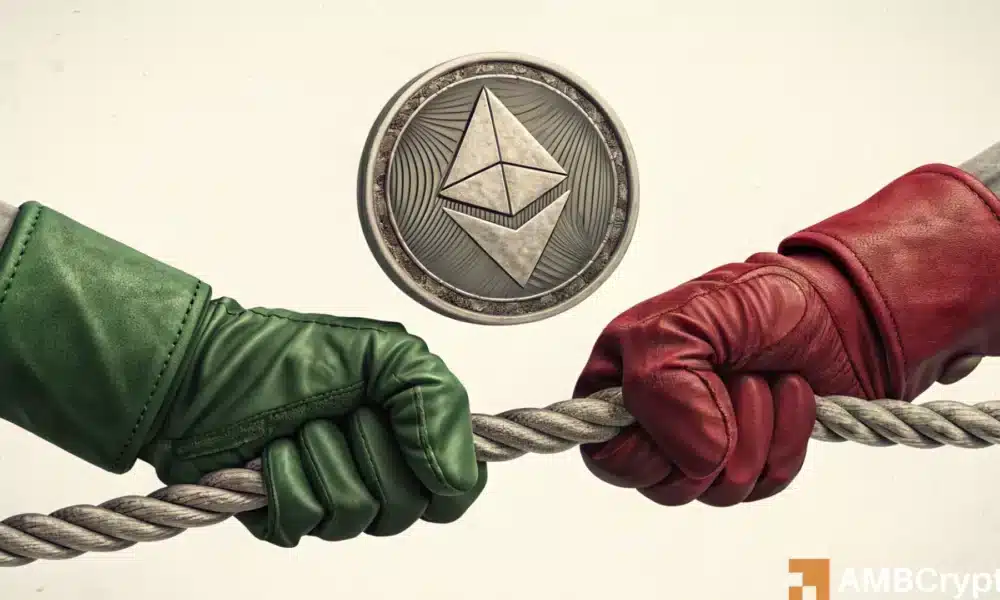
Cryptocurrency enthusiasts and investors alike are closely watching Ethereum (ETH) as it hovers around the $3,000 price level. The debate over whether Ethereum is overpriced or undervalued grows stronger, especially as its fundamentals improve while its price action remains stagnant.
Ethereum’s Recent Trajectory: Strong Fundamentals, Weak Price Action
Ethereum’s recent history shows a tug-of-war between its fundamentals and its market action. Despite posting negative returns in Q4 of the previous year—down by 28.28%—Ethereum has experienced significant improvements in on-chain activity, drawing attention to its underlying value.
For example, smart contract deployments have reached a record high of 8.7 million, according to Etherscan. At the same time, average transaction fees have significantly dropped to $0.17, a far cry from the $200 spike recorded in 2022. This indicates a notable increase in scalability and efficiency for the Ethereum network.
On-Chain Activity Shows Positive Trends
Ethereum recently hit 2.2 million daily transactions, underscoring its ability to handle high throughput without significantly increasing fees. While this might address scalability concerns, institutional inflows are still cautious about Ethereum, leaving room for speculation over its true valuation.
Despite its promising numbers, Ethereum ETFs experienced $72 million in outflows during the last quarter, signaling lingering concerns among institutional investors. Some analysts argue that Ethereum’s $3,000 price point could be overvalued when compared to competitors such as Solana (SOL), which boasts superior on-chain metrics and scalability. For instance, Solana has clocked in 232 million total transactions, with approximately 25% being non-vote transactions, outpacing Ethereum’s 1.2 million.
The Case of Undervaluation
While some critics call Ethereum overpriced, others point to its strong fundamentals and argue that it is undervalued. Factors like reduced transaction fees, high smart contract activity, and increasing daily transactions suggest that the market may not be fully accounting for Ethereum’s recent advancements.
Additionally, Ethereum’s more decentralized nature and broader adoption among developers give it a competitive edge that many rivals, including Solana, have yet to achieve. This dynamic creates an intriguing case for those seeking to capitalize on Ethereum’s long-term potential.
Considerations for Investors
As Ethereum demonstrates strong fundamental performance and technical resilience, it continues to pose compelling questions for both new and seasoned investors. Institutions remain cautious, but long-term cryptocurrency enthusiasts believe the downturn opens up a compelling buying opportunity.
If you’re considering investing in Ethereum or broadening your crypto portfolio, it’s essential to stay informed. Platforms like Ledger provide hardware wallets for secure storage, which can be pivotal for safeguarding your digital assets.
In conclusion, Ethereum’s $3,000 level may represent a tipping point. As debates over its valuation rage on, only time will tell if Ethereum can solidify its position as a decentralized giant or if it will face increased competition from next-generation blockchain platforms.