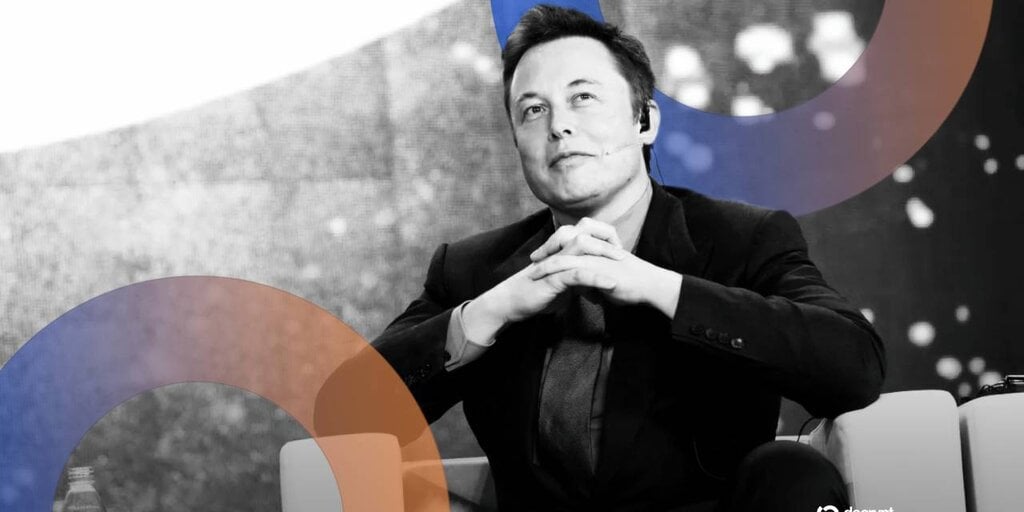
At CES 2026, Nvidia unveiled its latest development in autonomous driving technologies, introducing the Alpamayo AI model family. Touted as an open-source AI designed for complex urban navigation, the system was showcased in a live demo using a Mercedes to navigate through the bustling streets of Las Vegas. But Tesla CEO Elon Musk believes Nvidia’s technology still lags far behind Tesla’s autonomous driving capabilities.
Elon Musk’s Strong Statements on Nvidia’s Progress
Musk, known for his candid opinions, stated that Nvidia’s self-driving software is unlikely to pose serious competition to Tesla’s technology for at least another five to six years. He emphasized that achieving ‘safer-than-human’ fully autonomous driving still requires years of refinement, as automakers face long delays in developing and deploying the necessary hardware and software at scale.
“The actual time from when [a self-driving car] sort of works to where it is much safer than a human is several years,” Musk shared on X (formerly Twitter). He added that ‘legacy automakers’ face even greater delays because of the complexities of designing cameras and AI systems and integrating them into production vehicles.
The Competitive Edge: Tesla Vision
Tesla has been a trailblazer in autonomous driving since Musk hinted at the idea in 2013. Unlike competitors relying on lidar and multiple sensors, Tesla’s ‘Tesla Vision’ system employs only cameras and onboard AI. By standardizing this approach across its fleet, Tesla has removed the need for radar and ultrasonic sensors, making its self-driving technology cost-effective and scalable.
Tesla launched its widely discussed Autopilot system just two years after Musk’s initial hints, followed by its Full Self-Driving (FSD) beta. Despite criticisms and legal challenges related to safety, Tesla’s vision-based system has placed it miles ahead of many competitors still experimenting with sensor-based technologies.
Nvidia’s Aspirations and the Industry’s Challenges
During his keynote at CES 2026, Nvidia CEO Jensen Huang expressed admiration for Tesla while outlining Nvidia’s long-term plans. He stated that Nvidia’s journey into self-driving began nearly eight years ago, fueled by the belief that deep learning and artificial intelligence would revolutionize computing—and by extension, autonomous driving.
“We reasoned early on that deep learning would reinvent the entire computing stack… If we were ever going to understand how to navigate this new future, we had to get good at building the entire stack,” Huang explained. Nvidia plans to bridge the gap through innovations in chipsets and software—but as Elon Musk pointed out, real-world deployment and safety remain significant hurdles.
Autonomous Driving Faces Growing Pains
The autonomous vehicle space continues to encounter numerous challenges. For instance, late in 2025, Waymo recalled its robotaxis after failing to stop for school buses. Further, a power outage led to service suspensions in San Francisco, exposing vulnerabilities in infrastructure-dependent technologies.
By contrast, Tesla capitalized on its vision-only approach by avoiding similar outages and maintaining reliable service even during power disruptions. Musk remarked that Tesla’s limited robotaxi service, which operates with a human safety driver, was unaffected, showcasing the reliability of Tesla Vision.
Key Takeaway: A Trustworthy Self-Driving Cream of the Crop
While Nvidia’s innovations might eventually play a significant role in the future of autonomous driving, Tesla’s head start and hardware standardization set an unmatched benchmark. Tesla Vision’s reliance on cameras rather than lidar gives the company a cost-effective yet reliable edge, reinforcing its position as a market leader.
Related Recommendation: Want a clear view on and off the road? Check out the Ray-Ban Smart Eyewear, a perfect accessory for tech enthusiasts on the move. Offering UV protection paired with Bluetooth connectivity, these stylish glasses make staying connected both safe and fashionable.






