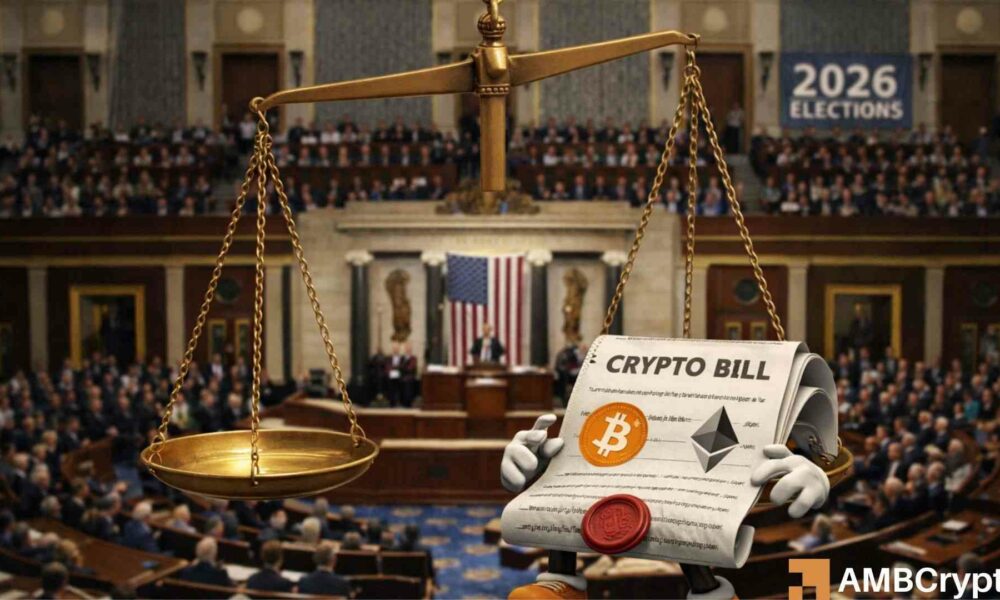
The future of the U.S. Crypto Market Structure Bill hangs in uncertainty as we advance toward the 2026 U.S. midterm elections. With significant delays already plaguing the bill’s progression, experts believe the legislative process could face further setbacks due to strategic political maneuvering.
Politics and Delays: The Factors Weighing on the Bill
Recently, Scott Johnsson, General Partner at Van Buren Capital, expressed concerns regarding the bill’s postponement to January 2024. He suggested that Senate Democrats might be intentionally prolonging negotiations to demonstrate goodwill to crypto lobbyists while avoiding conflict with banking sector interests. However, extending the delay past midterms could place the legislation in a precarious position, jeopardizing its chances of success.
According to Johnsson, internal party dynamics may shift significantly if the issue is pushed beyond midterms, making bipartisan support more difficult to achieve. This, he explained, could leave the crypto industry stuck with opposition from lawmakers unwilling to compromise.
Key Issues Dividing Parties
The Crypto Market Structure Bill addresses various contentious topics, including oversight of decentralized finance (DeFi), stablecoin rewards, and ethical concerns linked to certain political figures. Notably, opposition from traditional banking entities has made stablecoin rewards a polarizing issue, especially as these institutions lobby against their inclusion in the legislation.
Traditional financial players, such as Citadel Securities, are advocating for stricter DeFi regulations to manage risks associated with the tokenization boom. Conversely, the crypto sector is pushing back, requesting exemptions for DeFi platforms under the new legislative framework.
Significant Developments and Stakeholder Involvement
On December 17, crypto industry representatives, including Coinbase executives, met with the Senate Banking Committee, led by Chair and Republican Senator Tim Scott. The bipartisan discussion reportedly maintained a ‘cautiously optimistic’ tone about the bill’s trajectory, highlighting areas of incremental progress despite existing obstacles.
Financial lobbying groups from the banking sector have ramped up their spending, with over $100 million allocated to support pro-bank candidates in the upcoming midterms. This conflict of interests sets the stage for a prolonged battle between traditional finance entities and the burgeoning cryptocurrency sector.
What Lies Ahead for the Bill?
Two versions of the bill currently exist: the CLARITY Act, advanced from the House, and the Senate’s Responsible Financial Innovation Act (RFIA). The RFIA is awaiting markup before it can proceed to a Senate vote. If approved, it will then need to be reconciled with the House’s version before becoming law.
Despite these challenges, some experts estimate there is a 77% chance the bill could become law by 2027. However, this hinges greatly on bipartisan support during a politically volatile period, especially considering the influence of both crypto and banking lobbying groups.
Stay Informed and Involved
For those looking to explore cryptocurrency investments or learn more about safe practices within this evolving landscape, ensure due diligence before making any decisions. For example, tools like the Ledger Nano X Crypto Wallet can help secure your digital assets effectively, making it an essential product for investors navigating a rapidly changing market.
Stay tuned for updates as we follow the ongoing developments in this pivotal piece of legislation and its impact on the evolving crypto ecosystem.