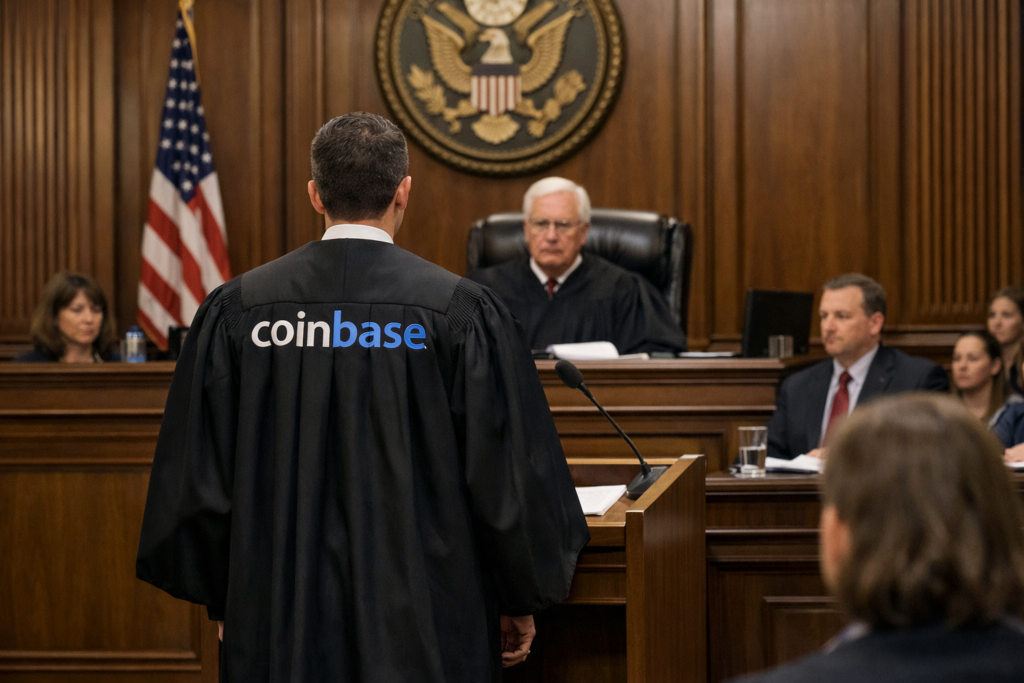
In a bold move to secure federal oversight, leading cryptocurrency exchange Coinbase has filed lawsuits against Michigan, Illinois, and Connecticut. The company aims to establish prediction markets under the jurisdiction of the Commodity Futures Trading Commission (CFTC) instead of state-level gambling laws, positioning itself as a pioneer in the financial derivatives space.
What Are Prediction Markets?
Prediction markets allow users to trade in contracts based on the outcomes of specific events such as elections, sports games, or financial events. Unlike traditional sportsbooks, these markets act as neutral exchanges that facilitate trades, matching buyers and sellers without taking direct financial interests in the outcomes.
In a December 19 statement on X (formerly Twitter), Coinbase’s Chief Legal Officer Paul Grewal stated, “Some states think prediction markets fall outside the CFTC’s jurisdiction when they relate to sports. But Congress has made it clear that these fall under CFTC’s scope, as they are commodities under U.S. law.”
State Regulators vs. Federal Oversight
The lawsuits emphasize a critical regulatory conflict: whether federally-approved markets can be curtailed by state laws. Coinbase argues that allowing individual states to enforce stricter regulations could undermine the uniformity necessary for federally supervised platforms. This issue is particularly pertinent as other companies, such as Kalshi and Crypto.com, face similar pushback.
For instance, despite securing CFTC approval, Kalshi continues to battle state regulators over its event market products in states like Maryland and Nevada. Meanwhile, the state of Connecticut issued a recent cease-and-desist order against Kalshi, leading to litigation expected to escalate further by 2026. Coinbase now hopes to pre-emptively avoid similar legal entanglements.
What’s Next for Prediction Markets?
Coinbase’s decision to integrate prediction markets directly into its app alongside crypto and stock trading signifies the growing importance of this financial tool. By pursuing federal approval, Coinbase aims to solidify prediction markets as a part of mainstream financial infrastructure.
Interested in exploring how prediction markets can enhance your financial strategies? Check out Capital.com, where you can find expert-managed platforms for derivatives trading, including commodities, crypto, and stocks.
Conclusion
The outcome of Coinbase’s legal battles will likely shape the future of prediction markets and set a precedent for federal versus state regulatory powers in the burgeoning space of financial event contracts. As this story develops, it will be a critical watchpoint for businesses, investors, and regulators alike.






