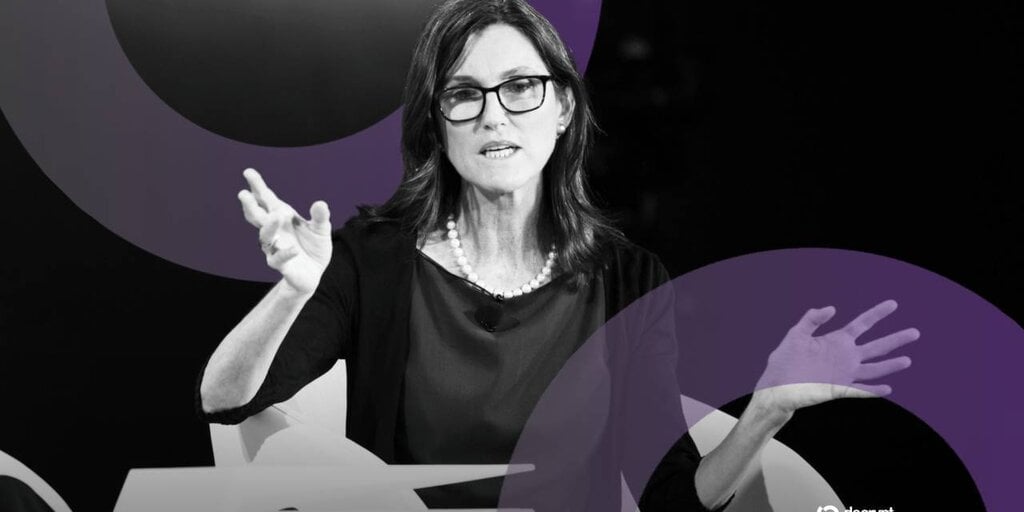
Bitcoin’s historic four-year cycle—a topic of much debate among cryptocurrency enthusiasts and skeptics alike—is now being challenged by Cathie Wood, CEO of Ark Invest. In a recent interview with Fox Business, Wood shared her insights on how institutional investment is reshaping Bitcoin’s trajectory and minimizing its notorious volatility.
Understanding Bitcoin’s Four-Year Halving Cycle
Historically, Bitcoin’s value has often skyrocketed following its halving events, which reduce the mining reward for creating new blocks on its blockchain. The most recent halving occurred on April 20, 2024, reducing rewards from 6.25 BTC to 3.125 BTC per block. These cycles have typically fueled significant bull runs due to a reduction in BTC supply, but Cathie Wood argues that the paradigm is shifting.
Institutional Investors Reshaping the Market
In Bitcoin’s early days, the cryptocurrency would often experience fluctuations of 75-90%. However, Wood believes that the increasing prevalence of institutional investors—such as hedge funds, financial institutions, and even corporations—is stabilizing the asset. She notes, “The volatility is going down… we think the move by institutions into this new asset class is going to prevent much more of a decline.”
Wood’s comments come amidst reports from Standard Chartered Bank that suggest Bitcoin’s halving cycles, which historically drove its price, are gradually losing their significance due to the advent of ETF purchasing. Bitcoin ETFs, like Ark Invest’s 21Shares Bitcoin ETF (ArkB), are attracting attention as accessible entry points for institutional investors and retail buyers alike. Explore Ark’s Bitcoin ETF options here.
Bitcoin: From Risk-Off to Risk-On Asset
Traditionally, Bitcoin has been viewed as a “risk-off” asset, behaving similarly to gold during periods of financial uncertainty. However, Wood now categorizes it as a “risk-on” asset, reflecting broader economic sentiment and aligning more closely with stocks and real estate. “Gold remains the preferred hedge against geopolitical risk,” Wood observed, repositioning Bitcoin as more volatile and growth-oriented.
Instances such as the 2023 U.S. regional banking crisis or the European sovereign debt troubles saw Bitcoin briefly return to its “risk-off” role. However, Wood asserts that such scenarios are becoming rarer due to its stronger integration into mainstream finance.
Pro-Crypto Investments Continue to Climb
Cathie Wood’s bullish stance on crypto remains unwavering. Recently, Ark Invest has expanded its investments in key crypto assets such as Coinbase, and stablecoin issuer Circle, while continuing to accumulate its Bitcoin ETF holdings. Standard Chartered Bank also echoes a sentiment of growing ETF-driven investment trends but has lowered its Bitcoin price estimate for 2025—citing $100,000 in contrast to prior predictions of $200,000.
While the four-year cycle theory might be fading, optimism about Bitcoin’s future continues to soar among market leaders. As ETFs like ArkB gain popularity and trust, crypto assets are proving to be integral in investor portfolios both big and small.
What This Means for the Future of Bitcoin
Bitcoin’s evolution mirrors the wider adoption of cryptocurrencies globally. The narrative is no longer dominated by retail investors but by institutional giants focusing on long-term gains. For those looking to diversify their portfolios, cryptocurrency ETFs might be the gateway. Learn more about the Ark Invest ETF series here.