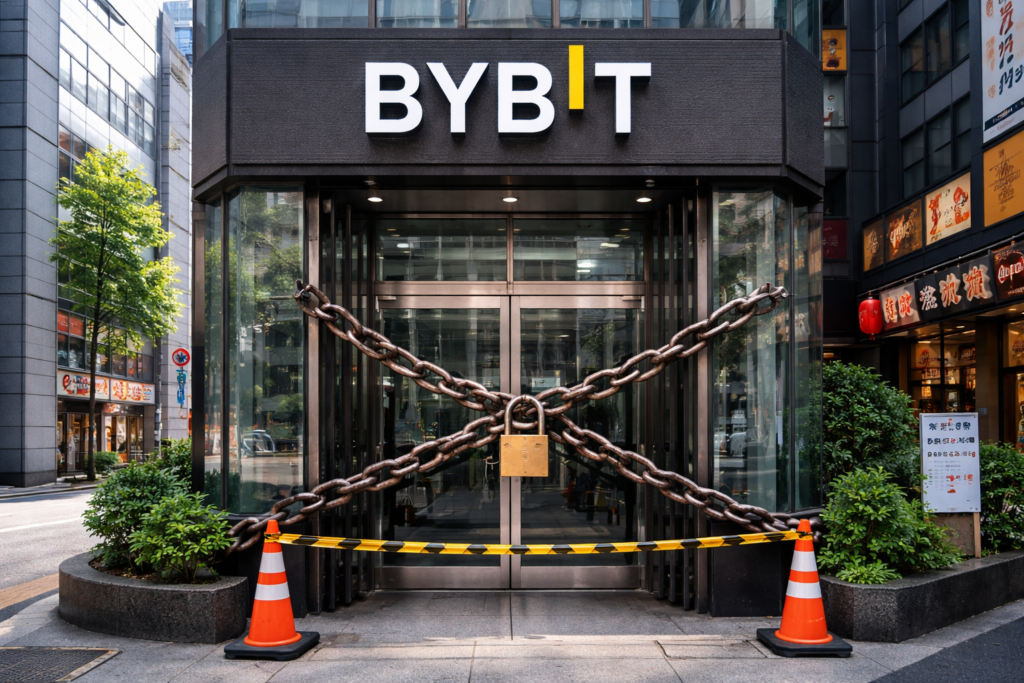
Cryptocurrency exchange giant Bybit has announced its decision to gradually implement account restrictions for its Japanese users starting in 2026 as part of an effort to comply with the country’s stringent regulatory framework. This move highlights the growing pressure on crypto platforms to adapt to local regulations in one of the world’s toughest markets for cryptocurrency operations.
Why Is Bybit Exiting the Japanese Market?
Bybit, one of the leading names in the global crypto industry, has operated in Japan for years without the necessary local registration or licensing. However, Japan’s Financial Services Agency (FSA) started issuing repeated warnings to Bybit and other platforms from 2021 onward, citing violations of the country’s fund settlement laws for operating unregistered crypto exchanges. This regulatory crackdown is part of Japan’s effort to ensure compliance and protect investors from potential risks.
What Does This Mean for Japanese Crypto Users?
Starting in 2026, Bybit will impose gradual restrictions on accounts held by residents of Japan. While no immediate account closures have been announced, users will receive updates on the remediation process through subsequent communications. New user registrations in Japan were voluntarily suspended earlier, signaling Bybit’s intent to comply with local laws while exiting the market.
For active crypto traders in Japan, this development may lead to disrupted access to popular platforms and services. However, it also serves as a reminder of the importance of choosing regulated trading platforms that adhere to local laws. A recommended platform for Japanese users is eToro, a globally recognized trading service that offers regulated crypto trading solutions.
Japan’s Strict Cryptocurrency Regulations
Japan is known for its stringent regulatory oversight of the cryptocurrency industry. The upcoming 2026 legislative session is expected to propose reclassifying cryptocurrencies as “financial products.” This reclassification would impose compliance requirements more aligned with traditional securities, enhancing investor protection and market integrity. Key regulatory measures expected to accompany the changes include:
- Obtaining a Type 1 Financial Instruments Business license
- Enforcement of insider trading bans
- Mandatory emergency reserve funds to protect against hacks or operational failures
- Enhanced disclosure requirements for cryptocurrencies
This shift marks a significant step forward in Japan’s efforts to create a highly secure and transparent cryptocurrency market, but it also raises the bar for entry for crypto platforms.
Bybit’s Global Strategy Amid Regulatory Pressures
In addition to its exit from Japan, Bybit has scaled back operations in other regions facing regulatory scrutiny, such as Hong Kong, the United States, and France. However, the platform has also made strides toward compliance in selected markets. Bybit recently resumed full operations in India by registering with the Financial Intelligence Unit and addressed its compliance issues in the UK with a two-year absence capped by a regulated re-entry.
While Bybit’s exit serves as a wake-up call to other crypto platforms, users across the globe are left determining which trading services meet compliance and offer long-term stability. If you are looking for alternatives, consider Coinbase, a highly regulated platform offering crypto trading services globally.
The Future of Cryptocurrency in Japan
Japan is set to remain a key player in shaping the global cryptocurrency narrative with its proactive approach to regulation and investor protections. Its evolving framework and emphasis on financial security may further legitimize cryptocurrencies as a mainstream financial product. For crypto enthusiasts and investors, adapting to these changes and staying informed about compliant trading platforms is crucial for navigating the shifting landscape.