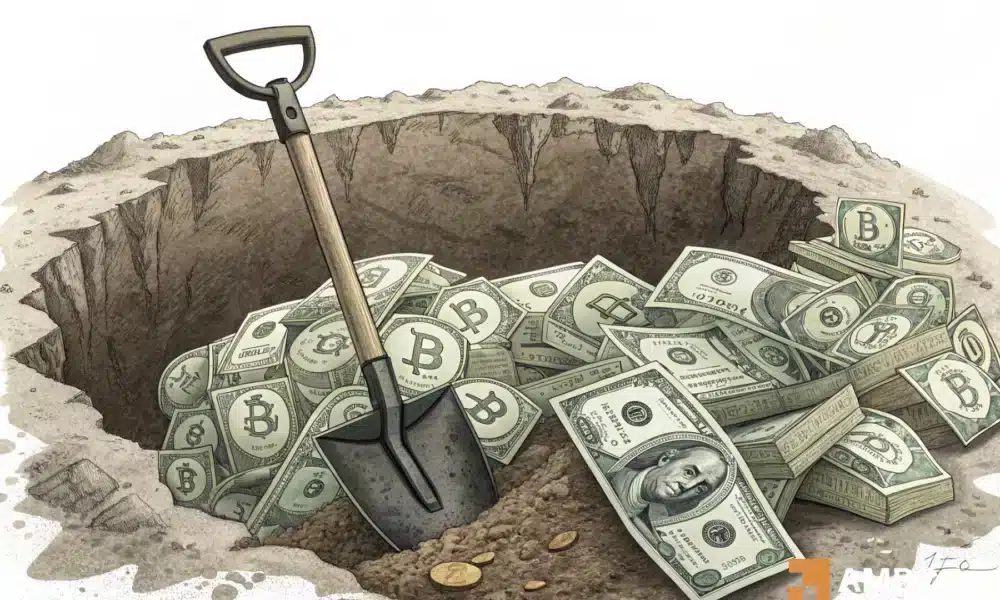
Bitcoin miners are under increasing pressure as the cryptocurrency market faces new challenges. According to recent data from Glassnode, total miner revenue has seen an 11% drop, falling from 562 BTC in mid-October to 502 BTC. This decline comes at a time when mining difficulty has reached an all-time high of 159 trillion, requiring significant increases in hashing power and electricity to maintain rewards.
Are Bitcoin Miners on the Verge of Capitulation?
The combination of falling revenue and rising difficulty is creating a perfect storm, putting serious strain on miners’ profitability. Short-term holders are also feeling the pressure, with Bitcoin trading approximately 30% below its peak of $126k. Many are sitting on unrealized losses of about 12%, further exacerbating market sentiment.
Mining Difficulty: A Closer Look
The new records in Bitcoin mining difficulty mean that miners must work increasingly harder but for diminishing returns. This heightened difficulty level is a direct result of the increased competition on the network, making it more energy-intensive and costlier to mine BTC, leaving margins razor-thin for many operators.
However, the mining sector isn’t the only area under pressure. Institutional interest in Bitcoin, a key driver of previous bull rallies, has yet to return with consistent inflows. Recent ETF data highlighted $80 million in net outflows, a stark contrast to the steady inflows seen during market booms. Without substantial institutional backing, Bitcoin’s current $90k support level remains tenuous.
What’s Next for Miners?
Historical patterns reveal that periods of prolonged difficulty and revenue divergence have led to miner capitulation in the past. Miners’ net position change turned negative in late November, with outflows of –3,555 BTC coinciding with Bitcoin dropping to around $80k. Current data suggests a similar trend as net outflows now stand at –487 BTC, hinting that another wave of miner distribution could be imminent.
While Bitcoin’s long-term prospects remain optimistic for many investors, the short-term outlook is undeniably challenging. With market volatility high and cautious bullish momentum, the risk of further miner capitulation looms large.
How Can Miners Reduce Operational Costs?
Given the tightening profit margins, miners are exploring ways to enhance efficiency and reduce costs. One of the emerging trends in the industry is the adoption of eco-friendly mining rigs and renewable energy sources. For instance, products like the Bitmain Antminer S19 Pro, designed for energy efficiency, are becoming increasingly popular among large-scale operations looking to cut costs without sacrificing performance.
Ultimately, the path forward for Bitcoin miners will depend on the market’s ability to stabilize and the potential influx of institutional investment. Until then, the sector is likely to face ongoing challenges as it navigates these turbulent times.