The $2 Billion Bet: Nvidia’s Strategic Pivot to AI Compute-as-a-Service

On June 22, 2026, Nvidia announced a landmark $2 billion investment in Nebius AI, a European cloud provider specializing in AI-optimized infrastructure. This move, reported by Blockonomi, triggered an immediate 18% surge in Nebius’s stock (NBIS) and represents a fundamental shift in the AI landscape. Nvidia, the undisputed leader in AI chip design, is no longer content with just selling hardware. This investment is a direct play to control the entire AI value chain, from silicon to service.
Nebius AI, founded by former Yandex Cloud executives, operates a unique, vertically integrated platform. They design their own servers, liquid cooling systems, and networking gear, all optimized to run Nvidia’s latest GPUs (like the H200 and Blackwell architectures) at peak efficiency. For Nvidia, this is a strategic hedge against hyperscalers like AWS, Google Cloud, and Microsoft Azure. While those giants are major Nvidia customers, they are also developing their own AI chips (TPUs, Trainium, Inferentia). By backing Nebius, Nvidia ensures a “friendly” cloud entirely dedicated to its stack, providing a pure-play, high-performance alternative for developers and enterprises.
The timing is critical. The global AI compute shortage is worsening, with lead times for high-end GPUs stretching into quarters. Nvidia’s investment will directly fund the expansion of Nebius’s data center footprint across Europe, aiming to bring scalable, on-demand AI training and inference capacity closer to users. This isn’t just about raw compute; it’s about providing a full-stack solution that includes Nebius’s own suite of AI development tools and pre-trained models, reducing the friction for companies to deploy large-scale AI.
Why AI Content Creators Should Care About the Infrastructure War
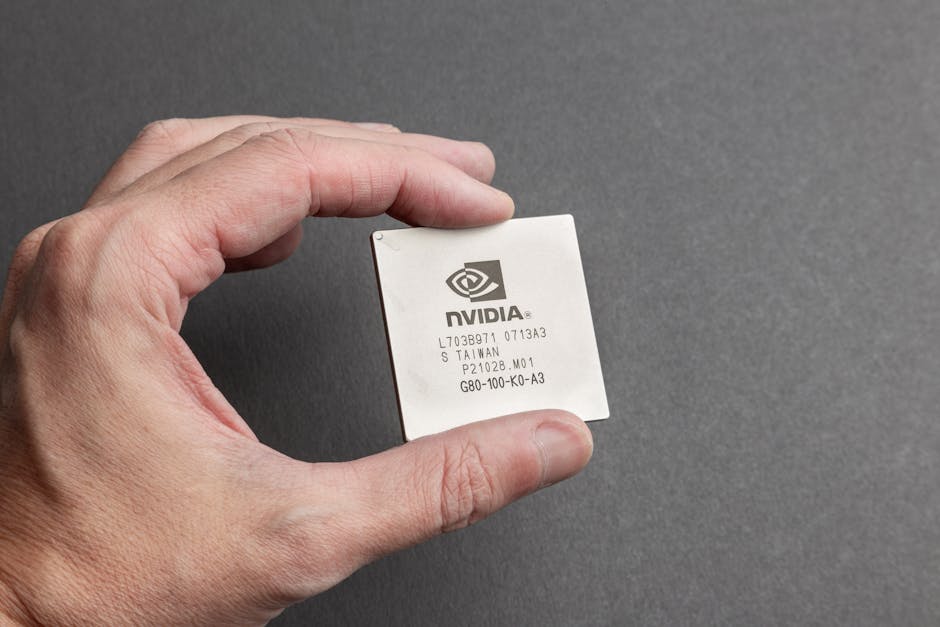
For AI content creators, bloggers, and automated publishers, the battle for AI infrastructure isn’t a distant corporate drama—it’s a direct determinant of your capabilities, costs, and competitive edge. The Nvidia-Nebius deal has three immediate implications:
1. The Democratization of High-End AI Models: Access to state-of-the-art models like GPT-4, Claude 3, and their successors has been gated by API costs and usage limits. Specialized cloud providers like Nebius, backed by Nvidia’s muscle, will increase the availability of “raw” AI compute. This means more companies will be able to host and fine-tune their own large language models (LLMs), leading to a proliferation of niche, domain-specific models. For content creators, this translates to more powerful, affordable, and customizable AI writing assistants beyond the mainstream offerings.
2. The Rise of Latency-Sensitive Real-Time Content: As AI infrastructure spreads geographically (like Nebius’s European expansion), latency decreases. This enables real-time AI applications previously not feasible. Imagine AI tools that can research, draft, and optimize a breaking news article in under 60 seconds based on live data feeds, or dynamically personalize content for a user based on their immediate browsing session. The reduced latency from localized AI clouds will make real-time content automation a standard competitive tool.
3. Cost Volatility and New Pricing Models: Increased competition in the AI cloud market will pressure prices, but also introduce complexity. We’ll see a rise in specialized pricing tiers: pay-per-token inference, subscription-based fine-tuning clusters, and spot pricing for non-urgent batch jobs (like generating a month’s worth of blog post drafts). Content creators will need to become savvy about matching their AI workload (quick social posts vs. deep-dive whitepapers) to the most cost-effective infrastructure.
Practical Strategies: Leveraging the New AI Infrastructure Landscape
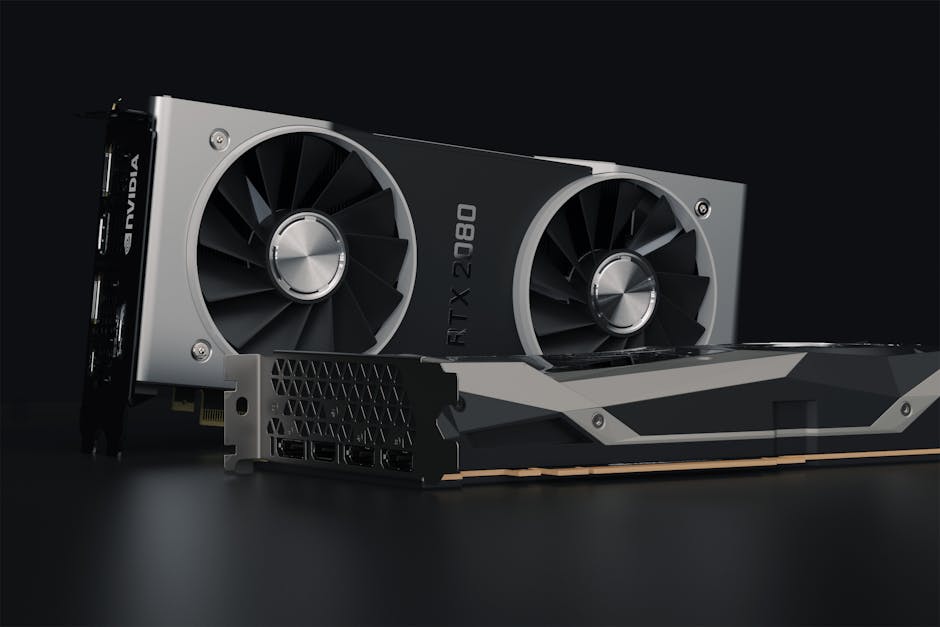
Adapting to this shift requires more than just watching stock prices. Here are actionable steps for AI-powered content operations:
1. Architect for Multi-Cloud AI: Avoid vendor lock-in. Design your content automation workflows (using tools like EasyAuthor.ai, Make, or n8n) to be model-agnostic. Your pipeline should be able to pull from OpenAI’s API, a Claude endpoint on Anthropic’s cloud, and a fine-tuned Llama model running on a Nebius-like service. This flexibility lets you hunt for the best performance-to-cost ratio for each task and insulates you from outages or price hikes from any single provider.
2. Invest in Prompt Engineering for Efficiency: As underlying compute becomes more commoditized, the quality of your instructions becomes the key differentiator. A well-engineered prompt that generates a perfect 1,000-word article in one call is far more cost-effective than a vague prompt that requires three generations and heavy editing. Dedicate time to systematic prompt optimization; it’s your direct lever on infrastructure costs.
3. Explore On-Demand Fine-Tuning: The new generation of AI clouds will make it simpler and cheaper to fine-tune a base model on your specific content corpus—your blog’s style guide, product descriptions, or industry jargon. Instead of relying on a generic AI, you can run a specialized model tuned for your voice. Start by cataloging your best-performing content to create a training dataset. Services like Nebius will likely offer one-click fine-tuning, turning your unique tone into a sustainable competitive advantage.
4. Monitor the Edge AI Trend: Nvidia’s investment highlights a push towards distributed compute. Watch for AI capabilities moving to the “edge”—closer to the point of creation. This could mean WordPress plugins with integrated, lightweight LLMs that run directly on your hosting server, reducing API dependence. Prepare by ensuring your hosting environment (e.g., modern PHP, sufficient RAM) is ready to support these future tools.
The Future of AI Content is Built on Compute

The Nvidia-Nebius deal is a clear signal: the next phase of AI advancement will be defined by infrastructure accessibility. For content creators, the ability to generate high-quality, scalable, and personalized content will soon depend less on which AI tool you choose and more on your understanding of the underlying compute landscape. The winners will be those who master the trifecta: strategic prompt design, agile multi-cloud workflows, and leveraging specialized fine-tuning. The era of AI content creation is moving from a software-centric model to a compute-centric one. Start building your strategy accordingly.
