According to a June 8, 2026 report by Blockonomi, the first regulated perpetual futures contract for Chainlink’s LINK token has launched on the CFTC-regulated prediction market platform Kalshi. This event marks a pivotal shift: regulated crypto derivatives are entering mainstream U.S. markets, and the demand for high-quality, timely content around these complex financial products is exploding. For AI content creators, this represents both a massive opportunity and a significant challenge. The technical, regulatory, and financial nuances of products like “Kalshi LINK perps” require a depth of understanding that generic AI models often lack.
Why This Launch Signals a New Era for Financial Content

The launch of Chainlink perpetual futures on Kalshi is not just another crypto product release. It’s a landmark event with three critical dimensions that redefine the content landscape.
First, it introduces a fully regulated avenue for U.S. investors to speculate on LINK price movements. Kalshi operates under the oversight of the Commodity Futures Trading Commission (CFTC), a key U.S. regulatory body. This contrasts sharply with the unregulated or offshore perpetual futures (“perps”) markets that have dominated crypto trading. For content creators, this means the discourse must shift from purely technical analysis to include regulatory compliance, investor protection, and legal frameworks. Articles must now explain what “CFTC oversight” means in practice.
Second, it bridges the worlds of traditional finance (TradFi) and decentralized finance (DeFi). Chainlink is a cornerstone of the DeFi ecosystem, providing oracle data to smart contracts. Its price is now tradable via a TradFi-style, regulated derivatives contract. This convergence creates a need for content that educates both traditional finance audiences about DeFi fundamentals and crypto-native audiences about regulated market mechanics. The audience is suddenly broader and more diverse.
Third, the timing is strategic. The launch coincided with a notable rebound in LINK’s market price. Content must now connect product availability with market sentiment and price action analysis. This requires integrating real-time data feeds, historical price charts, and speculative market narratives into a coherent story. The demand for content that is not only accurate but also contextually aware and timely has never been higher.
The AI Content Creation Challenge: Depth vs. Speed

For creators using AI tools like ChatGPT, Claude, or specialized platforms like EasyAuthor.ai, this event exposes a core tension in automated content creation: the trade-off between production speed and substantive depth.
Standard AI prompts can generate a basic news summary of the launch. However, they typically falter when required to explain:
- The specific mechanics of a “perpetual futures contract” versus a standard futures contract.
- The role of the CFTC and how its oversight differs from the SEC’s.
- The technical function of Chainlink oracles and why their token’s price is a meaningful derivative.
- The implications for liquidity, market manipulation, and institutional adoption.
This is where strategic AI content workflows become essential. The opportunity lies not in using AI to write a superficial article, but in using AI as a research assistant, data synthesizer, and drafting engine for a human editor who provides the critical financial and regulatory expertise. The AI can gather all recent price data for LINK, summarize CFTC public statements, and compile definitions of perpetual futures. The human expert then structures this information into an authoritative analysis.
Failure to achieve this depth results in content that is easily identifiable as low-value AI output, which risks losing reader trust and search engine ranking. Google’s Search Generative Experience (SGE) and evolving SEO algorithms increasingly favor content that demonstrates real expertise, especially in complex verticals like finance.
Practical Tips for AI-Driven Coverage of Complex Financial Events
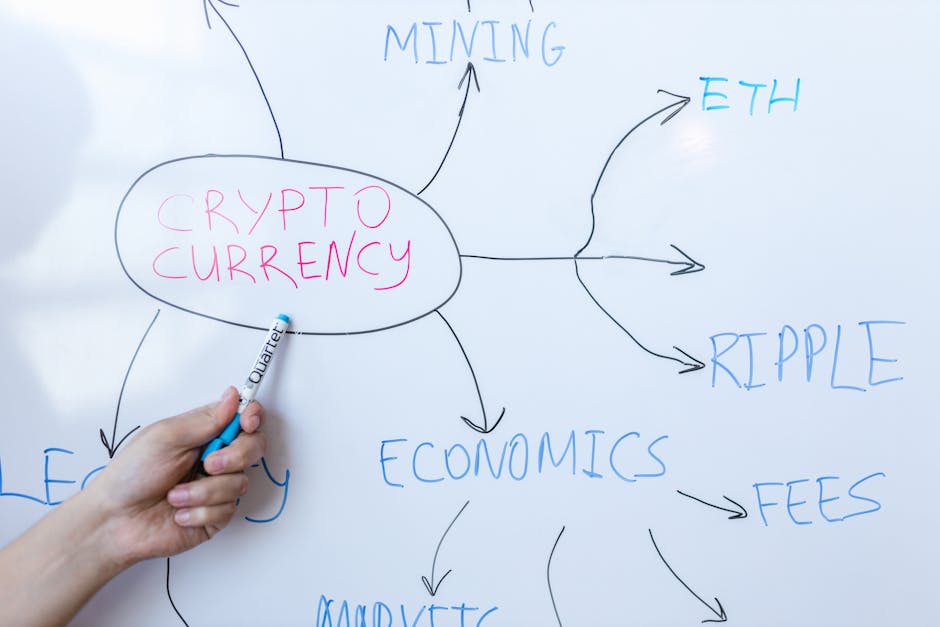
To produce competitive content on developments like the Kalshi LINK perps launch, AI content strategists must adopt a layered, tool-enhanced approach.
1. Implement a Multi-Source Research Pipeline: Do not rely on a single AI model for research. Use a combination of tools:
- Perplexity.ai or ChatGPT with browsing enabled to gather the latest news reports and official announcements from Kalshi and Chainlink.
- Specialized data plugins (if available in your AI platform) to pull real-time and historical price data for LINK from sources like CoinGecko or Binance API.
- Google Scholar or Semantic Scholar search prompts to find academic or regulatory papers on CFTC oversight of digital assets.
Compile this research into a structured fact base before drafting.
2. Use AI for Structuring, Not Just Writing: Command your AI tool to create a detailed outline based on your research. For example:
“Based on the provided research, create an outline for a 2500-word article explaining the Chainlink perpetual futures launch on Kalshi. Include sections on: Product Mechanics (How the perps work), Regulatory Context (CFTC role), Market Impact (LINK price analysis), and Future Implications for DeFi/TradFi convergence. Ensure each section has 3-4 subpoints.”
This forces the AI to organize complex information logically, providing a scaffold for deep writing.
3. Inject Original Analysis with Human-AI Collaboration: After the AI generates a draft based on the outline, the human editor must:
– Add proprietary insights: Compare this launch to previous regulated crypto product launches (e.g., Bitcoin ETFs).
– Clarify jargon: Translate terms like “funding rate” or “oracle network” into plain English with analogies.
– Integrate visual data: Use AI to suggest chart types (e.g., “a 30-day LINK price chart with volume overlay”) and then create them using tools like Figma or data visualization plugins.
– Cite primary sources: Always link to the original Kalshi announcement, CFTC regulations, and Chainlink documentation.
4. Optimize for SEO with Semantic Depth: Keywords for this topic extend beyond “Chainlink futures.” Include long-tail, intent-driven phrases like:
“How do regulated crypto perpetual futures work?”
“Is Chainlink a good investment after Kalshi launch?”
“CFTC vs. SEC regulation for digital assets.”
Use AI keyword expansion tools, but ensure they are integrated into sections that genuinely answer those queries.
The Future of AI Content in Niche Financial Markets

The launch of regulated Chainlink derivatives is a prototype for future financial product releases in crypto, AI, and other tech-driven sectors. Each launch will generate a surge of content demand. AI content creation systems must evolve to handle this complexity.
Successful strategies will involve:
– Custom-trained AI models on specific domains (e.g., financial regulation, crypto economics).
– Automated data integration where AI drafts automatically pull in live price feeds, regulatory updates, and social sentiment metrics.
– Multi-format output where one research pipeline generates a long-form blog post, a summary for social media, a video script, and a data-focused newsletter.
The key takeaway for AI content creators is that the low-value, generic news rewrite is obsolete. The value now lies in AI-powered depth—using automation to achieve a level of research, structuring, and data integration that would be impossible manually, then combining it with human editorial expertise to produce content that truly informs and guides the reader. The Kalshi LINK perps launch is the first test of this new paradigm.