Blockonomi reports that Nvidia’s stock rebounded on June 8, 2026, after the company announced a landmark partnership with South Korea’s SK Telecom to build an “AI factory” by 2027. This move signals a major strategic shift away from pure consumer-facing AI services towards building sovereign and enterprise-grade AI infrastructure. For content creators, this signals a future where high-performance, localized AI compute is more accessible, potentially lowering costs and increasing the speed of AI-generated content production.
The Anatomy of the Nvidia-SK Telecom AI Factory Deal

The partnership, disclosed on June 8, 2026, is a multi-billion dollar commitment to construct a dedicated AI cloud data center in South Korea. This facility, termed an “AI factory,” is designed to serve as a centralized hub for AI training and inference, specifically tailored for the Asian market. The core of the deal involves SK Telecom deploying Nvidia’s next-generation Blackwell architecture GPUs, including the flagship GB200 NVL72 systems, which are renowned for their massive parallel processing capabilities essential for training large language models (LLMs) like GPT-4, Claude 3, and future iterations.
Unlike standard cloud partnerships, this initiative is framed as “sovereign AI” infrastructure. This means the computational power and data residency will be controlled within South Korea, addressing growing global concerns about data privacy, security, and geopolitical dependencies on U.S. or Chinese tech giants. SK Telecom plans to offer this infrastructure to local enterprises, government agencies, and research institutions, enabling them to build and run proprietary AI models without relying on overseas hyperscalers like AWS, Google Cloud, or Microsoft Azure.
Financially, the announcement provided a critical boost to Nvidia’s stock (NVDA), which had been experiencing volatility. The deal validates Nvidia’s enterprise and infrastructure-focused strategy, proving that its growth is not solely tied to consumer AI applications from companies like OpenAI or Midjourney. It represents a tangible, long-term revenue stream anchored in physical hardware deployments.
Why This Infrastructure Shift Matters for AI Content Creators
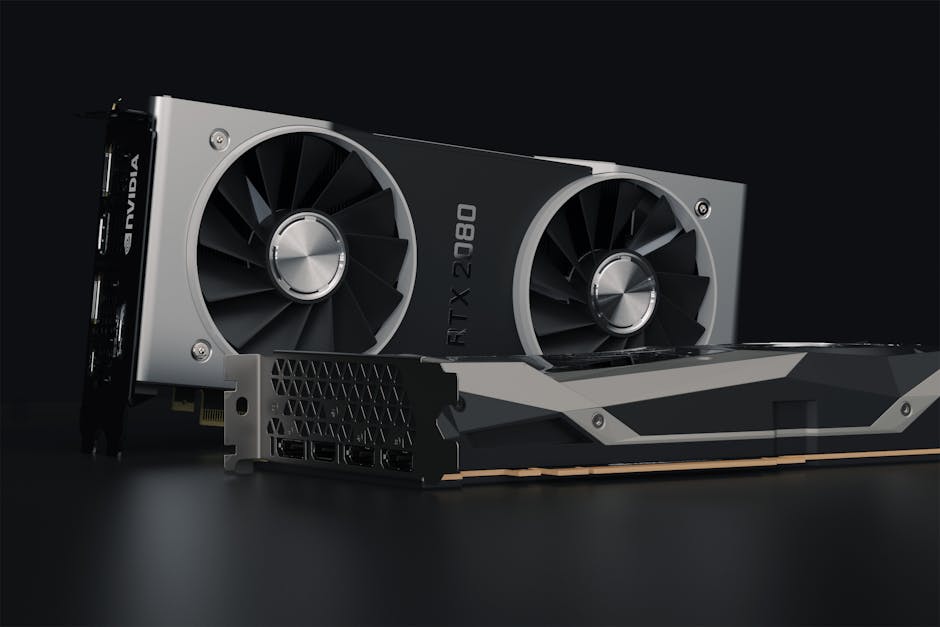
For bloggers, marketers, and media companies using AI tools, this deal is a bellwether for the future landscape of content creation. The proliferation of regional AI factories promises three key impacts: reduced latency, increased model specialization, and potentially lower operational costs.
First, latency and performance. Currently, an AI content creator in Seoul using a tool powered by a U.S.-hosted model may experience slower response times. A local AI factory in Korea means inference—the process where an AI generates text or images—happens physically closer to the end-user. This translates to faster generation times for long-form articles, quicker iterations on image prompts, and a smoother experience in real-time AI editing tools integrated into platforms like WordPress or Canva.
Second, it enables hyper-localized and specialized AI models. SK Telecom and its clients can now train models on datasets rich in Korean language, culture, and business context. For a content agency targeting the Korean market, this means future AI writing assistants could produce more nuanced, culturally relevant, and accurate content than a generalized global model. This specialization extends to industry-specific verticals; imagine an AI factory jointly operated by a telecom and a healthcare provider training a model exclusively on medical research papers and regulatory documents for that region.
Third, it could influence the cost dynamics of AI content creation. While Nvidia’s hardware is expensive, increased competition in the infrastructure layer and more efficient, localized compute could drive down the cost-per-inference over time. Content platforms that rely on AI for bulk generation or personalization may see their API costs from providers like OpenAI or Anthropic become more competitive as alternative, regionally-hosted model providers emerge.
Practical Tips for Content Strategists Preparing for an AI-Factory World

The shift towards decentralized AI compute won’t happen overnight, but forward-thinking content creators can start adapting their strategies now. Here are four actionable steps:
- Audit Your AI Toolchain’s Dependencies: Map out every AI tool in your workflow—from your headline generator and article writer to your image creator and SEO optimizer. Identify where their models are hosted and processed. Are you entirely dependent on a single provider’s U.S.-based infrastructure? Understanding this will help you assess future risks and opportunities related to performance, cost, and data governance.
- Prioritize Workflows That Benefit from Low Latency: If you use AI for real-time applications—like live content personalization on a website, AI-powered chatbots for customer service, or interactive content tools—start monitoring performance metrics closely. As regional AI factories come online in 2027 and beyond, be prepared to test and switch to providers that leverage this local infrastructure for significantly improved speed.
- Explore Emerging “Sovereign AI” Content Platforms: Keep an eye on new AI-as-a-Service platforms that will inevitably launch from these regional hubs. In Asia, watch for offerings from SK Telecom’s service arm or local startups that get access to this compute. In Europe, similar initiatives are likely. Signing up for early beta access could give you a first-mover advantage in generating content that resonates with local audiences more authentically than global models can.
- Future-Proof Your Tech Stack with API Flexibility: Avoid locking your content automation systems into a single AI model’s API. Use middleware or platforms like EasyAuthor.ai that allow you to switch between different AI engines (e.g., OpenAI’s GPT-4, Anthropic’s Claude, or a future regional model) without overhauling your entire workflow. Ensure your WordPress publishing pipeline can accept content from multiple AI sources.
The Road Ahead: Decentralized Compute and the Future of Automated Content

The Nvidia-SK Telecom deal is a single tile in a much larger mosaic. It confirms the industry trajectory towards distributed, specialized AI infrastructure. For content professionals, the era of a one-size-fits-all AI model hosted in a single geographic region is ending. The next phase will be defined by a network of AI factories, each offering unique blends of computational power, data sovereignty, and localized model training.
This evolution will empower content creators to produce higher-quality, more relevant, and faster content at scale. However, it also introduces complexity in choosing the right tools and infrastructure. Success will belong to those who strategically diversify their AI sources, optimize for latency where it counts, and leverage specialized models for niche audiences. The AI content creation landscape of 2027 and beyond will be less about which chatbot has the most hype and more about which integrated, geographically-aware system delivers the best results for your specific audience and use case.
