SpaceX scrubbed the highly anticipated launch of its Starship V3 rocket on May 21, 2026, due to last-minute technical issues with a hydraulic pin and ground support equipment at the launch pad. According to a report by Blockonomi, SpaceX CEO Elon Musk confirmed the abort just minutes before the scheduled liftoff, with the company immediately announcing a new attempt for May 22. The launch delay coincided with SpaceX filing paperwork with the SEC for its initial public offering (IPO) on the same day, creating a news-rich environment for content creators to cover. This event underscores a critical lesson for AI-powered news operations: the ability to rapidly analyze, contextualize, and produce authoritative content around unfolding, multi-faceted stories is now a core competitive advantage. Content that merely reports the delay is commodity news; content that connects the technical scrub to SpaceX’s IPO timing, engineering philosophy, and market implications provides strategic value for readers and search engines.
The Anatomy of a High-Stakes Launch Scrub: A Content Goldmine

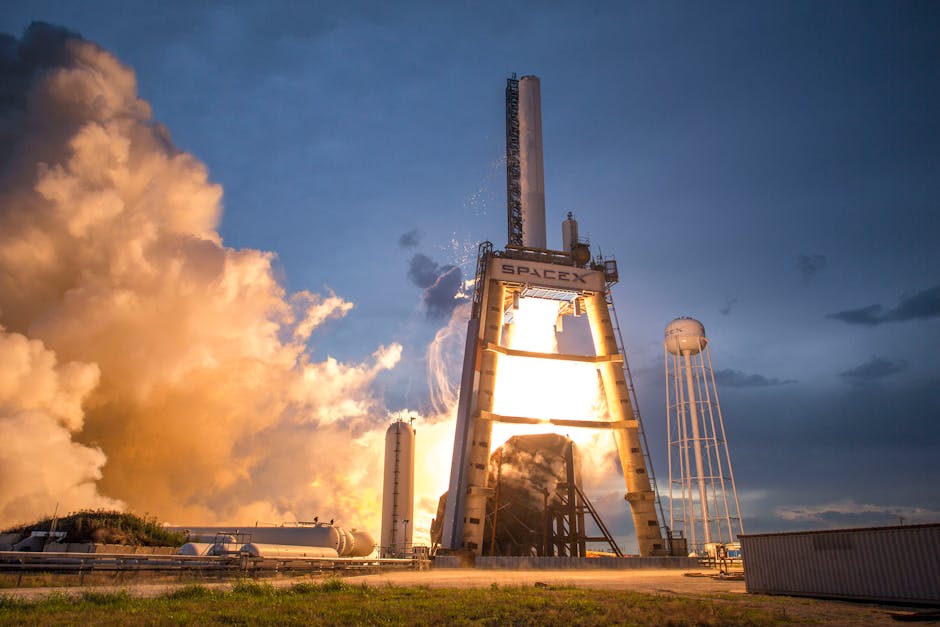
The May 21 launch attempt for Starship V3, the largest rocket ever built, was halted due to two specific, unplanned technical faults. SpaceX identified a faulty hydraulic pin on the launch tower’s quick-disconnect arm—a critical component for fueling—and an unspecified issue with the launch pad’s ground support equipment (GSE). This scrub, occurring within the final minutes of the countdown, is a textbook example of the “rapid iterative development” and risk-tolerant culture Musk has championed. For AI content strategists, this event is not a single data point but a complex narrative with multiple layers: technical (the specific failures), operational (the rapid turnaround to a May 22 attempt), financial (the concurrent IPO filing), and strategic (what this means for SpaceX’s Mars timeline and competitive position against entities like NASA and Blue Origin).
Effective content in this domain requires moving beyond the press release. It demands synthesizing information from live streams (like SpaceX’s official broadcast), Musk’s social media updates (on platforms like X), regulatory filings (the SEC S-1), and historical context of previous Starship tests. An AI-augmented workflow can monitor these disparate sources in real-time, but the human-AI partnership must contextualize the data. For instance, the hydraulic pin failure is a minor component issue, but its location in the fueling system makes it mission-critical. This nuance—the difference between a trivial fault and a show-stopper—is where authoritative content separates itself from generic aggregation.
Why This News Cycle is a Stress Test for AI Content Creation
The confluence of the launch scrub and the IPO filing creates a perfect storm for testing modern content strategies. For creators using tools like EasyAuthor.ai, ChatGPT-4, or Jasper, this scenario highlights both the power and the pitfalls of AI-driven news production.
Speed vs. Depth: Basic AI can rewrite the headline “Launch Scrubbed” in seconds. However, the real opportunity lies in producing comprehensive analysis that answers the “so what?” The IPO filing, revealed on the same day, adds a financial narrative layer. AI can quickly pull data from the SEC filing (total shares, proposed ticker), but human oversight is needed to craft the analysis: Does the scrub impact investor sentiment? Does it demonstrate SpaceX’s disciplined approach to risk, which could be a selling point? AI tools excel at data collation, but strategic insight requires a human-in-the-loop to guide the narrative.
Technical Accuracy: AI models can misrepresent technical details. Describing the hydraulic pin failure requires precise language to avoid conflating it with a major engine or flight computer issue. Prompt engineering for AI must include commands for accuracy and caution, such as “Explain the technical fault in simple terms but do not speculate on its severity beyond confirmed reports.” Using specialized knowledge bases or feeding the AI verified technical glossaries can mitigate this risk.
SEO & Timeliness: The news cycle for an event like this is measured in hours, not days. An AI-powered workflow that automatically generates a news brief, a technical deep-dive, and an IPO analysis piece—all properly categorized and tagged for SEO—can capture search traffic across multiple intent layers (“Starship launch today,” “SpaceX IPO date,” “Starship V3 technical specs”). Tools like Clearscope or Surfer SEO can be integrated to optimize these pieces in near real-time for trending keywords.
Practical AI Workflow for Breaking News in Tech & Engineering
To capitalize on complex, fast-moving stories like the Starship scrub, content teams need a systematic, AI-augmented approach. Here is a practical workflow:
1. Real-Time Monitoring & Triage: Set up alerts using tools like Google Alerts, Mention, or Twitter/X Lists for keywords (“Starship,” “SpaceX launch,” “FAA scrub”). Use an AI summarizer (like Genei or a custom GPT) to parse incoming alerts and prioritize the core facts: What happened? When? What’s the next step? This creates your inverted pyramid lead in under 60 seconds.
2. Multi-Format Content Generation: Don’t just write a single article. Use your core facts to spin up a content suite:
- Short-Form Update (300 words): For social media and immediate blog posting. Focus on the scrub cause and new launch time. Use EasyAuthor.ai’s quick-post templates.
- Comprehensive Analysis (2000+ words): This is your flagship piece, diving into technical details, IPO implications, and historical context. Use AI to draft sections, but enforce a strong editorial outline first.
- Visual Content Brief: Prompt AI (e.g., DALL-E 3 via ChatGPT) to generate ideas for featured images: “A concept art of Starship V3 on the launch pad at dusk, with service arm retracting.” AI can also suggest data points for infographics.
3. Context & Connection Layer: This is the critical human step. An editor or strategist must instruct the AI to connect this event to broader themes. Example prompts:
- “Compare the hydraulic pin issue to previous Starship (V1, V2) launch delays. What does this say about progress?”
- “Analyze the timing of the IPO filing relative to the launch attempt. Source SEC filing language about risk factors related to launch reliability.”
- “Generate a FAQ section anticipating reader questions: Will the IPO price be affected? How many scrubs are typical for a new rocket?”
4. Optimization & Distribution: Run the completed analysis through an SEO optimization tool. Target primary keywords (“Starship V3 launch scrubbed”) and secondary long-tails (“SpaceX IPO 2026 date,” “what is a hydraulic pin on a rocket”). Use WordPress plugins like Rank Math or Yoast SEO to finalize on-page elements. Schedule social posts using Buffer or Hootsuite, with AI-generated post variants for different platforms.
Forward-Looking Summary: The AI-Enhanced Newsroom

The scrubbed Starship launch is a microcosm of the future of content creation. The winners in this landscape will not be those who publish fastest with the bare minimum, but those who publish fastest with the most authority, context, and strategic insight. AI is the engine that makes this speed possible—handling data aggregation, initial drafting, and SEO scaffolding. However, the human strategist remains the pilot, directing the narrative, enforcing accuracy, and making the connections that transform information into understanding. As events become more complex and interconnected (technology, finance, regulation), the ability to deploy AI workflows that can dissect these layers simultaneously becomes non-negotiable. The lesson from May 21, 2026, is clear: your content strategy must be as iterative and resilient as SpaceX’s engineering. Build systems that can handle a last-minute scrub and still deliver a flawless payload of value to your audience.