Source: Blockonomi, “Nvidia (NVDA) Stock Hovers Below $200 as Key Earnings Approach,” published May 4, 2026, by Trader Edge. Key Insight: Nvidia’s stock price, a bellwether for the AI industry, is trading cautiously below $200 ahead of its pivotal Q1 2026 earnings report on May 20, 2026. Despite a 32% year-to-date decline, institutional ownership remains strong at 66.1%, and analysts maintain a consensus price target of $275.25. This pre-earnings tension underscores the high-stakes reality that the entire AI content creation ecosystem, from cloud GPUs to consumer-facing AI tools, is built upon the computational foundation Nvidia provides. The upcoming results will serve as a critical stress test for the sustainability of the current AI boom.
The Deep Dive: Nvidia’s Pivotal Position in the AI Supply Chain
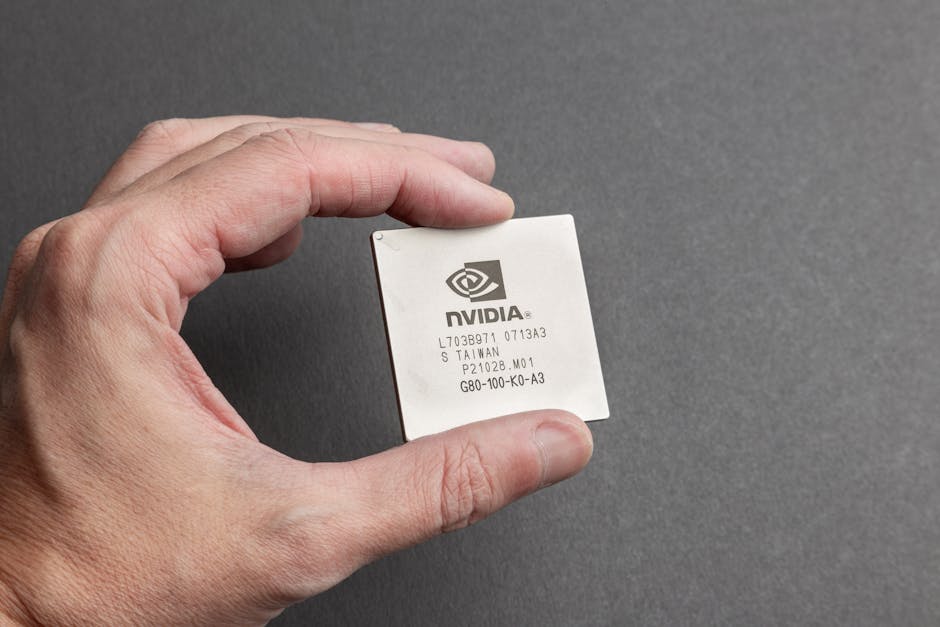
Nvidia’s financial performance is no longer just a story about a chipmaker; it’s a real-time health check for the artificial intelligence economy. The company’s data center segment, driven by its H100, H200, and Blackwell architecture GPUs, has become the primary engine of growth, powering the large language models and generative AI services that content creators use daily. The anticipation surrounding the May 20, 2026 report centers on several key metrics that directly reflect AI adoption:
- Data Center Revenue Growth: Analysts will scrutinize whether the explosive year-over-year growth rates (often exceeding 200%) can be sustained as enterprise AI deployments move from pilot phases to production.
- Guidance for Q2 2026 and Beyond: Forward-looking statements about demand for the next-generation Blackwell platform will signal the industry’s confidence in scaling AI workloads. Any hint of a “digestion phase” where customers pause to integrate existing hardware could spook markets.
- Gross Margins: Nvidia’s industry-leading margins (often above 70%) are a testament to its pricing power. Stability here suggests continued high demand and limited competitive pressure, which translates to stable costs for AI cloud services.
- China and Export Control Impact: Ongoing U.S. restrictions on advanced chip exports to China create a persistent overhang. The market will watch for management’s commentary on developing alternative products for the Chinese market and the overall financial impact.
The stock’s current trading range below $200, despite a $275.25 analyst target, reflects a classic “wait-and-see” posture. The 32% YTD drop indicates profit-taking and heightened volatility after a historic multi-year rally. However, the steadfast 66.1% institutional ownership reveals that large, long-term capital still believes in the foundational AI thesis. This earnings report will either validate that patience or trigger a broader re-evaluation of AI infrastructure spending timelines.
Direct Impact on AI Content Creators and SaaS Tools

For professionals using AI to create content, manage blogs, or run automated workflows, Nvidia’s ecosystem is the invisible backbone. The company’s financial health and strategic direction have tangible downstream effects:
- Cost and Accessibility of Cloud AI APIs: Services from OpenAI (ChatGPT, GPT-4), Google (Gemini), Anthropic (Claude), and Midjourney run on clusters of Nvidia GPUs. Significant fluctuations in Nvidia’s chip supply, pricing, or performance roadmaps can influence the pricing tiers, rate limits, and latency of the APIs that tools like EasyAuthor.ai depend on. A strong earnings beat could signal continued investment and stability in these services, while a miss might foreshadow cost-push pressures or scaled-back feature rollouts.
- Pace of AI Model Innovation: The development of next-generation multimodal models (text, image, video) is gated by compute availability. Nvidia’s R&D and capital expenditure plans, revealed in earnings calls, dictate the hardware available to AI labs. Robust investment signals faster iteration on more powerful models, giving content creators new capabilities (e.g., higher-fidelity video generation, more nuanced long-form writing assistants). A slowdown could mean a plateau in perceived model quality gains.
- Local AI Hardware for Creators: The consumer-grade RTX GPU line brings stable diffusion image generation and local LLM execution (via tools like LM Studio or Ollama) to desktops. Nvidia’s focus and profitability in the gaming and creator segments affect the price-to-performance of future GeForce cards. Strong overall company performance supports continued investment in this segment, empowering creators with more affordable local AI power.
- SEO and Content Strategy Implications: The AI industry’s news cycle is heavily influenced by Nvidia’s milestones. Earnings releases, product launches (like the recent Blackwell), and developer conference (GTC) announcements generate massive search volume. AI-savvy content strategists can anticipate these cycles, creating targeted, timely content (e.g., “How Blackwell GPUs Could Revolutionize AI Video Editing”) to capture traffic and establish topical authority.
In essence, a thriving Nvidia correlates with a thriving, innovative, and cost-effective environment for AI content creation tools. Uncertainty or contraction at the hardware layer eventually ripples out to the software and service layer.
Practical Tips for AI Content Strategists Navigating This Landscape

Smart content creators and marketers can proactively manage their strategy in the context of this foundational AI infrastructure news. Here are actionable steps:
1. Monitor the Right Metrics and Events
Don’t just watch the stock price. Set Google Alerts for “Nvidia earnings call transcript,” “Nvidia data center revenue,” and “Nvidia GTC.” Key dates for your 2026-2027 editorial calendar should include:
- Earnings Dates: Late May (Q1), August (Q2), November (Q3), February (Q4).
- GTC (GPU Technology Conference): Typically March and September. These are launchpads for major software (e.g., new AI libraries) and hardware announcements.
2. Build Content That Connects Hardware to Creator Outcomes
Your audience cares about results, not teraflops. Create content that bridges the gap. For example, after the May 20 earnings:
- If data center growth is strong: Write “How Nvidia’s Record Earnings Signal More Affordable AI Writing Assistants in 2027.”
- If guidance is cautious: Pivot to “Why Local AI Models on Your RTX GPU Are Becoming a Essential Backup Plan.”
- Use tools like Ahrefs or Semrush to track rising keyword clusters around “AI cost,” “local AI,” and specific chip names.
3. Diversify Your AI Tool Stack Based on Infrastructure Trends
Reduce reliance on any single API or service. If Nvidia’s reports suggest supply constraints or rising cloud costs, having a diversified workflow is prudent.
- Experiment with local execution: Test Ollama or LM Studio with open-source models (like Llama 3 or Mistral) on a capable PC.
- Evaluate multi-cloud AI services: Don’t just use OpenAI. Also test Google’s Gemini API, Anthropic’s Claude API, and open-source-focused platforms like Together.ai or Replicate. Their underlying infrastructure may differ.
- In your automation workflows (e.g., using Make.com or Zapier), build fallback paths that switch AI providers if one hits rate limits, which can be caused by underlying compute scarcity.
4. Leverage AI to Cover AI News Efficiently
Use the technology itself to stay ahead. Configure an AI agent in ChatGPT or Claude to summarize Nvidia’s earnings call transcript the minute it’s released, highlighting 5 key points for content creators. Use a tool like EasyAuthor.ai to rapidly generate first drafts of news analysis posts, which you can then fact-check and add expert commentary to. This lets you publish authoritative, timely content within hours of the news breaking, capitalizing on peak search interest.
Conclusion: Building on a Foundation of Informed Awareness

The trajectory of Nvidia and the AI chip sector is now inextricably linked to the daily work of content creators. The May 20, 2026 earnings report is more than a financial event; it’s a barometer for the tools and technologies that will define the next era of digital content. By understanding this connection, monitoring the right signals, and adapting your strategy accordingly, you position yourself not as a passive user of AI, but as an informed strategist building a sustainable content business on top of the world’s most critical technological infrastructure. The future of AI content isn’t just written in code—it’s forged in silicon, and staying ahead means knowing where the silicon is headed.