Source: Blockonomi, reporting on March 31, 2026, that Dubai’s Virtual Assets Regulatory Authority (VARA) has enacted a comprehensive new regulatory framework for cryptocurrency derivatives trading. The rules, which immediately cap retail leverage at 5x and introduce stringent risk management mandates, signal a pivotal shift from a frontier market to a structured financial hub. For AI content creators, this event is not just a financial news story; it’s a masterclass in how to produce authoritative, compliant, and deeply valuable content in fast-moving, regulated industries.
Decoding Dubai’s Derivatives Directive: The Specifics That Matter

VARA’s new rulebook, effective immediately, establishes a clear regulatory perimeter for crypto derivatives, a market previously characterized by extreme volatility and minimal oversight. The key provisions that content creators must understand include:
- Leverage Cap: A strict 5x leverage limit for all retail traders, a drastic reduction from the 100x or higher often seen on unregulated offshore exchanges. For professional or institutional investors, higher limits may be permitted following rigorous suitability assessments.
- Mandatory Risk Disclosures: Licensed Virtual Asset Service Providers (VASPs) must provide clear, prominent warnings about the risks of derivatives trading, including the potential for total loss of capital.
- Enhanced Custody and Segregation: Client assets must be held in segregated accounts, distinct from the VASP’s operational funds, with regular proof-of-reserves audits required.
- Real-Time Monitoring & Reporting: VASPs must implement systems to monitor for market manipulation (like spoofing and wash trading) and report large or suspicious transactions to VARA.
This framework positions Dubai in direct contrast to jurisdictions like the United States, where regulatory ambiguity persists, and the European Union’s MiCA, which largely excludes derivatives from its initial scope. The move is a calculated bid to attract legitimate institutional capital while protecting retail participants—a narrative rich with angles for analysis.
Why This Regulatory Shift is a Critical Signal for AI Content Strategists
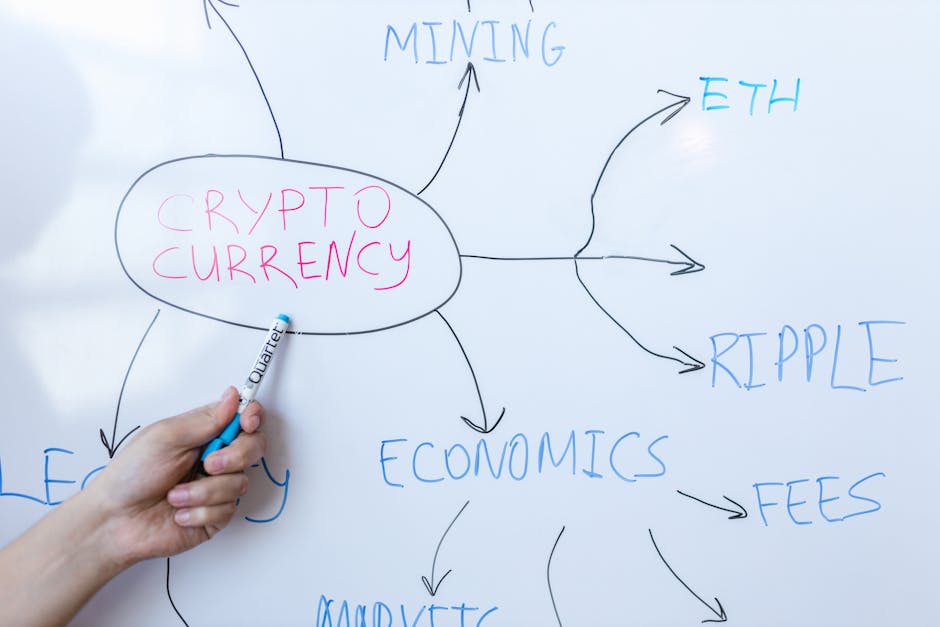
For professionals using AI tools like EasyAuthor.ai, Claude, or ChatGPT to scale content production, Dubai’s action is a case study in navigating complexity. It underscores several non-negotiable principles for successful AI-driven content in technical fields.
1. Regulatory Intelligence as a Core Competency: AI cannot autonomously track regulatory filings or interpret legal nuance. The creator’s role is to feed the AI with precise, up-to-date source material—like the official VARA rulebook PDF—and direct it to analyze specific clauses (e.g., “Explain the capital adequacy requirements in Section 4.2 for a content piece aimed at fintech startups”). The output’s authority depends entirely on the quality of the input.
2. The Death of Generic Crypto Content: The era of publishing vague “What is Bitcoin?” articles is over. Search engines and readers now demand specificity. AI content that precisely addresses “How does Dubai’s 5x leverage cap compare to Binance’s new EU limits?” will outperform generic rivals. This event creates immediate content clusters: compliance guides for traders, competitive analysis for other jurisdictions (UAE vs. Hong Kong), and technical explainers on risk management systems.
3. Demonstrating E-E-A-T Through Precision: Google’s emphasis on Experience, Expertise, Authoritativeness, and Trustworthiness (E-E-A-T) is paramount in YMYL (Your Money or Your Life) niches like finance. AI-generated content must be meticulously fact-checked, cite primary sources (laws, official statements), and include expert commentary. A post stating “Dubai capped leverage” is weak. A post stating “VARA’s Circular No. 2026/03, Clause 12.1.A, institutes a maximum leverage ratio of 5:1 for all retail virtual asset derivative contracts” demonstrates authority and builds trust.
Practical AI Content Workflows for Capitalizing on Regulatory News

Transforming a complex regulatory announcement into a stream of ranked content requires a systematic, tool-augmented approach. Here is a actionable workflow for AI content creators:
Phase 1: Rapid Intelligence & Outline Generation (Day 1)
- Tool Stack: Use a research assistant like Perplexity AI or ChatGPT with browsing enabled to gather the core facts, official sources, and initial reactions from key industry figures (e.g., VARA CEO, exchange CEOs).
- Prompt Strategy: “Based on VARA’s March 31, 2026 announcement, generate a content strategy outline covering: a) a breaking news explainer (500 words), b) a comparative analysis piece vs. EU MiCA and US stance (1200 words), c) a list of 10 FAQs for retail crypto traders, and d) five ideas for LinkedIn carousel graphics summarizing the rules.”
- Output: A structured editorial calendar with target keywords (e.g., “VARA derivatives rules 2026,” “crypto leverage cap Dubai”).
Phase 2: Depth Creation & Human Refinement (Day 2-3)
- Tool Stack: Use a long-form AI writer (like EasyAuthor.ai’s blog post generator) with the official regulatory document uploaded as a source. Combine this with SEO tools like Ahrefs or Semrush to identify question-based keywords (“Is crypto derivatives trading legal in Dubai?”).
- Prompt Strategy: “Write an 1800-word expert analysis titled ‘Dubai’s Crypto Derivatives Framework: A Model for Global Regulation?’ Use the provided VARA PDF as the primary source. Adopt the tone of a financial compliance consultant. Include specific data points: the 5x leverage limit, capital requirement percentages, and audit frequencies. Structure the piece with H2s on ‘Retail Protections,’ ‘Institutional Implications,’ and ‘Global Regulatory Arbitrage.'”
- Human Role: The content strategist must verify all numbers, add relevant internal links to existing site content on MiCA or SEC rules, and insert practical call-outs (e.g., “For projects seeking a VARA license, ensure your risk engine can generate the reports mandated in Annex B”).
Phase 3: Repurposing & Distribution (Ongoing)
- Tool Stack: Use AI tools for summarization (like Claude) and graphic creation (Canva AI, Midjourney for conceptual images).
- Action: Transform the core article into a Twitter/X thread, a LinkedIn article summary, a 5-minute script for a YouTube Short, and a newsletter email. AI can draft each variant, but the strategist must tailor the messaging for each platform’s audience.
The Future-Proof AI Content Strategy: Agility Meets Authority

Dubai’s move is a precursor to a global wave of crypto financial regulation. For AI-augmented content teams, the winning formula is clear: Speed + Specificity + Sourcing. The ability to quickly interpret a dense regulatory text, generate a comprehensive content plan around it, and execute with flawless accuracy is the new competitive edge.
This means moving beyond simple keyword blogging to building a content architecture that positions your brand as a regulatory intelligence hub. Think dedicated topic clusters (e.g., a “Global Crypto Regulation” pillar page), regularly updated comparison tables (“Leverage Limits by Jurisdiction”), and expert round-ups generated by interviewing sources and using AI to draft the summaries.
The March 31, 2026 VARA rules are more than a financial regulation; they are a benchmark for content excellence. They prove that in complex fields, AI is not a replacement for strategic thought but its ultimate amplifier. The content that wins will be produced by strategists who use AI to handle scale and scope, while they focus on insight, analysis, and forging genuine connections with an audience hungry for clarity in a chaotic market.