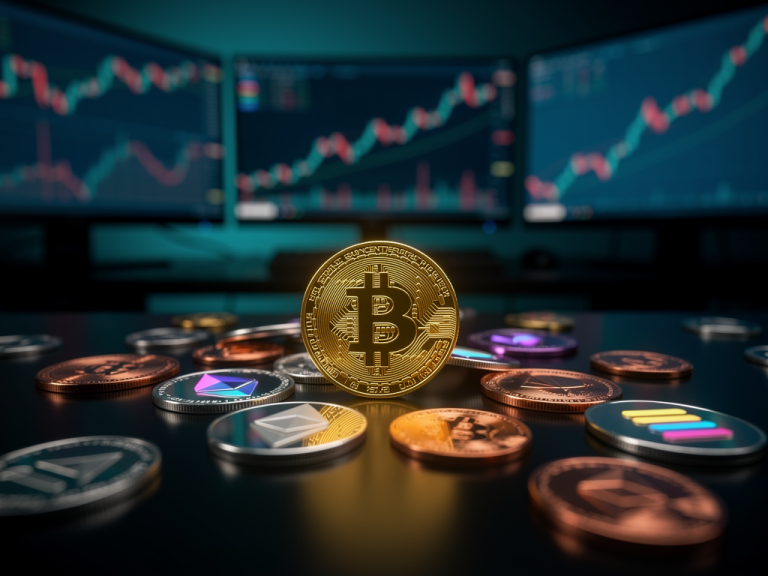
If you’d told me five years ago that I’d be obsessively checking a digital wallet on my phone and speculating about something called “blockchain,” I’d have laughed you all the way to the nearest coin-operated laundromat. Yet here I am, neck-deep in the wild world of Bitcoin—part tech enthusiast, part anxious investor. In this article, I’m sharing my candid, firsthand experience with Bitcoin: how it works, why it’s such a big deal, and what you should know before you even consider dipping a toe into the crypto ocean. Buckle up, because this is a ride full of head-scratching discoveries, late-night revelations, and yes, a fair share of laughs at my own expense!
What Is Bitcoin, Really? (And Why Did Everyone Lose Their Minds Over It?)
The Origins: A Mysterious Beginning
Let’s start with the basics: Bitcoin is a decentralized digital currency that began life in 2009, thanks to the enigmatic Satoshi Nakamoto (who may or may not be one person or a group—cue the conspiracy music). Unlike dollars or euros, Bitcoin isn’t printed by any government. Instead, it’s created, or “mined,” via complex mathematical puzzles solved by computers—a process that’s as baffling as my attempt to assemble IKEA furniture without instructions.
The core technology powering it, blockchain, is essentially a public ledger: it records every single Bitcoin transaction, ever. No banks, no middlemen, just a peer-to-peer network and a digital record that can’t be faked—or so the cryptographers claim. If you want to learn more about blockchain, the Wikipedia blockchain entry is a surprisingly accessible rabbit hole.
Why The Hype?
Here’s why Bitcoin made headlines worldwide: it’s fast, international, and anonymous enough to raise eyebrows. Early adopters saw it as a rebellion against traditional finance, promising a world where you could send money as easily as sending an email. And let’s be honest—who didn’t get a little FOMO when some lucky folks went from ramen to Rolls Royce by buying Bitcoin for pennies? For the data lovers, consider this: in 2010, a single Bitcoin was worth less than $0.01. As of June 2024, it’s hovering around $65,000. Talk about a glow-up!
How Does Bitcoin Work? A (Slightly Embarrassing) User’s Guide
Digital Wallets: Your Virtual Piggy Bank
To own Bitcoin, you first need a digital wallet. This is where you store your coins—no leather, zippers, or pockets required. There are software wallets (apps on your phone or computer) and hardware wallets (USB-like gadgets that make you feel like a spy). Setting these up was the first time I realized how much I take my bank’s password-recovery button for granted. Lose your wallet’s private key? Say goodbye to your Bitcoin forever. (I still wake up in cold sweats after reading those horror stories.)
The Joys and Woes of Buying Bitcoin
Getting your hands on Bitcoin is much easier now than when I started. Major platforms like Coinbase and Binance let you buy with a few taps. But beware: fees can sneak up on you, and there are always new verification hoops to jump through. I once uploaded the same blurry ID photo three times—my phone’s camera quality clearly wasn’t up to 21st-century crypto standards.
Once purchased, those Bitcoins sit in your wallet, waiting for you to spend, save, or (let’s be real) nervously check every time the price moves. It’s like Tamagotchi for grownups, except the stakes are a bit higher.
Why Do People Invest in Bitcoin? (And Should You?)
The Lure of Digital Gold
Many people call Bitcoin “digital gold.” Like gold, it’s scarce—there will only ever be 21 million Bitcoins, period. That’s coded into the rules. Compare this to national currencies, which can be printed at will by central banks, and you can see why people flock to Bitcoin when inflation is a worry. According to a BBC analysis, Bitcoin is increasingly seen as a hedge against economic instability.
Freedom, Privacy, and (Sometimes) Profit
Some investors love Bitcoin for its libertarian streak: no government, no bank, just you and your digital cash. Others are in it for the potential profit. The volatility is legendary—prices can double or halve in a matter of weeks. I’ve had days where my portfolio looked like a slot machine jackpot, only to see it nosedive before lunch.
But before you get starry-eyed, remember: investing in Bitcoin is risky. Financial experts at Investopedia stress that you should only invest what you can afford to lose. I started with a small amount—enough to feel involved but not enough to cause existential despair if things went south. Spoiler: there were definitely some sleepless nights anyway.
Bitcoin and the Real World: What Can You Actually Do With It?
Spending Bitcoin: Fact or Fiction?
So, can you actually use Bitcoin to buy stuff? The answer is: yes, but not everywhere. Some major companies (think Tesla, at least for a while) and online retailers accept it. There are even Bitcoin debit cards linked to your wallet, letting you spend like regular money. That said, the list of participating businesses is still relatively small. I tried paying for pizza once—let’s just say I ended up using my regular Visa.
Bitcoin as a Tool for Global Access
Bitcoin is a big deal in places where traditional banking is unreliable. For people in countries with strict capital controls or unstable currencies, Bitcoin can be a lifeline. According to the World Bank, cryptocurrencies like Bitcoin have helped millions access financial services for the first time. Still, don’t expect your local farmer’s market to make the switch just yet.
The Challenges and Controversies: What I Learned the Hard Way
Volatility and the Emotional Rollercoaster
I’ll be honest: Bitcoin ownership is not for the faint of heart. The price swings are stomach-churning. I’ve watched my holdings soar—and crash—more times than I care to admit. If you check your balance every hour, like I did at first, you’re practically signing up for a crash course in stress management. If you want to learn about effective emotional coping techniques, check out our own stress management guide.
Security Nightmares and Scams
Crypto has its share of horror stories: lost passwords, hacked exchanges, and scam artists galore. One unfortunate day, I almost clicked on a phishing email that looked exactly like my exchange. Lesson learned: always enable two-factor authentication, and never share your private keys. The U.S. Federal Trade Commission has a great primer on avoiding crypto scams. Don’t become a cautionary tale!
Bitcoin and the Future: Is It Here to Stay?
Regulation and Mass Adoption
Regulation is the elephant in the crypto room. Governments worldwide are grappling with how to handle Bitcoin. Some, like El Salvador, have gone all-in, making it legal tender. Others, like China, have banned it outright. The rest of us? We’re left navigating a patchwork of rules and tax headaches. If you’re curious about crypto tax implications, our personal finance tips can help.
Innovation and the Next Wave
Despite the chaos, Bitcoin has sparked a technological revolution. The rise of decentralized finance (DeFi), NFTs, and smart contracts owes much to Bitcoin’s pioneering spirit. Whether or not it replaces traditional money, its impact on how we think about value and security is undeniable. For a glimpse into the latest trends, the Coindesk news portal is my go-to for daily updates.
Tips for Bitcoin Beginners: Wisdom From My Blunders
Start Small and Stay Curious
If you’re thinking of buying Bitcoin, begin with an amount you’re comfortable losing. I learned more from my first $100 investment than any book or blog post. There’s no substitute for skin in the game, but keep your risk in check.
Keep Learning—and Don’t Panic
The crypto space is constantly changing. New coins, new regulations, new jargon—it’s enough to make your head spin. My advice? Follow reputable sources, join online communities, and don’t make impulsive decisions based on FOMO or panic. For foundational knowledge, our crypto basics guide is a great place to start.
Conclusion
So, what’s my final word on Bitcoin? It’s exhilarating, intimidating, and occasionally exasperating—but above all, it’s a window into the future of money. Whether you’re a curious newcomer or a seasoned investor, Bitcoin challenges you to rethink what value means and how technology can reshape our everyday lives.
Before you dive in, arm yourself with knowledge, stay skeptical, and—most importantly—don’t invest more than you can afford to lose. As for me? I’m still checking my wallet, still learning, and still convinced that the story of Bitcoin is only just beginning. Ready to start your own adventure? The crypto world is waiting… just don’t forget your private key.