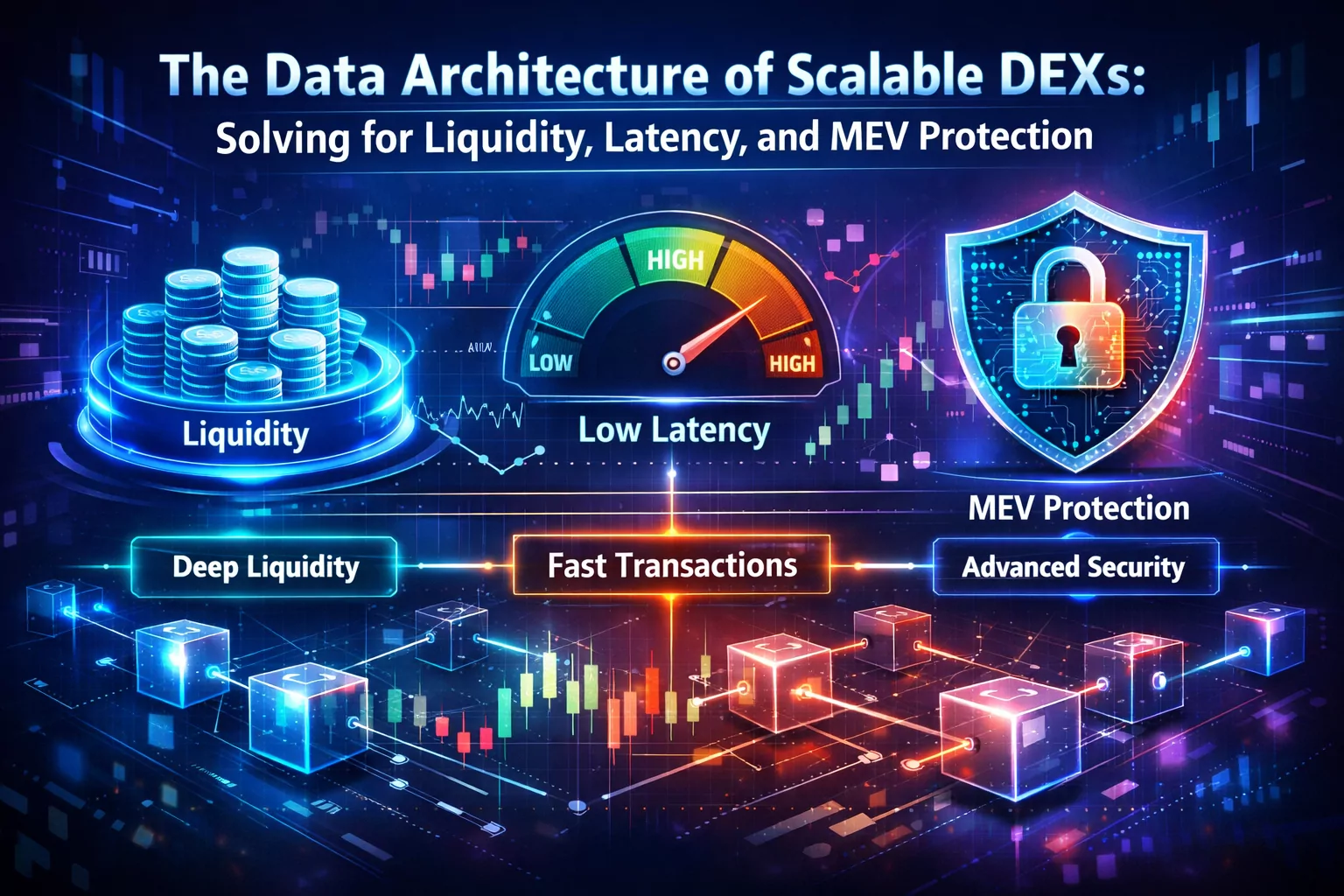
In the rapidly evolving world of decentralized exchanges (DEXs), the focus has shifted towards creating systems that not only function efficiently but also prioritize user experience and security. While many DEX platforms aim to decentralize trading, they often face challenges in providing the liquidity, speed, and security that centralized platforms offer.
Solving the Trilemma: Liquidity, Latency, and MEV Protection
One of the most significant challenges DEXs face is the ‘trilemma’ of ensuring deep liquidity, minimizing latency, and protecting users from Maximal Extractable Value (MEV) attacks. MEV attacks occur when bots or malicious actors manipulate transactions, undermining trust in the platform.
To address this, leading DEXs are implementing robust system architectures capable of handling extreme market volatility. This ensures predictable pricing, stable trades even during medium-volume exchanges, and significant protection against losses caused by sudden price spikes.
Why Liquidity Management is Key
Effective liquidity management is the cornerstone of every successful DEX. Platforms must plan anchor pairs (base liquidity with high demand), establish optimal liquidity concentration ranges, and incentivize long-term liquidity providers (LPs). These strategies enable stable trades and minimize potential disruptions caused by insufficient funds in liquidity pools.
Some DEXs go a step further by integrating liquidity aggregators, ensuring that user orders are automatically routed to the most efficient pools. This reduces exchange losses and ensures a seamless trading experience for users.
Prioritizing Security in Decentralized Trading
For the average trader, security is more than just a badge of approval or an audit report on a website. Leading DEXs adopt continuous security frameworks that include:
- Smart contract testing beyond basic checks, considering economic vulnerabilities and market disruptions.
- Defenses against MEV threats, preventing trade preemptions or manipulations.
- Ongoing monitoring tools to detect liquidity anomalies and enable real-time risk management.
As users demand higher reliability from DEX platforms, these measures build trust and pave the way for the industry’s long-term growth.
User Experience: Matching the Standards of Centralized Platforms
A major pitfall for many DEXs is failing to match the intuitive experience provided by centralized exchanges (CEXs). From slow transaction times to a lack of transparency in pricing and fees, these issues discourage wider adoption.
To compete with CEXs, DEX platforms must optimize their user interfaces, reduce response times, and enhance overall clarity in transaction processes. For example:
- Providing real-time data on market conditions, slippage, and execution probabilities.
- Offering detailed explanations when transactions encounter issues, including next steps for users.
- Ensuring minimal waiting times for gas fee confirmations through optimized node strategies.
Platforms like eToro are examples of crypto ecosystems that integrate ease of use with reliability, setting benchmarks for DEXs to follow.
The Foundation for a Future-Proof DEX
Successful DEXs are built with scalability, reliability, and security at their core. By concentrating liquidity, incorporating advanced risk monitoring systems, and enhancing the user interface, they can attract long-term users and achieve widespread adoption.
Moreover, robust planning, active trading incentives, and cutting-edge technical infrastructure ensure that these platforms not only survive market adversities but also thrive as leaders in decentralized finance.
When investing in a DEX, consider its ability to meet these benchmarks. Platforms designed with these principles today will likely be at the forefront of the decentralized financial ecosystem tomorrow.


