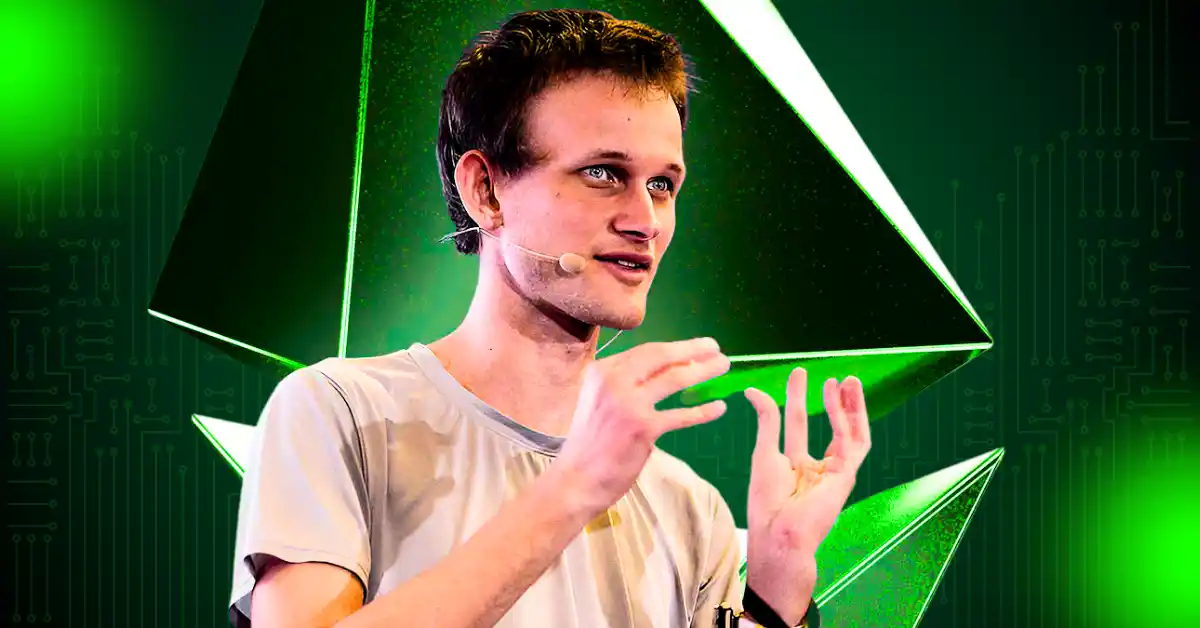
As centralized social platforms like X (formerly Twitter) enforce mass bans and strict moderation, a growing question looms over the digital space: what’s next for decentralized social networks? In a thought-provoking discussion on the WuBlockchain Podcast, Ethereum co-founder Vitalik Buterin and Mask Network’s Suji Yan delved into the challenges, failures, and emerging opportunities for decentralized social platforms. If you’re intrigued by the intersection of blockchain and social media, this article breaks down their compelling insights.
The Challenges Facing Decentralized Social Platforms
Despite years of innovation, most decentralized social platforms have struggled to gain traction. According to Buterin, the two main roadblocks are network effects and misaligned incentives. “Almost no new social platforms have truly broken through at scale,” Buterin observed. Without a significant user base, even the most advanced platforms feel barren and ineffective.
Additionally, many projects overly emphasize tokenization—using financial incentives to drive social behavior. But this approach has often fallen short. “The core issue is creator incentives,” Buterin noted, explaining that token-driven models frequently reward influence and speculation instead of quality content.
A Gradual Path Toward Decentralization
Suji Yan highlighted that user migration from centralized platforms to decentralized alternatives is gradual and multi-phased. Similar to the evolution of decentralized finance (DeFi), users are unlikely to abandon existing platforms entirely overnight. Instead, they’ll transition step by step—from centralized systems to semi-centralized models, and eventually to fully decentralized ecosystems.
One promising strategy could involve shared protocol layers and tool aggregators. These solutions allow users to experiment with decentralized social networks without completely abandoning their current communities.
Innovative Ideas on the Horizon
Vitalik and Suji also explored groundbreaking concepts that could reshape decentralized social platforms:
- Wallet Integration: A seamless future where users can post directly from blockchain wallets, across multiple chains, making onboarding easier.
- Prediction Markets: Introducing prediction markets to gauge the credibility of information, replacing reliance on traditional fact-checking systems.
These innovations highlight the potential for decentralized social networks to not only compete with centralized platforms but also offer unique benefits, such as increased user control and more robust content moderation systems.
Decentralized Social Isn’t About Replacing Platforms—Yet
Critically, Buterin emphasized that success in this space doesn’t depend on “replacing X overnight.” Instead, it’s about enhancing user experiences, improving discussion quality, and mitigating risks associated with centralized systems. “The goal,” according to Buterin, “is to have blockchain fade into the background while better social experiences take center stage.”
What’s Next for Users?
While the transition to decentralized platforms may take years, users can still explore tools that bring blockchain tech closer to their daily lives. A trusted solution, MetaMask, allows users to interact seamlessly with decentralized applications (dApps) and manage their wallets, paving the way for a future tied to blockchain-enabled social platforms.
As the landscape evolves, one thing remains clear: whether through prediction markets, wallet integrations, or semi-centralized intermediaries, decentralized social networks have the potential to provide more agency and better tools for navigating online discourse.