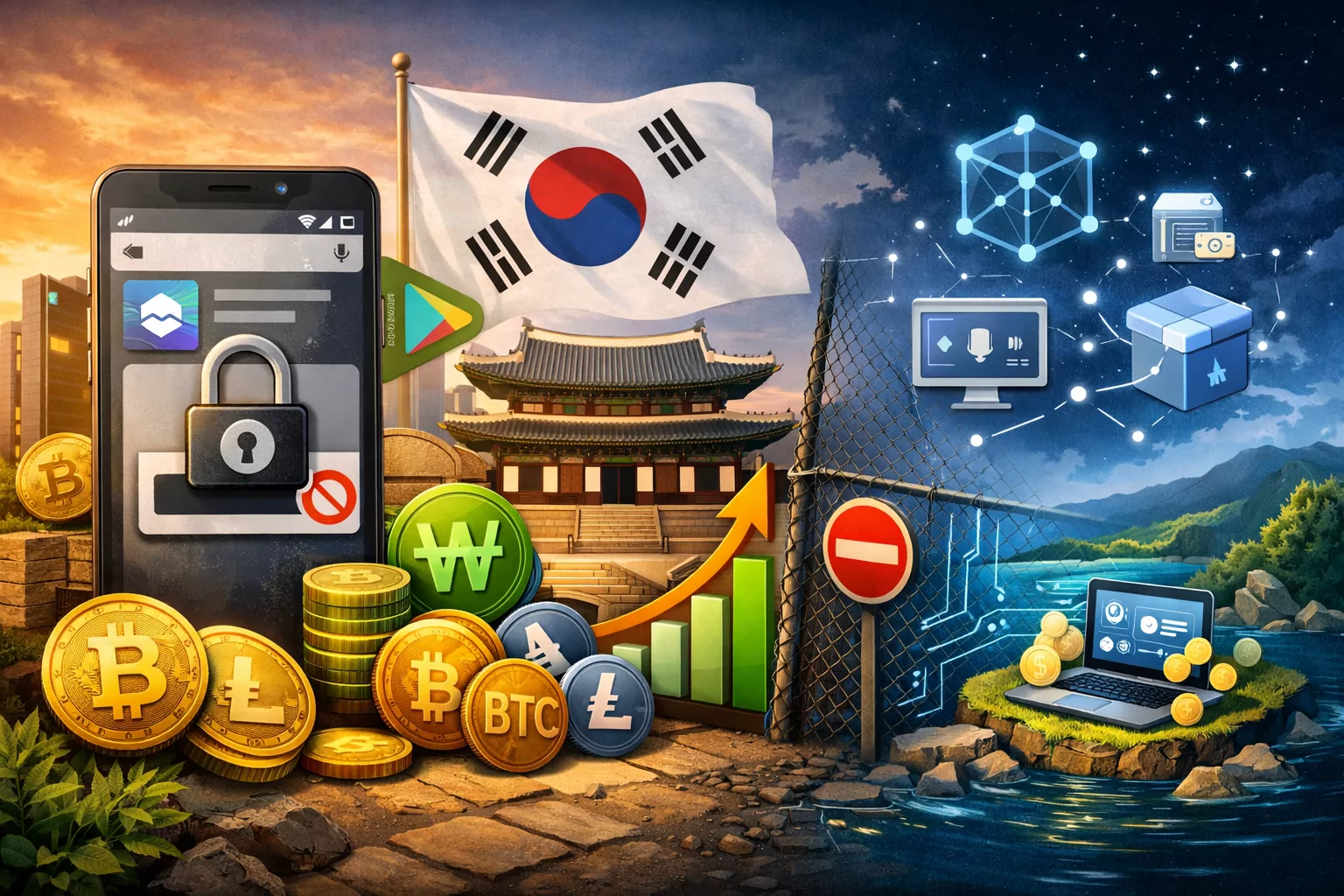
South Korea’s cryptocurrency landscape is undergoing significant changes, driven by policy adjustments that are reshaping access to foreign crypto exchange platforms. This shift is directly linked to Google Play’s updated policies, which now require apps to adhere to South Korea’s local licensing standards. As a result, many international cryptocurrency exchange apps may become unavailable for download or updates within the country. Here’s how this change impacts traders, the market, and the broader implications for users relying on mobile crypto platforms.
Why Google Play’s Licensing Policy Matters
Effective immediately, all cryptocurrency apps on Google Play must comply with South Korea’s local regulatory requirements. These requirements mandate that exchanges and wallet providers register as Virtual Asset Service Providers (VASPs) and comply with strict anti-money laundering (AML) and security measures outlined by the Financial Intelligence Unit (FIU). Currently, only a few foreign platforms have secured the required VASP status, leaving the majority unable to list their apps on the Play Store.
This policy update doesn’t entirely block South Korean traders from accessing international platforms. Users can still engage with these exchanges via web browsers or by sideloading app installation files (APKs). However, these methods come with risks, such as potential exposure to malware or phishing attacks, which make downloading directly from Google Play the preferred option for many.
The Impact on Domestic and Foreign Exchanges
With restrictions on foreign apps, South Korea’s domestic exchanges like Upbit and Bithumb stand to benefit. These VASP-registered platforms could secure larger market shares as traders gravitate towards locally accessible options. This consolidation of trading activity on local platforms could directly impact trading volumes, token listings, and even fee structures in the domestic market.
International exchanges might explore alternative strategies to maintain their foothold in South Korea. For example, Binance’s past collaboration with Gopax highlighted a pathway for global platforms to penetrate the market through partnerships or equity stakes in local companies with VASP licenses. However, such solutions often come with limitations, like restricted product offerings due to South Korea’s regulatory framework, which bans crypto derivatives trading.
Decentralized Finance (DeFi): A Pivot Option?
For some traders, these new barriers to centralized platforms may accelerate adoption of decentralized finance (DeFi) tools. Unlike their centralized counterparts, decentralized exchanges (DEXs) and non-custodial wallets are not subject to Google Play’s restrictions, allowing continued user access without regional licensing requirements. Platforms like MetaMask offer secure wallets and access to a broad range of DeFi services, making them an attractive option for crypto traders in South Korea.
Despite the flexibility DeFi offers, users should remain cautious. South Korea’s regulatory oversight extends to taxation and reporting on crypto assets, which includes DeFi activity. The lack of regulatory clarity in this space could expose traders to potential compliance risks in the future.
Looking Ahead
The policy changes in South Korea highlight a growing trend: regulatory bodies worldwide are becoming more stringent in managing cryptocurrency activities. For traders, this means adapting quickly to evolving compliance requirements. While these changes aim to protect the market and users from risks tied to unregulated platforms, they also raise concerns about reduced access to international innovation and competitive pricing.
For those seeking alternatives to centralized exchanges, it’s crucial to prioritize security. Investing in highly rated cold storage wallets, such as the Ledger Nano X, can protect funds against compromised APK files and potential fraud when venturing into less-regulated crypto spaces.
As South Korea’s crypto regulations tighten, the landscape for digital assets continues to evolve. Staying informed and investing in secure tools will help users navigate these complexities effectively.