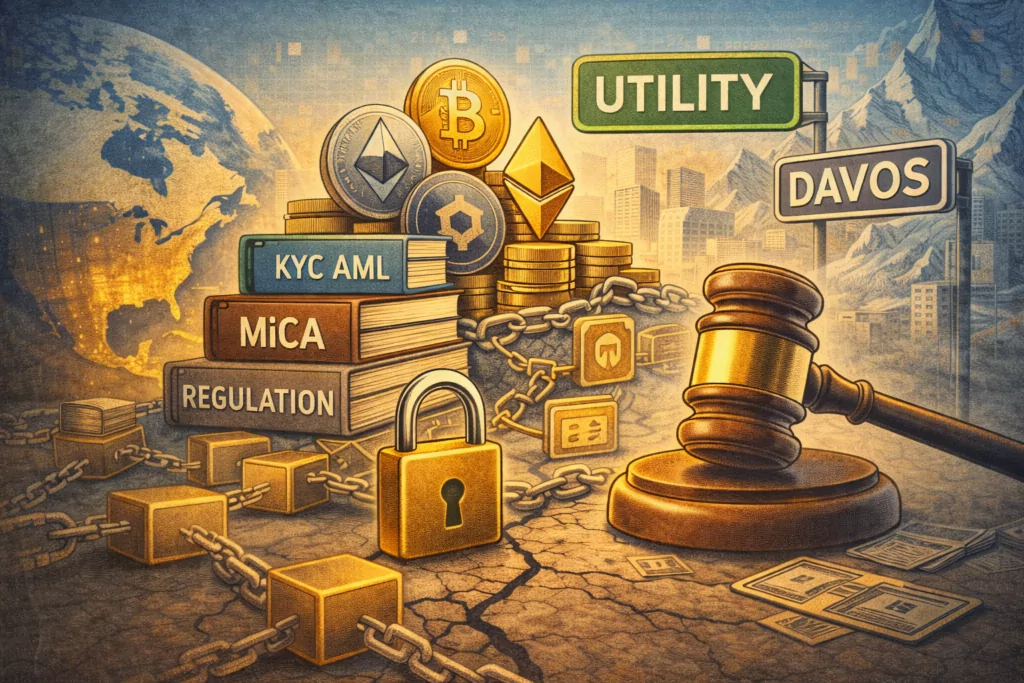
The Crypto Revolution: What Lies Ahead in 2026?
As global leaders gather at the 2026 World Economic Forum in Davos, the cryptocurrency and blockchain industry finds itself in a transformative phase. The focus has shifted from speculative markets to real-world utility, regulatory frameworks, and institutional applications. This evolution marks a critical period for crypto enthusiasts, businesses, and the broader economy.
Utility Takes Center Stage
The era when Bitcoin’s role as “digital gold” was the main headline is fading. Today, attention is turning to altcoins and their emerging utilities in decentralized finance (DeFi), non-fungible tokens (NFTs), and tokenized assets. As Yat Siu, Chairman of Animoca Brands, highlights, identity verification and tokenization are becoming central to this utility-driven ecosystem. For instance, tokens that verify professional credentials or loyalty memberships simplify access and enhance value for users.
Consider incorporating utility-focused products into your crypto portfolio. Ledger’s Nano X hardware wallet is an excellent tool to securely store utility tokens. You can explore Ledger Nano X here.
Tokenizing Real-World Assets
Tokenization—converting real-world assets like real estate, intellectual property (IP), and royalties into blockchain-based tokens—is increasingly gaining traction. Industries like music and gaming are already exploring tokenized royalties, driven by enforceable and digital cash-flow structures.
However, challenges like interoperability (ensuring platforms can “talk” to one another) and regulatory compliance remain key barriers. Nevertheless, with frameworks like Europe’s MiCA in place, tokenization is set to redefine how we approach assets, adding liquidity, transparency, and new investment opportunities.
How Businesses Should Adapt
For businesses, the call to embrace blockchain technology is clear: tokenize or risk obscurity. Companies that fail to adapt to tokenized models may fall behind just as traditional retailers were outpaced by e-commerce giants.
To get started, businesses should map potential network effects, identify opportunities for tokenization, and plan scalable implementations. Utilizing a strategic approach to tokenization helps unlock new partnerships and reach untapped audiences.
Regulations: Steps Toward Global Trust
One of the pivotal factors for widespread blockchain adoption is regulatory clarity. Frameworks like MiCA in the EU have already set standards for compliance, offering the guidance necessary for institutions to embrace blockchain solutions. Yet, global consistency is critical for further adoption. From Know Your Customer (KYC) policies to Anti-Money Laundering (AML) requirements, regulators must address operational gaps to solidify blockchain as a settlement layer for banks and asset managers.
How Does the US Compare?
The US regulatory landscape remains fragmented, with some states encouraging blockchain innovation while federal agencies adopt a more cautious stance. However, legislation like the proposed Clarity Act aims to bridge these gaps, paving the way for wider tokenization efforts in the country. By 2026, this could trigger a major wave of adoption, further driving the crypto economy in the US.
Conclusion: A New Era for Crypto and Blockchain
The progression of crypto from speculation to utility and institutional integration signifies an exciting chapter for the industry. Leaders like Animoca Brands are paving the way for innovation with strategic initiatives like public listings designed to attract broader investments.
Whether you’re an investor, business leader, or crypto enthusiast, staying informed and taking strategic action will be key to navigating the ever-evolving blockchain ecosystem in 2026.