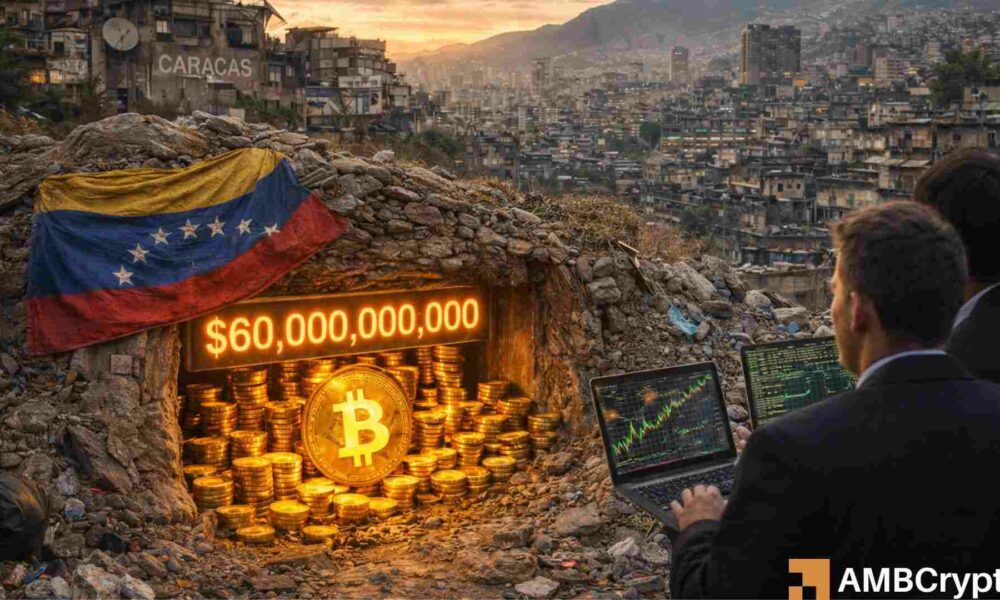
The crypto landscape continues to spark global intrigue, especially as discussions about Venezuela’s alleged $60 billion Bitcoin holdings intensify. After the United States reportedly claimed ownership of Venezuelan oil assets, speculation is rife that it could also target the country’s purported Bitcoin reserves. But is such a move feasible? This article delves into the ongoing debate and provides the critical insights you need to know.
Unproven Bitcoin Reserves at the Center of Controversy
Paul Atkins, Chairman of the Securities and Exchange Commission (SEC), recently addressed these speculations in an interview with Fox Business. When asked if the U.S. government would pursue Venezuela’s rumored Bitcoin stash, Atkins stated, “That remains to be seen. But I’m not involved with that, and I’ll leave it for others in the Administration to deal with that.”
The alleged Bitcoin holdings, estimated to be around 600,000 BTC, remain unverified. Despite claims placing its valuation at approximately $56.4 billion (as of a Bitcoin price of $94,000), blockchain intelligence platform Arkham has yet to confirm the stash’s existence. According to Matteo Colledan, VP of Business Development at Arkham, “We have not identified any such holdings at present. We are still assessing whether any holdings exist.” Furthermore, Bitcoin Treasuries data indicates the Venezuelan government officially holds just 240 BTC, valued at $22.61 million, at the time of writing.
Bitcoin and Crypto’s Role in Venezuela’s Economy
Venezuela has emerged as a significant player in the cryptocurrency space. Between mid-2024 and mid-2025, it ranked as the fourth-largest destination in LATAM for crypto inflows, receiving $44.6 billion, according to Chainalysis. The country’s accelerating crypto adoption has largely been driven by hyperinflation and U.S. sanctions on its oil industry. Bitcoin, stablecoins, and USDT have reportedly served as crucial tools for circumventing sanctions and capital controls.
However, this has not gone unnoticed by global regulatory frameworks. Chainalysis revealed that inflows into sanctioned crypto addresses surged by 694% in 2025, closely tied to geopolitical conflicts. Notably, Venezuela has been accused of routing crypto flows to other sanctioned nations, such as Russia, as a means of bypassing global financial restrictions.
What’s Next for Venezuela’s Bitcoin Stash?
The mystery surrounding Venezuela’s alleged Bitcoin reserves continues to captivate the global financial community. With the country’s verified holdings far below the speculated numbers, it remains to be seen if the U.S. will take action. Should the remaining stash come to light, it could redefine Venezuela’s role in the global crypto ecosystem.
For readers interested in monitoring real-time cryptocurrency movements, consider using a reliable hardware wallet like the Ledger Nano X. This wallet offers advanced security features, making it an excellent choice for storing Bitcoin and other digital assets securely.


